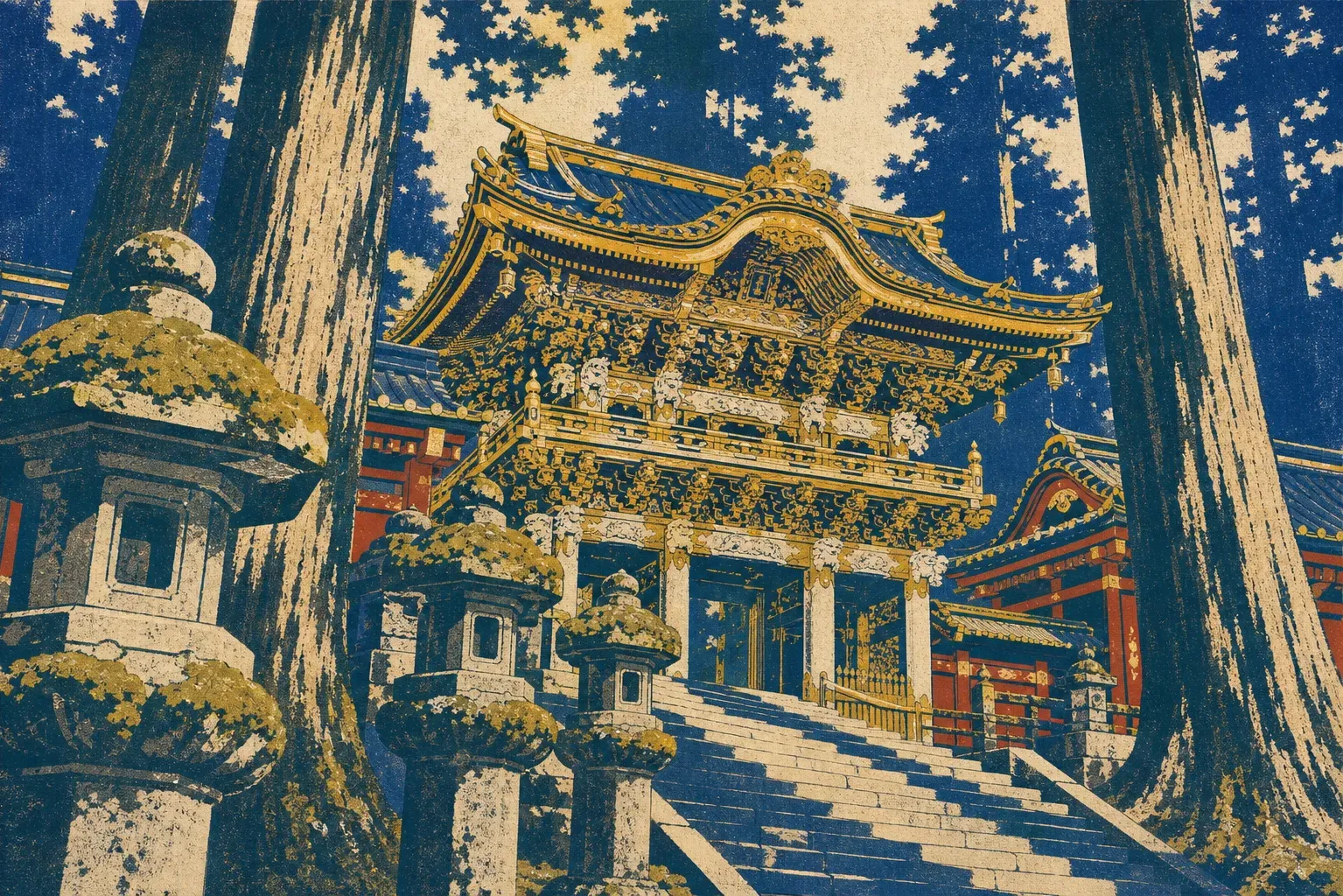
Nikko (Toshogu Shrine)
日光の社寺
- Tobu-Nikko Station / JR Nikko Station (gateway city: Utsunomiya)
- ≈2.5–3 h from Tokyo
- Depends on route — see Access
- autumn (mid-Oct to mid-Nov foliage)
Quick facts
- ≈2.5–3 h from Tokyo
- Tobu limited express roughly 3,000-3,300 yen one way; Shinkansen route about 5,500-6,000 yen
- Depends on route — see Access
- autumn (mid-Oct to mid-Nov foliage) · spring (late Apr-May, fresh green and Toshogu Grand Festival) · winter (quiet, occasional snow scenery)
- Tobu-Nikko Station / JR Nikko Station (gateway city: Utsunomiya)
- From March 31, 2026, Toshogu's on-site ticket machines accept cash only, so buy in advance. The shrine's own advance-purchase link goes to KKday (1,600 yen), and the Nikko City Tourism Association promotes NIKKO MaaS digital tickets; either way the QR code is scanned at Toshogu itself and swapped for a paper ticket, at the admission reception's group window No. 7 or at the Toshogu Museum, not at any station counter.
- Toshogu's Grand Autumn Festival runs October 16-17, 2026: yabusame horseback archery on the 16th and the samurai procession on the 17th. Book lodging about three months ahead and expect an extra 30-45 minutes in ticket lines.
Overview
Why it's inscribed
Nikko was inscribed in 1999 for 103 religious buildings belonging to two shrines and one temple, arranged across a forested mountainside shaped as deliberately as the architecture on it. The centerpiece is Toshogu, the mausoleum of Tokugawa Ieyasu, founder of the shogunate that held Japan in peace for roughly 260 years. His shrine began modestly in 1617; his grandson Iemitsu rebuilt it in the first half of the 17th century, reportedly with 127,000 craftsmen, and the result set the tone for an entire era of Japanese decoration. The gongen-zukuri mausoleum style reached its peak here, at Toshogu and at Iemitsu's own Taiyuin, and shaped shrine and temple architecture across the country afterward.
Two other things matter. This is a working religious center, not a preserved set: Futarasan Shrine has served the deities of Nikko's three sacred mountains since the monk Shodo Shonin founded it in 782, and pilgrims still come. And Nikko kept the old blend of Shinto and Buddhism that Meiji-era policy stripped from most Japanese sites, so a Buddhist temple administers a shogun's mausoleum and pagodas stand inside shrine grounds. Sorting out which is which is half the fun.
What you'll actually see
Shinkyo Bridge
Before any ticket gate, you pass the vermilion Shinkyo Bridge arcing 28 meters over the Daiya River. It technically belongs to Futarasan Shrine, and the founding legend has two serpents forming a crossing so Shodo Shonin could reach the sacred mountains. Counted among Japan's three most unusual bridges, it photographs best from the modern road bridge beside it, which costs nothing; walking onto Shinkyo itself runs 300 yen, cash only, as of 2026. Cross if you want the ceremony. Otherwise take the picture and start up the hill.
Rinnoji Temple
Up the slope from the bridge sits Nikko's most important Buddhist temple, also founded in the eighth century by Shodo Shonin. Its main hall is the Sanbutsudo, the Three Buddha Hall, with the Shoyoen garden alongside. The useful thing to know here: the 900-yen combined ticket (2026) covers both the Sanbutsudo and Taiyuin, Iemitsu's mausoleum at the far end of the precinct, which Rinnoji administers. Buy it now and your last stop is already paid for.
Nikko Toshogu Shrine
Everything funnels toward Toshogu, Ieyasu's mausoleum-shrine. The Five-Story Pagoda stands in the free forecourt before the Omotemon ticket gate, so see it on the way in; its central pillar hangs suspended rather than resting on the ground, and viewing that interior costs a separate fee. Past the gate come the storehouse carving of "imagined elephants," done by an artist who had never seen one. The famous three wise monkeys decorate the sacred stable nearby; they are smaller than photos suggest. Beyond rises Yomeimon Gate, arguably the most ornate structure in Japan, brilliant again since the Heisei-era restoration finished. Inside Honjido Hall a priest claps beneath the painted Crying Dragon and the ceiling answers with a ringing echo. The main shrine enshrines Ieyasu alongside Toyotomi Hideyoshi and Minamoto Yoritomo.
Ieyasu's tomb
Look up at the small Nemurineko, the sleeping cat carved over Sakashitamon Gate, then start climbing: 207 stone steps through cedar forest to the Inner Sanctuary where Ieyasu actually lies. After the gilding below, the tomb is austere, almost plain, and that contrast is the point. The round trip takes about 30 minutes. Do it early in your visit, while your legs are willing; postponing the climb until you are templed-out is the classic Nikko regret.
Futarasan Shrine
A few minutes' walk west of Toshogu and far older in origin, Futarasan is dedicated to the deities of Nikko's three sacred mountains: Nantai, Nyoho, and Taro. The free grounds hold vermilion pavilions and sacred trees; 300 yen (2026) opens a small forested garden with a spring, old sacred trees, and closer views of the main hall. Keep an eye out for the Bakedoro, a "ghost lantern" whose surface carries scars said to be from samurai who slashed at it in the dark. The whole precinct feels calmer and older than its famous neighbor, and works as a pressure release between the two mausoleums.
Taiyuin
Iemitsu, the shogun who paid for Toshogu's splendor, chose a deliberately quieter grave for himself out of deference to the grandfather he glorified. His mausoleum sits at the western edge of the precinct, administered by Rinnoji, and most tour groups never reach it, so you can stand alone at gates that would draw crowds anywhere else. It opens at 8:00, a full hour before Toshogu; entry is 550 yen (2026) or included in the Rinnoji combined ticket. Seeing it first, in morning quiet, is the best hour in Nikko.
Worth knowing
The precinct rewards a structured morning: Taiyuin at 8:00, then Toshogu the moment it opens at 9:00. Even in February around 40 people are waiting at opening, a line forms at Honjido by 10:00, and by late morning the ticket queue can stretch past 100 meters. Budget honestly, too. The Toshogu circuit alone runs close to two hours, and the full precinct takes four to five.
Shoes come off twice inside Toshogu, at the Main Shrine and Honjido, so wear slip-ons. No photography inside shrine interiors or the Toshogu Museum. If you collect goshuin, bring cash (500 yen each, 1,000 yen for the limited Crying Dragon stamp as of 2026) and get each one as you pass its office; the layout punishes a backtracking sweep at the exit.
One last trap: restaurants around the shrines close between 17:00 and 18:00. Make lunch the main meal, and save only a hotel dinner or a station-area chain for the evening.
Highlights
Nikko Toshogu Shrine, the lavishly decorated mausoleum of Tokugawa Ieyasu
Yomeimon Gate, covered in more than 500 carvings
Famous carvings: the Three Wise Monkeys and the Sleeping Cat (Nemuri-neko)
Futarasan-jinja Shrine, rooted in ancient mountain worship of Mt. Nantai
Rinnoji Temple with its Sanbutsudo (Three Buddha Hall)
Shinkyo sacred vermilion bridge and the giant cedar-lined approach
Getting there from Tokyo
Tobu Railway limited express (SPACIA / SPACIA X 'Kegon') direct from Asakusa (some services from Shinjuku via JR-Tobu direct trains) to Tobu-Nikko Station in about 1h50m; alternatively Tohoku Shinkansen to Utsunomiya (~50 min) then JR Nikko Line (~45 min). From the station, World Heritage loop bus ~10 min or a 30-40 min walk to the shrine precinct.
Where to base & what to eat
Where to base
Central Nikko / station area
The only base that makes an 8:00 Taiyuin start painless, with the historic Nikko Kanaya Hotel among the options, but nights are quiet and true onsen are scarce.
Kinugawa Onsen
Large riverside ryokan baths about 30 minutes away on the Tobu line; the hot springs deliver even though stretches of the town feel dated.
Chuzenji Onsen (Oku-Nikko)
Lakeside ryokan up the Irohazaka switchbacks with real national-park scenery, but once the day-trippers leave, dinner outside your hotel barely exists.
Yumoto Onsen
A quiet sulfur-spring hamlet at the park trailheads, ideal if you're pairing the shrines with hiking, but it sits 80 minutes by bus (1,950 yen, 2026) from the heritage precinct.
What to eat
Yuba (tofu skin) cuisine
Nikko's signature, rooted in monk cooking: lunch courses at Ganso Nikko Yuba Ryori Ebisuya run 2,000-3,500 yen (2026), or grab an age-yuba manju at Sakaeya near Tobu-Nikko Station for about 200 yen.
Natural-ice kakigori
Shaved ice cut from winter-harvested ice ponds; Shogetsu Himuro, in business since 1894, serves roughly 25 seasonal flavors from around 800 yen (2026).
Tochigi Wagyu
The local premium beef: iron-plate steaks from 2,500 yen (2026) at Gourmands Wagyu, or a wagyu lunch with waterfall views at Yama no Restaurant on the Kirifuri highlands.
Santate soba
Freshly milled, rolled, and boiled buckwheat at Nagahataan for 900-1,400 yen (2026); a fast, honest lunch between shrine complexes.
Official links
Fares, hours and closures change with little notice. These are the operators' and authorities' own pages — worth a look close to your travel dates.
Related stories
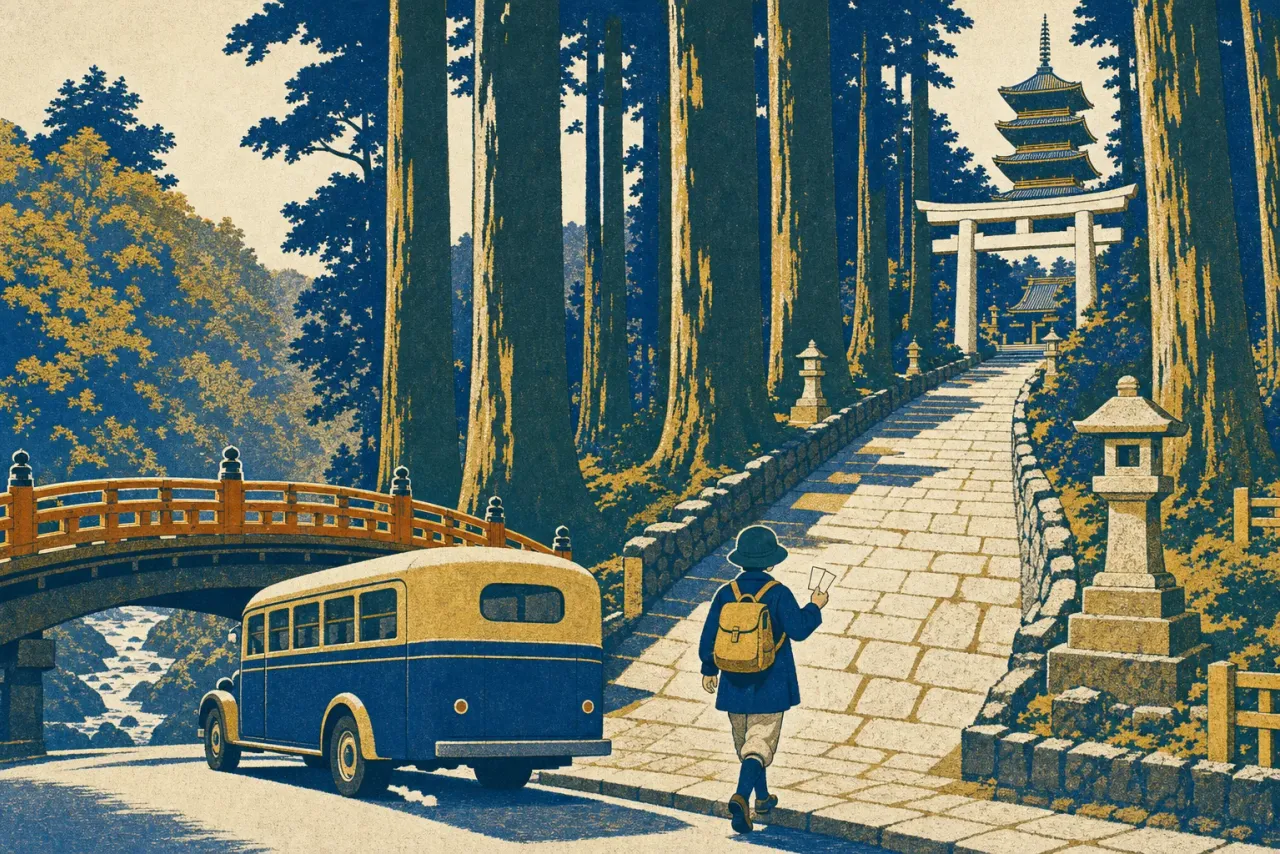
Nikko in One Day: The No-Backtracking Route from Asakusa to Ieyasu's Tomb
The train, the right bus stop, the ticket exchange, and the climbing order that turn Tokyo's favorite day trip into five smooth hours instead of a 100-meter queue.
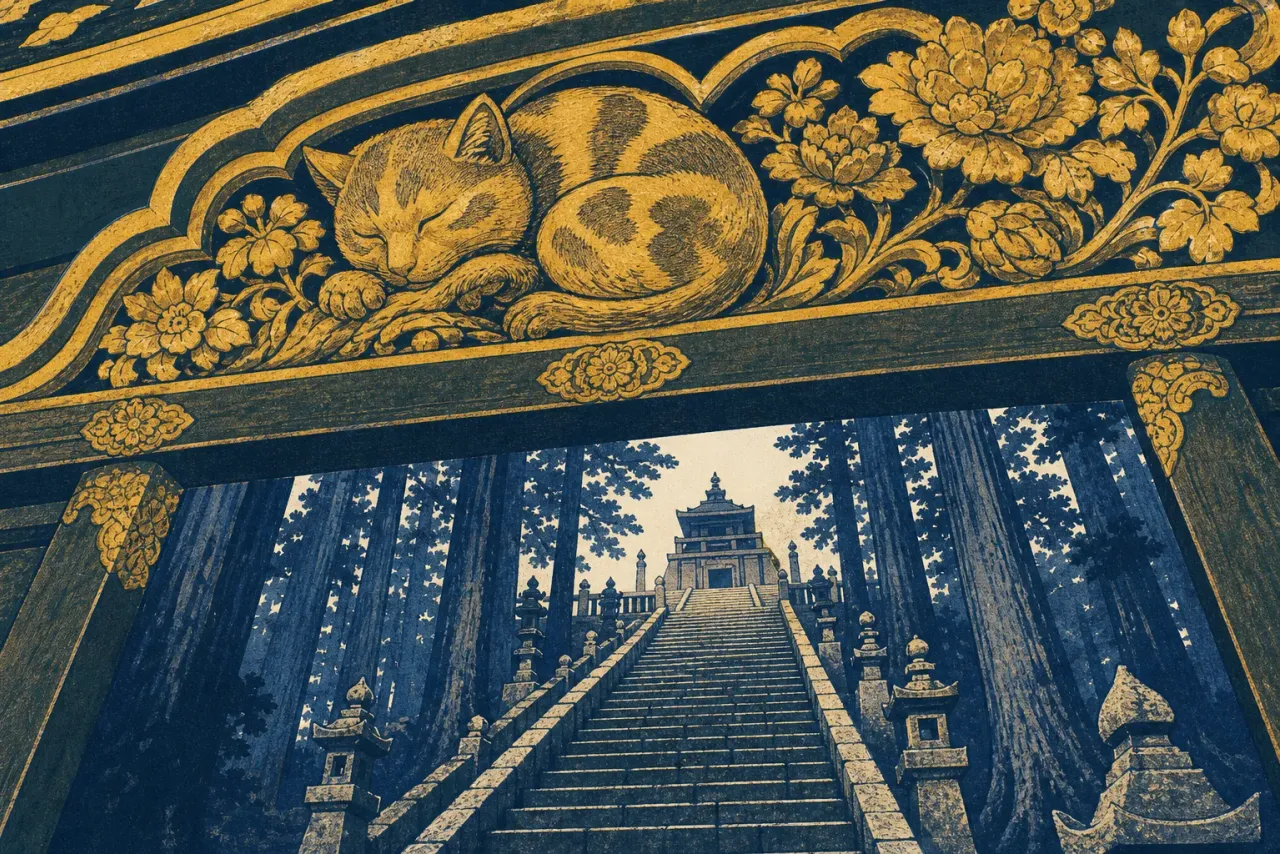
Why is Toshogu so gaudy? Reading the monkeys, the cat, and the politics of gold
Toshogu's gold was a government proclamation issued in carving and leaf. How to read the monkeys, the sleeping cat, and the plain stone tomb at the top of 207 steps.