Nikko in One Day: The No-Backtracking Route from Asakusa to Ieyasu's Tomb
The ticket line at Nikko Toshogu measures, with some precision, how well you planned your morning. By 11:00 it can run past 100 meters. The people at the back will shuffle shoulder to shoulder past the Three Wise Monkeys sometime after noon. The people who walked through the gate at 9:00 sharp are already up at Tokugawa Ieyasu's tomb, alone among the cedars. Same shrine, same 1,600-yen ticket (2026 price). The difference was decided back in Tokyo, around 7 a.m.
Nikko is genuinely doable as a Tokyo day trip, but it is a sequencing problem, not a distance problem. The trains are fine. What kills people is dead time: the wrong transfer, the wrong bus stop, an hour in a ticket queue, a 207-step climb postponed until mid-afternoon legs. Solve the sequence and the whole World Heritage precinct, 103 buildings belonging to two shrines and a temple, fits into five hours with a proper lunch.
Take the Tobu train, and buy tickets before you leave
Two ways up. The Tobu limited express, the SPACIA or the newer SPACIA X, runs from Asakusa to Tobu-Nikko in about an hour and 50 minutes, one seat the whole way. The alternative is the Tohoku Shinkansen to Utsunomiya in roughly 50 minutes, then the JR Nikko Line for another 45. The shinkansen combination looks faster on paper and rarely is once the Utsunomiya transfer is factored in. Unless a JR Pass is paying for it, board at Asakusa, and reserve your return seat while you're at it.
Buy your Toshogu admission before leaving Tokyo, too. Since March 31, 2026, the shrine's on-site ticket machines take cash only, and by late morning the queue for them is the 100-meter line from the opening paragraph. Buy through the channel the shrine itself links, KKday, at 1,600 yen; the Nikko City Tourism Association's NIKKO MaaS digital tickets work the same way.
Understand what the e-ticket actually buys you, though, because this is where people build false confidence. It is not a turnstile pass. You still redeem it at the shrine: staff scan the QR at Toshogu's own admission reception, at group window No. 7, or at the Toshogu Museum, and hand you a physical ticket. What you skip is the general ticket line and the cash-only machines, and that redemption counter is a great deal shorter than the queue beside it. What you do not do is exchange anything at the Tobu-Nikko Station Tourist Center; that counter sells bus passes, not shrine admission, and a detour there costs you the head start you got up at 7 a.m. for.
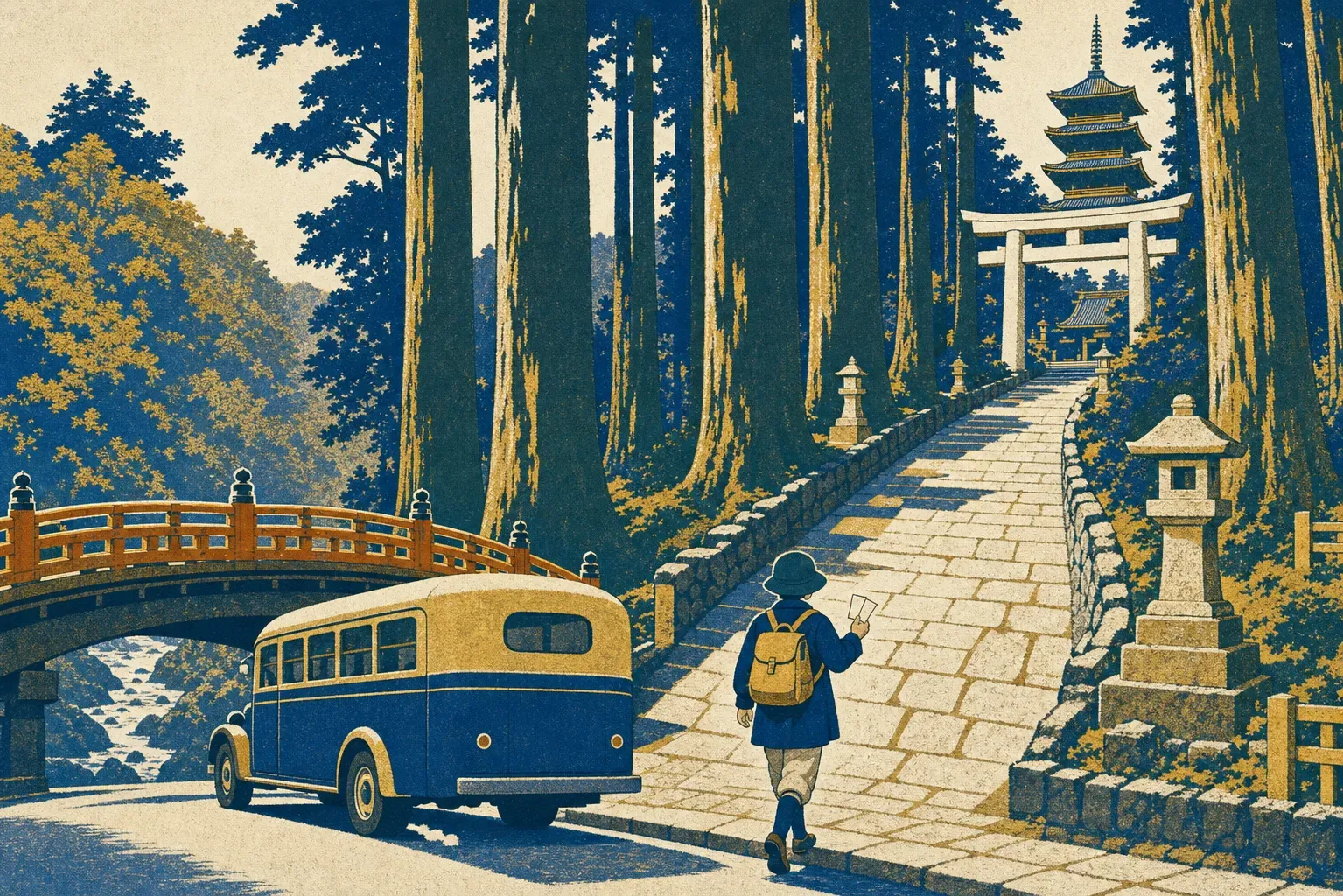
From the station, the World Heritage loop bus reaches the precinct in 10 to 13 minutes (350 yen a ride, 600 yen for a day pass, 2026). Here is the classic first-timer error: getting off at the first stop that sounds plausible. Stay on until Yasukawacho or Omotesando; anything earlier strands you at the bottom of a long hill. Walking from the station is pleasant but uphill, and eats 30 to 40 minutes you will want later.
Use the 8:00 hour at Taiyuin
Toshogu opens at 9:00. Taiyuin, a short walk deeper into the forest, opens at 8:00, and almost nobody exploits the gap. This is the mausoleum of Iemitsu, the third shogun, the grandson who turned Ieyasu's modest 1617 shrine into the gilded complex you came for. His own tomb was kept deliberately quieter out of deference to his grandfather, and tour groups skip it, which is exactly backward. The gates climb the hillside in stages, the cedar shade does half the work, and at 8:15 you may have the courtyards to yourself. Admission is 550 yen (2026), or 900 yen on Rinnoji's combined ticket with the Sanbutsudo hall. Fifty minutes covers it without hurrying.
Then walk back and stand at Toshogu's gate for the 9:00 opening. You won't be alone; on one February weekday, about 40 people were waiting when the doors opened. You will, however, be a full hour ahead of the tour buses.
The no-backtracking circuit inside Toshogu
The grounds funnel uphill, so work with gravity exactly once.
Before you hand your ticket over at Omotemon, stop in the free forecourt for the five-story pagoda; its central pillar hangs suspended, touching nothing, and going inside to see that is a separate charge. Through the gate, take the carvings along the lower courtyard next: the Three Wise Monkeys and the famous imagined elephants. Look now, because by noon this stretch is elbow to elbow. Yomeimon Gate follows, white and gold and crawling with carved sages and beasts. It earns ten minutes of simply standing there.
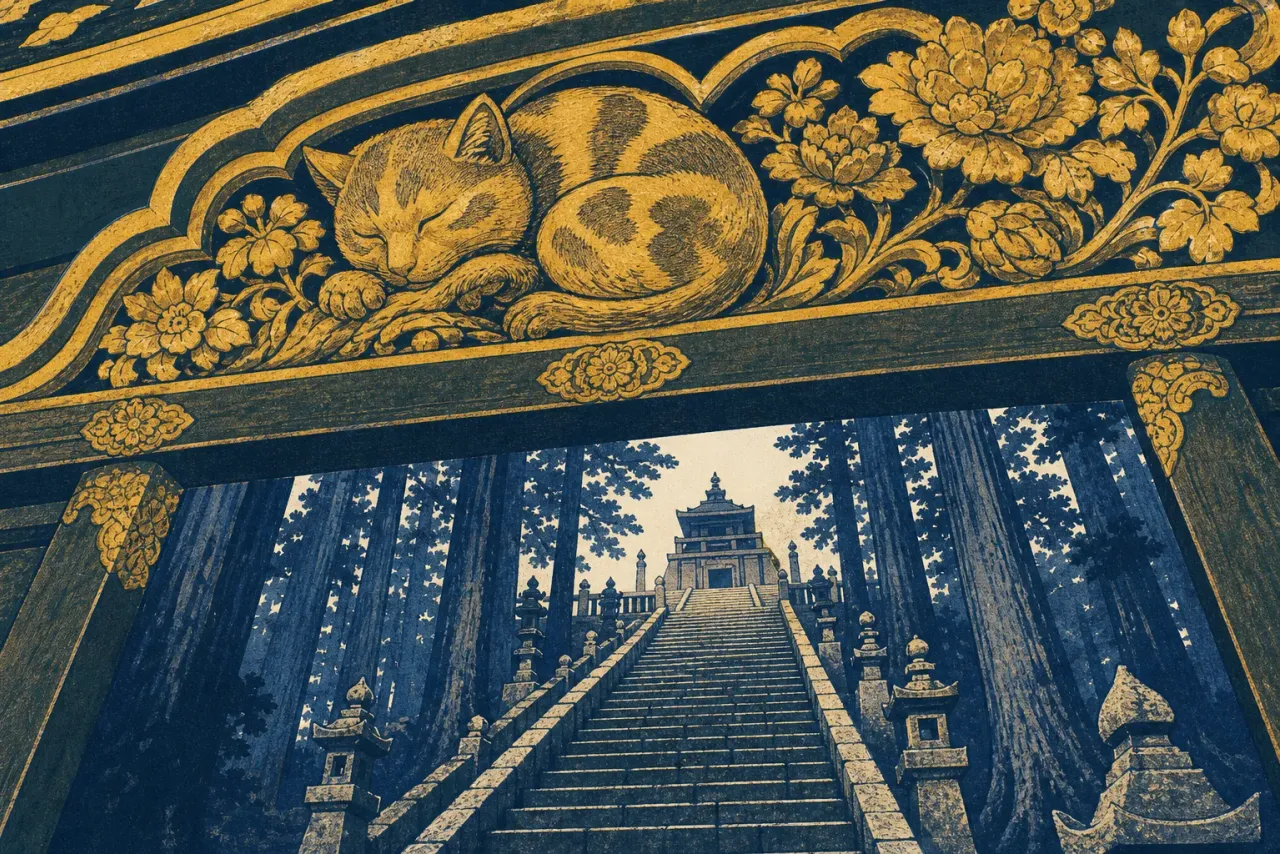
Now the counterintuitive move. Find the sleeping cat carving over the Sakashitamon Gate (small, easy to miss, worth the look up), then climb the 207 stone steps to the Inner Sanctuary immediately, while your legs are fresh. The tomb is the opposite of everything below it: austere, quiet, a dignified urn among enormous trees. The round trip takes about 30 minutes. Nearly everyone saves this climb for last and regrets it.
Come down and finish with the main shrine and Honjido hall, where a priest claps beneath the Crying Dragon ceiling to set off its strange ringing acoustic. Lines form here by 10:00, which is precisely why it goes last on this route. Two logistics notes: shoes come off twice, at the main shrine and at Honjido, so wear slip-ons; and collect goshuin stamps as you pass each office rather than saving them for the exit, or you'll re-climb the entire hill. Stamps run 500 yen in cash, and Honjido sells a limited Crying Dragon version for 1,000 yen (2026).
A full circuit takes about an hour and 50 minutes. The Toshogu Museum adds 30 more and holds Ieyasu's armor and letters; the 2,400-yen combo ticket (2026) is the sensible way to buy it, but on a one-day schedule I'd skip the museum unless the weather turns.
One calendar caveat: on May 17 and 18, and again October 16 and 17, the shrine's Grand Festivals bring yabusame horseback archery on the first day and a costumed samurai procession on the second; the spring procession fields more than 1,200 participants, and ticket queues run 30 to 45 minutes longer than usual. Decide in advance which side of that trade you want.
Lunch is dinner in Nikko
Eat your real meal at midday, and make it yuba, the tofu skin that began as monks' cuisine here. This is not just a recommendation but a constraint: nearly everything near the shrines closes between 17:00 and 18:00, and by evening your options shrink to hotel dining rooms and a Gyoza no Ohsho open until 21:00.
Nikko Yubamaki Zen, on the old Nikko Kaido near Toshogu, rolls yuba around Tochigi Wagyu or sea bream from about 900 yen a piece (2026). Ganso Nikko Yuba Ryori Ebisuya serves full course lunches for 2,000 to 3,500 yen. In warm weather, Shogetsu Himuro, cutting natural pond ice since 1894, does kakigori shaved ice for around 800 yen.
With the big sites done by early afternoon, the rest is optional in the best way. Futarasan Shrine next door has free grounds, a 300-yen garden (2026), and a lantern said to bear samurai sword scars. On the walk down, you pass Shinkyo Bridge, the vermilion 28-meter span over the Daiya River. Walking it costs 300 yen in cash (2026); the better photograph is free, from the road beside it.
Back at Tobu-Nikko Station with time before your limited express, find Sakaeya, steps away, and hand over about 200 yen (2026) for an age-yuba manju, a deep-fried, lightly salted bun eaten standing on the pavement. It is the correct last taste of Nikko, finished about the time the train doors open.