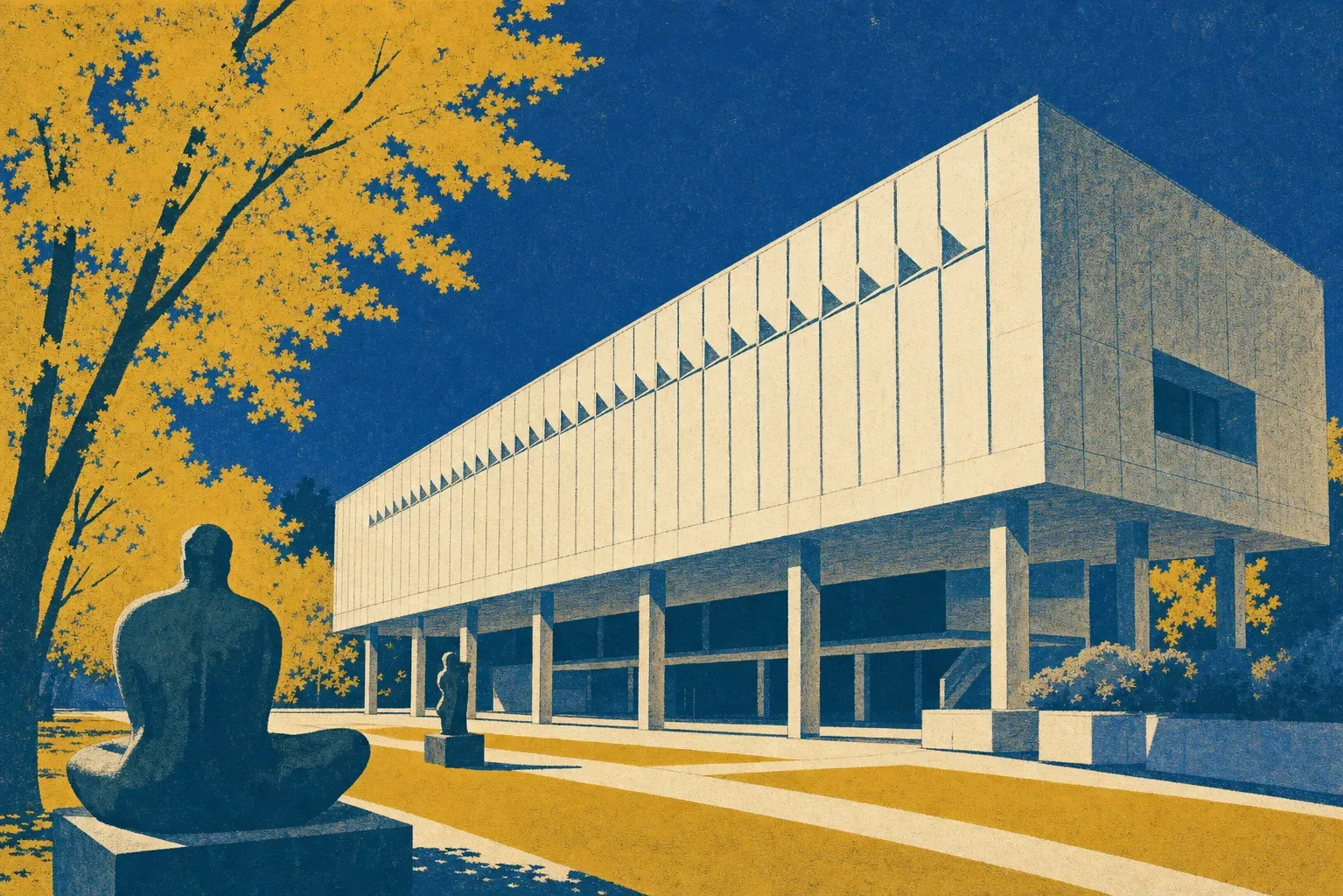
National Museum of Western Art (Le Corbusier)
ル・コルビュジエの建築作品―近代建築運動への顕著な貢献(国立西洋美術館)
- JR Ueno Station (Park Exit), Tokyo
- ≈20–30 min from Tokyo
- Depends on route — see Access
- year-round
Quick facts
- ≈20–30 min from Tokyo
- train about 200 yen (after the March 2026 JR East fare revision); permanent collection admission 500 yen
- Depends on route — see Access
- year-round · spring (Ueno Park cherry blossoms)
- JR Ueno Station (Park Exit), Tokyo
- The permanent-collection galleries close for maintenance from January 12 to March 19, 2027; the Le Corbusier exterior, pilotis, and restored forecourt remain viewable free of charge.
- Groups of 20 or more must reserve via the museum's group form at least one week in advance; without a reservation the group is still admitted but pays individual rather than group rates. Individual visitors need no reservation for the permanent collection.
- NMWA schedules multi-week full closures for exhibit replacement — it shut entirely from February 16 to March 27, 2026 — so check the calendar on nmwa.go.jp against your dates before booking travel around a visit.
Overview
Why it's inscribed
Seventeen buildings in seven countries share this listing, and Tokyo holds exactly one of them. In July 2016, UNESCO inscribed "The Architectural Work of Le Corbusier" as a single transnational property: houses in Stuttgart and Antwerp, the chapel at Ronchamp, the Capitol Complex in Chandigarh, and, in Ueno Park, the National Museum of Western Art. It is the only building Le Corbusier realized in East Asia. The case rested on the idea that no single structure could represent what modern architecture did to the 20th century; the movement reshaped everything from workers' housing to government capitols, so the listing spans four continents too.
The Tokyo chapter is also a diplomatic story. Shipping magnate Kōjirō Matsukata bought European art in bulk from 1916 into the early 1920s. The works still in France after World War II were sequestered as enemy property, and France agreed to return 370 of them on one condition: a French architect would design the museum that housed them. The building that opened on June 10, 1959 is a peace settlement poured in concrete. Recognition took longer than construction did. Japan first nominated the museum in 2007, ICOMOS initially recommended against inscription, and approval finally came on July 17, 2016 — nine years after the first attempt.
What you'll actually see
The forecourt
Start here, because it costs nothing. The 2020–2022 renovation stripped out decades of accumulated planting and returned the front garden to Le Corbusier's original conception, with the sculptures back in their intended positions. This is the closest you can get to seeing the 1959 design as designed, and it sits outside the ticket gate: open on Mondays, open during gallery closures, open to anyone cutting through Ueno Park. Give it ten minutes on the way in, not a glance on the way out.
The pilotis
The gallery box never touches the ground. It floats on exposed cast-concrete columns, seven per side, leaving the ground level open in the way Le Corbusier had argued for since the 1920s. Walk under the building before you enter and put a hand on the rough concrete. Then consider what you cannot see: since a 1998 retrofit, Japan's first full-scale base isolation of a building of this kind, the entire structure including the basement rests on seismic isolators that protect both the architecture and the paintings in an earthquake.
The 19th Century Hall
Past the entrance you land in a double-height hall lit from above, the core the whole building wraps around. Proportions here and throughout follow the Modulor, Le Corbusier's measuring system derived from the human body, which is why the spaces feel scaled to a person rather than to an institution. The four troughs that originally pulled in natural light are now artificially lit to protect the art, a visible compromise between 1959 intent and modern conservation.
The ramp
There is no grand staircase. You rise from the hall to the galleries on a slope lined with sculpture, Le Corbusier's promenade architecturale, the building revealing itself as you climb. It is the single most important thing here to do slowly. Visitors regularly walk it eyes-down, hunting the next painting, and miss the only Le Corbusier work in East Asia. Stop halfway and look back into the hall.
The ring galleries
The plan is a square with galleries spiraling around the central hall, a concept Le Corbusier called the Museum of Unlimited Growth: as the collection expanded, the building could in theory keep coiling outward. Tokyo is one of only a handful of realized versions. Inside hangs the point of it all, roughly 4,500 works from the 14th century to the early 20th, with the Matsukata Collection at the core, Monet and Van Gogh through Picasso, plus a major Rodin holding. Permanent-collection admission is 500 yen for adults as of 2026.
The New Wing
Le Corbusier visited Tokyo only briefly and drew the basic design; working drawings and site supervision fell to three Japanese former students of his atelier, Junzō Sakakura, Kunio Maekawa, and Takamasa Yoshizaka. In 1979 Maekawa returned to add the New Wing, deep-green tile laid out to spare the existing trees around an inner courtyard, and in 1997 his successor firm buried the Special Exhibition Wing beneath the forecourt. Skipping it loses what makes this site different from every other Tokyo art museum: one admission reads the whole lineage in built form, 1959, 1979, 1997.
Worth knowing
Come on a Friday or Saturday if you can. The museum stays open until 20:00 those two nights (17:30 otherwise), and the final hours are the quietest time all week to walk the ramp. Last admission is 30 minutes before closing, and the door means it. Mondays are closed, with a twist worth memorizing: when Monday is a national holiday, the museum opens that day and closes the following weekday instead. Nearly every museum in Ueno Park follows the same pattern, so a regular Monday here is a wasted day.
Ticketing has one trap. If a special exhibition is running, its ticket already includes the permanent collection, so buying both wastes the price of the permanent ticket. Admission is free for anyone under 18 or 65 and over; carry your passport as proof. The desk takes credit cards and Suica, but the coin lockers want a 100-yen coin, returned when you retrieve your bag. Photography rules differ between the permanent collection and special exhibitions, so check the signs at each entrance rather than assuming. Budget 45 to 60 minutes for the Le Corbusier building alone, and close to three hours if a special exhibition is on.
Highlights
Le Corbusier's Main Building (1959) with pilotis and Modulor-based proportions
The 19th Century Hall, the museum's dramatic central atrium
Rodin sculptures in the free forecourt garden, including The Thinker and The Gates of Hell
The Matsukata Collection of European paintings (Monet, Renoir and others)
Location inside Ueno Park, next to Tokyo's other major museums and the zoo
Getting there from Tokyo
JR Yamanote Line or Ueno-Tokyo Line from Tokyo Station to Ueno Station (about 8 min), then about 1 minute on foot from the Park Exit into Ueno Park. Closed Mondays; open 9:30-17:30 (to 20:00 Fri/Sat).
Where to base & what to eat
Where to base
Ueno (around JR Ueno Station)
A one-minute walk from the museum with good-value business hotels and hostels clustered near the station, though the Ameyoko side is noisy after dark and there is almost nothing at the design or luxury end.
Asakusa
Ten minutes away with the best nearby stock of traditional ryokan and small family-run inns, but there is no JR line, so most cross-city trips need a transfer.
Yanaka / Nezu / Sendagi (Yanesen)
Small guesthouses and machiya-style stays in low-rise old-Tokyo lanes, with a quiet walk into Ueno Park from the north, at the cost of few rooms and very limited late-night dining.
Tokyo Station / Nihonbashi
Eight minutes from Ueno on the Yamanote or Ueno-Tokyo Line and the place for full-service and luxury hotels, though rates run markedly higher and the district goes quiet at night.
What to eat
Edomae unagi (grilled eel)
Izuei has served eel in Ueno since the early 1700s; its Honten near Shinobazu Pond, about ten minutes from the museum, is the neighborhood's proper sit-down splurge.
Yōshoku (Japanese-Western cooking)
Seiyōken, founded in Tsukiji in 1872 and in Ueno Park since 1876, is one of Japan's oldest Western restaurants, the exact culinary counterpart to a museum built for Western art, with a terrace over the park.
Seafood bowls and grilled skewers
Ameyoko, the roughly 500-meter strip of some 400 shops under the tracks between Ueno and Okachimachi stations, grew out of the postwar black market and remains the essential post-museum eating walk.
Lunch without leaving the museum
CAFÉ Suiren, named for Monet's water lilies, sits inside the museum and lets you break a multi-museum Ueno day without re-crossing the park or re-queuing.
Official links
Fares, hours and closures change with little notice. These are the operators' and authorities' own pages — worth a look close to your travel dates.
Related stories
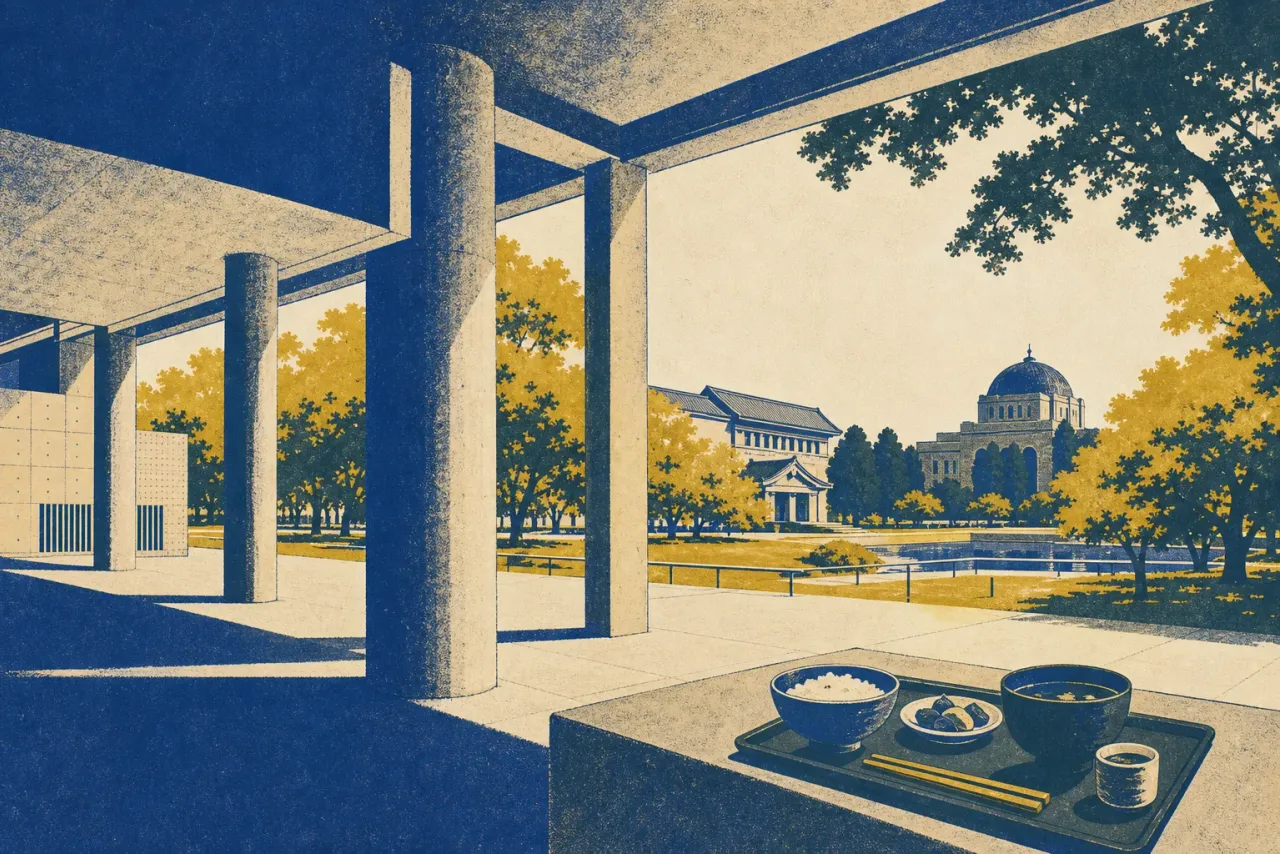
Half a day in Ueno: one World Heritage museum, four more, and where to eat after
How to build an easy half day around the National Museum of Western Art: honest timings for the Le Corbusier building, which one of Ueno Park's other museums to add, and where to eat when you're done.
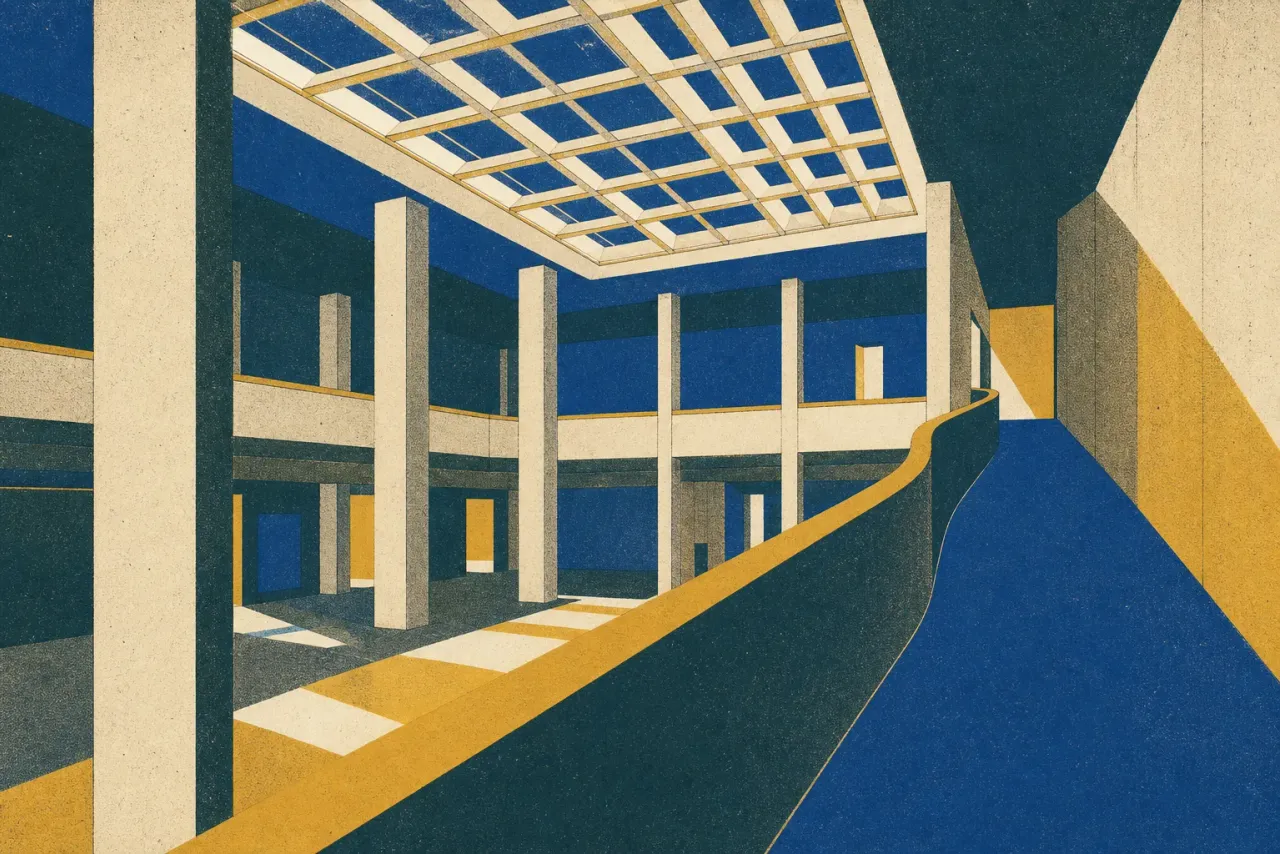
The Only Le Corbusier in East Asia: How to Read a Building in 45 Minutes at Ueno
The National Museum of Western Art is on the UNESCO list for its building, not its paintings. A slow 45-minute walk through the forecourt, the pilotis, the skylit hall, and the ramp shows you why.