Half a day in Ueno: one World Heritage museum, four more, and where to eat after
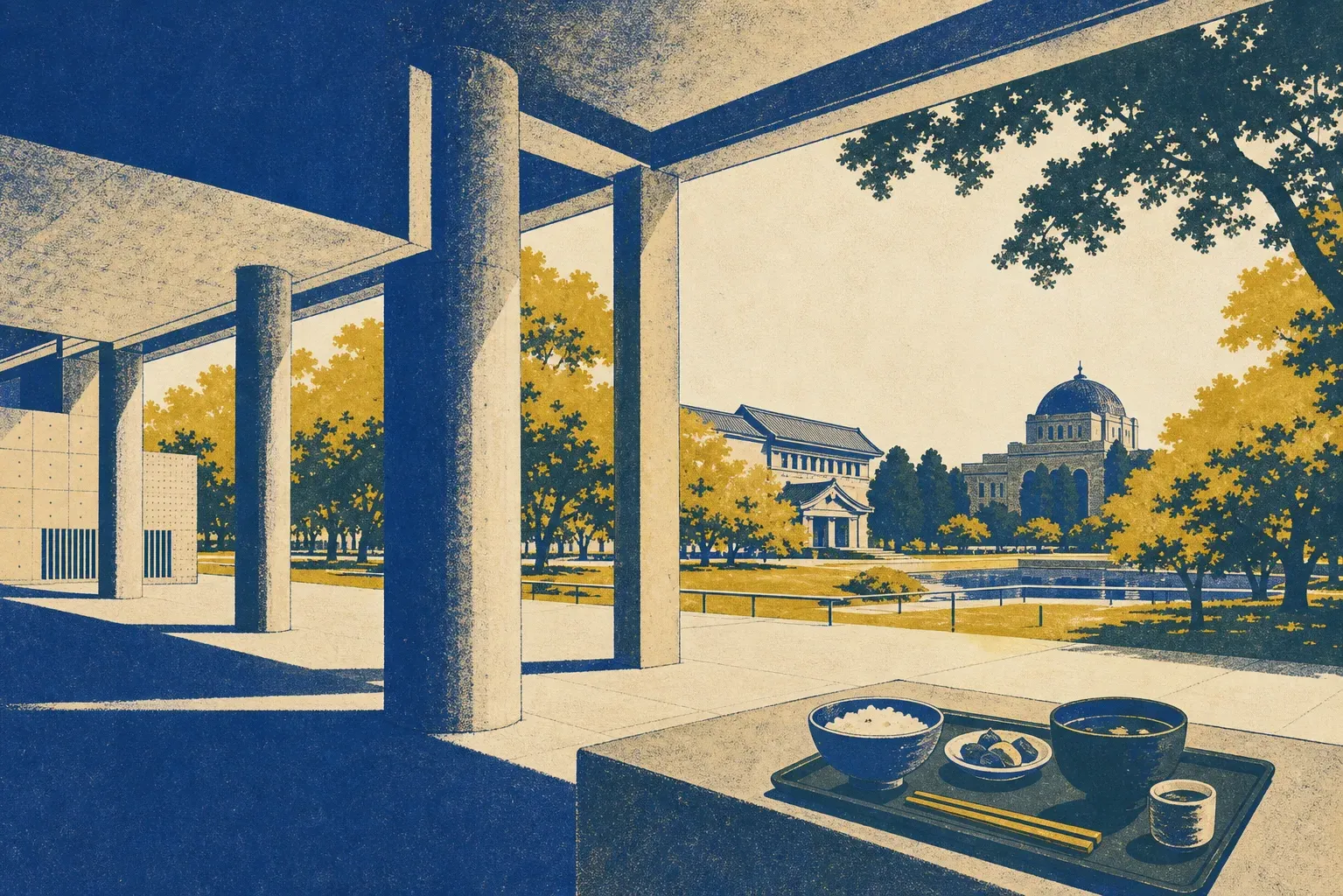
Start with a date you need before anything else: from January 12 to March 19, 2027, the permanent-collection galleries at the National Museum of Western Art close for maintenance. If you are planning a winter 2027 trip around the Matsukata Collection's Monets and Rodins, move the trip or accept the substitute — the Le Corbusier building's exterior and its restored forecourt stay viewable, free, the whole time. Every other week of the year, this museum anchors the easiest half day in Tokyo.
Here is why it's easy. From Tokyo Station, the JR Yamanote or Ueno-Tokyo Line puts you at Ueno Station in about 8 minutes. Take the Park Exit and the museum is roughly one minute on foot. From Shinjuku the ride is 24 minutes; from Haneda Airport, plan on about 50. There is no mountain shrine here, no bus timetable to decode. You walk out of a train station and stand in front of the only building Le Corbusier ever completed in East Asia, one of 17 sites across seven countries that UNESCO inscribed together in 2016.
The museum, timed honestly
The Main Building opened in 1959 to house the Matsukata Collection, European art that had spent the postwar years impounded in France and came home with a French architect attached to the deal. Le Corbusier supplied the design; his Japanese former students carried out the construction.
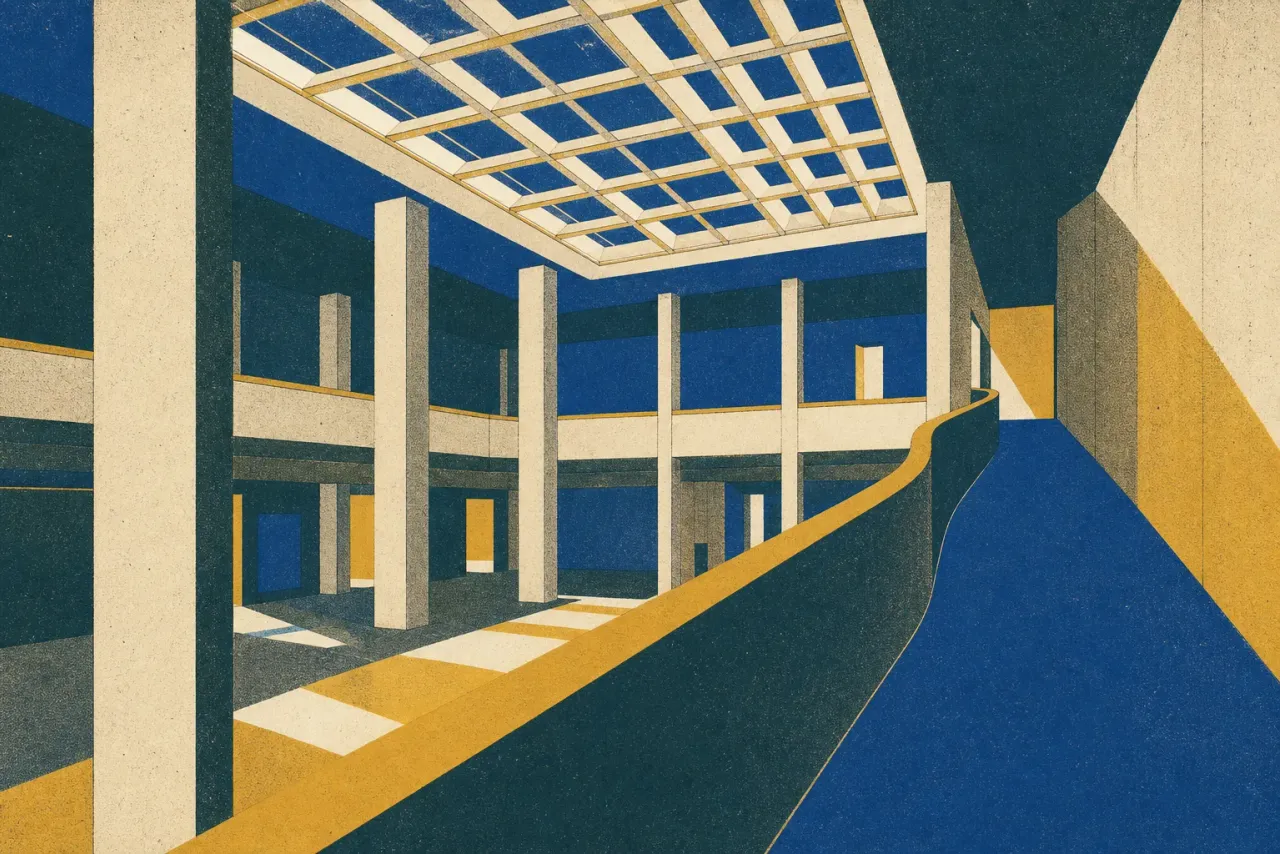
Give the Corbusier building itself 45 to 60 minutes. Outside, the gallery box floats on cast-concrete columns. Inside, the double-height 19th Century Hall opens overhead under a skylight, and from there a ramp, not a staircase, carries you up into the galleries. Walk it slowly; that slope is the point of the whole building. Add the 1979 New Wing, designed by Kunio Maekawa, one of those former students, where much of the collection hangs, and you're at 1.5 to 2 hours. A special exhibition pushes the visit to 2.5 or 3.
Hours run 9:30 to 17:30, with last admission 30 minutes before close, extending to 20:00 on Fridays and Saturdays. That evening slot is the quietest window of the week, and the best time to have the ramp nearly to yourself. Closed Mondays, with a twist that catches people in both directions: when a national holiday lands on a Monday, the museum opens that day and closes the following weekday instead. Check the calendar for your specific week rather than assuming. It also closes December 28 through January 1, and almost everything else in the park shares the Monday habit, so a Monday in Ueno is largely a wasted day.
Admission to the permanent collection is ¥500 for adults and ¥250 for university students as of 2026. Anyone under 18, anyone 65 or over, and disability-certificate holders with one carer enter free; carry a passport or ID as proof. If a special exhibition is on, its ticket already includes the permanent collection, so don't buy both. Free permanent-collection days exist too: the second Sunday of every month, branded Kawasaki Free Sunday, plus May 18 and November 3. Crowds scale accordingly.
Two small mechanical points. The ticket desk takes credit cards and e-money, Suica included, so you don't need cash to get in. The coin lockers do need a single ¥100 coin, returned when you retrieve your bag. And groups of 20 or more must book through the museum's form at least a week ahead; a group that turns up unannounced still gets in, but loses the group rate of ¥400 for adults and ¥200 for university students and pays individual admission instead.
Four more museums within a ten-minute walk
Ueno Park exists because of a war. Kaneiji, the Tokugawa family temple that owned this hill, burned in the Boshin War of 1868, and the park opened on its former grounds in 1873 as one of Japan's first Western-style public parks. The institutions that have filled it since are the reason your half day can go several directions from the same train exit.
Tokyo National Museum (¥1,000) holds the country's deepest collection of Japanese art and is the pick if you want a counterweight to all that European painting. The National Museum of Nature and Science (¥630) is the strongest rainy-day option with kids. The Tokyo Metropolitan Art Museum runs rotating exhibitions a few minutes further on. Ueno Zoo, Japan's oldest, keeps around 3,000 animals across roughly 300 species for a ¥600 ticket. Then there's the free layer: Kaneiji's surviving halls, the Kiyomizu Kannon-dō, and Bentendō out on its island in Shinobazu Pond, which was landscaped to evoke Lake Biwa. Ueno Tōshōgū costs nothing to approach, ¥700 for the inner shrine — all 2026 prices.
My advice on building the half day: don't attempt three museums. Do the NMWA properly and pick one more, then spend the difference outdoors and at the table. The permanent collection plus the Tokyo National Museum makes a full, good afternoon. Museum fatigue is real, and it sets in around hour three no matter how strong the collections are.
Where to eat when you're done
Ameyoko is the fast, loud choice: about 500 meters and roughly 400 shops packed along and under the elevated tracks between Ueno and Okachimachi stations. It began as a postwar black market, its founding traders around 400 demobilized soldiers repatriated from Manchuria, and it still runs on that energy, with fishmongers shouting prices and standing bars wedged into the railway arches. Go hungry and graze; sitting down for long is not really the format.
For the opposite pace, Izuei has been grilling Edomae eel in Ueno for roughly 300 years, since the reign of the eighth shogun, Yoshimune. Its main shop sits by Shinobazu Pond, about ten minutes from the museum on the far side of the water. Unagi over rice in a lacquered box is Ueno's signature sit-down splurge, and after a morning of concrete and canvas it lands exactly right.
The thematically correct choice, though, is Seiyōken, one of Japan's oldest Western restaurants: the company opened in Tsukiji in 1872 and has run this branch inside Ueno Park since 1876. This is yōshoku, the Meiji-era Japanese adaptation of European cooking, served with a terrace over the park, a few hundred meters from a museum built to house Western art. The symmetry is hard to beat. If you'd rather not leave the building at all, CAFÉ Suiren inside the museum works well as a mid-visit reset on a two-museum day.
One final scheduling thought, because it's the single best move available: if your dates allow, run this whole plan on a Friday or Saturday. Do the other museum in the afternoon, then walk the NMWA's ramp after 18:00, when the day-trippers have gone and the 19th Century Hall goes quiet. Dinner afterward, at Izuei or under the arches. Just hold onto the two smallest details in this article: last admission on those evenings is 19:30, and the locker still wants its ¥100 coin.