Kumano Kodo & Koyasan (Kii Mountains)
紀伊山地の霊場と参詣道
- Shin-Osaka/Namba (for Koyasan), Nagoya or Kii-Tanabe/Shingu (for Kumano), Kyoto (for Yoshino)
- ≈5–6 h from Tokyo
- Depends on route — see Access
- spring (April cherry blossoms at Yoshino)
Quick facts
- ≈5–6 h from Tokyo
- roughly 17,000-20,000 yen one way combining Shinkansen and local limited express/bus
- Depends on route — see Access
- spring (April cherry blossoms at Yoshino) · autumn (Oct-Nov foliage, stable hiking weather) · early summer fresh green (avoid the June-early July rainy season)
- Shin-Osaka/Namba (for Koyasan), Nagoya or Kii-Tanabe/Shingu (for Kumano), Kyoto (for Yoshino)
- Book all Kumano Kodo lodging and Koyasan shukubo well in advance (kumano-travel.com covers the trail villages); walk-ins are not accepted, meals must be pre-ordered, and rural areas run on cash.
- Trail closures as of mid-2026: the Ohechi between Wabuka and Tako stations is closed until an estimated end of April 2027, the Shiomi-toge section is closed by landslide, and the road between Oto Onsen and Totsukawa Onsen is closed with no detour (the Yamato-Yagi–Shingu bus is suspended along it), so verify current status at tb-kumano.jp before walking.
- At Kinpusen-ji in Yoshino, the Nio-mon Gate is scaffolded for a restoration reported through fiscal 2028, but the National Treasure Zao-do main hall remains open.
Overview
Why it's inscribed
For more than 1,200 years, people have walked into the Kii mountains to pray, and they have not stopped. That continuity is the point. Inscribed in 2004, the property is not one monument but 242 separate elements: three sacred areas and the pilgrimage trails that link them. Pilgrimage routes are rare on the World Heritage list; the main company the Kii trails keep are the Santiago de Compostela routes, inscribed separately in Spain and in France.
What happened in these mountains happened nowhere else in Japan. Shinto, the native worship of nature, met Buddhism arriving from the continent, and instead of one displacing the other, they fused. Out of that fusion came Shugendo, a mountain asceticism in which waterfalls and forests are not backdrops for worship but the objects of it. Nachi Falls is a deity. So is the primeval forest behind it.
Each of the three areas carries different weight: Yoshino and Omine as the training ground of Shugendo, the Kumano Sanzan as the goal of the great medieval pilgrimages, and Koyasan as the monastic city Kukai founded in 816. Retired emperors made the Kumano journey from Kyoto on foot. The trails they wore into the ridgelines are inscribed too, which changes how you should think about a visit: this is a site you walk, not one you look at.
What you'll actually see
The Danjo Garan and Kongobu-ji, Koyasan
Most itineraries start here, on the plateau Kukai chose for his monastery in 816. The Danjo Garan is the ceremonial heart, anchored by the vermilion Konpon Daito pagoda; the pagoda and the Kondo hall each charge 500 yen as of 2026, or a 2,500 yen combination ticket covers both plus other sights. Kongobu-ji, head temple of the Koyasan Shingon sect, is a short walk away (1,000 yen as of 2026, 8:30 to 17:00, last entry 16:30). The town runs on temple time. See what you can before the gates shut, then let the evening belong to your shukubo.
Okunoin
Japan's largest cemetery is a two-kilometer avenue through giant cedars, past more than 200,000 tombstones, ending at the mausoleum where Kobo Daishi is believed to remain in eternal meditation. Entry is free, and the Torodo lantern hall opens at 6:00, which is exactly when to come; the avenue before breakfast is a different place than at midday. Past Gobyobashi Bridge the rules tighten: no photography, no food, no drink. This is the emotional summit of Koyasan, so give it more time than the guidebook hour.
The Nakahechi trail
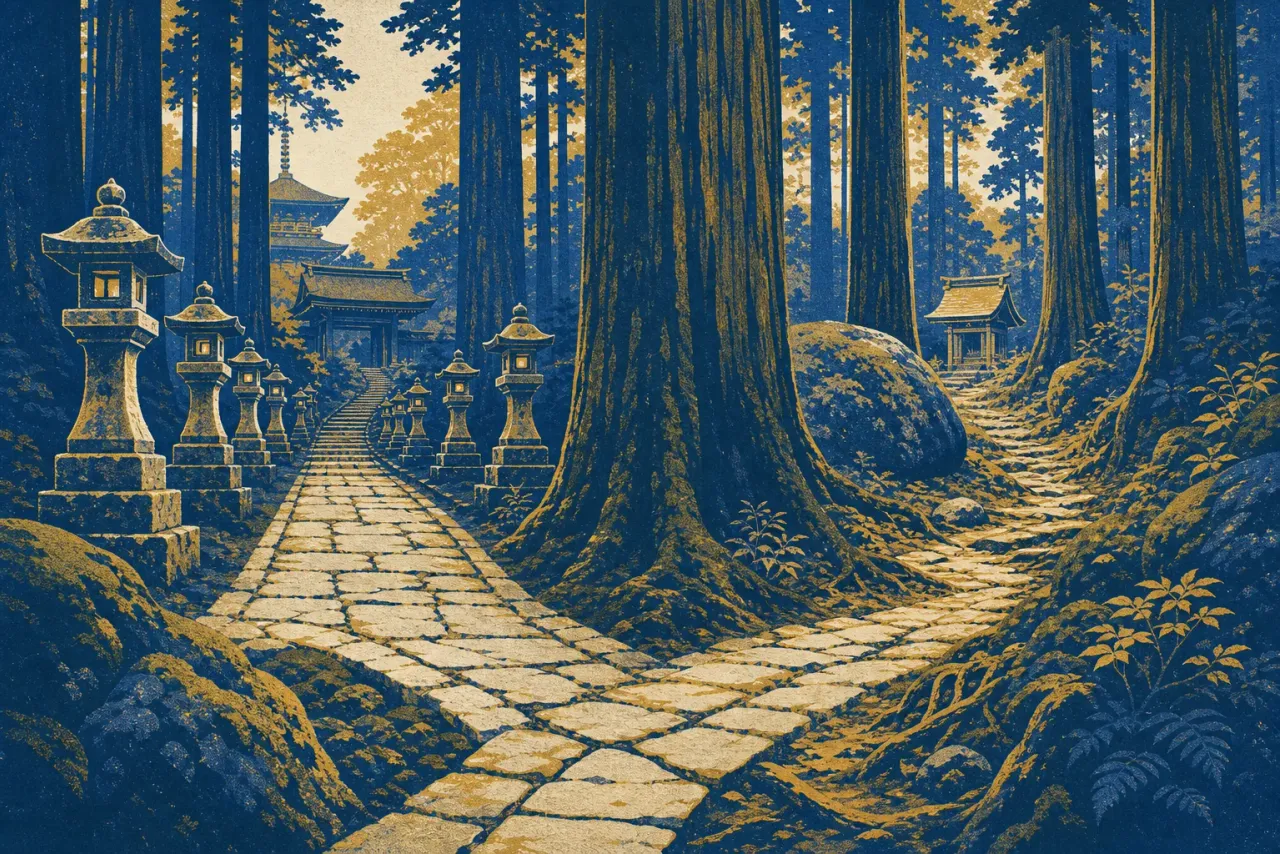
The best-preserved branch of the Kumano Kodo, and the route emperors used, runs about 38 kilometers from Takijiri-oji to Hongu: roughly 17 km to Tsugizakura-oji, then about 21 km on to the shrine, at official pace estimates of 7 to 10 and 8 to 11 hours. The classic two-day split with a night near Chikatsuyu-oji is lopsided, since Chikatsuyu falls well before Tsugizakura: a first day of about 13 km buys you a second day of about 25. Plenty of walkers take three days instead. The trail climbs straight up its ridges with few switchbacks, and wet cobblestones cause most injuries out here. A daily luggage shuttle moves bags between lodgings, and it is worth every yen. One quiet piece of good news: in October 2025 the long detour dating from 2011 typhoon damage was retired, and walkers again follow the original line past Iwagami-oji.
Kumano Hongu Taisha and Oyunohara
Every route in the network converges on this shrine. It originally stood down on Oyunohara, a sandbank in the river, until the flood of 1889 forced its relocation to the hill above. Walk down to the sandbank anyway. The largest torii gate in the world stands there: 33.9 meters tall, 42 meters wide, 172 tons of steel raised in 2000, marking the open ground that was once the holiest place in Kumano. The emptiness carries more charge than many crowded shrines.
Nachi Taisha, Seiganto-ji, and Nachi Falls
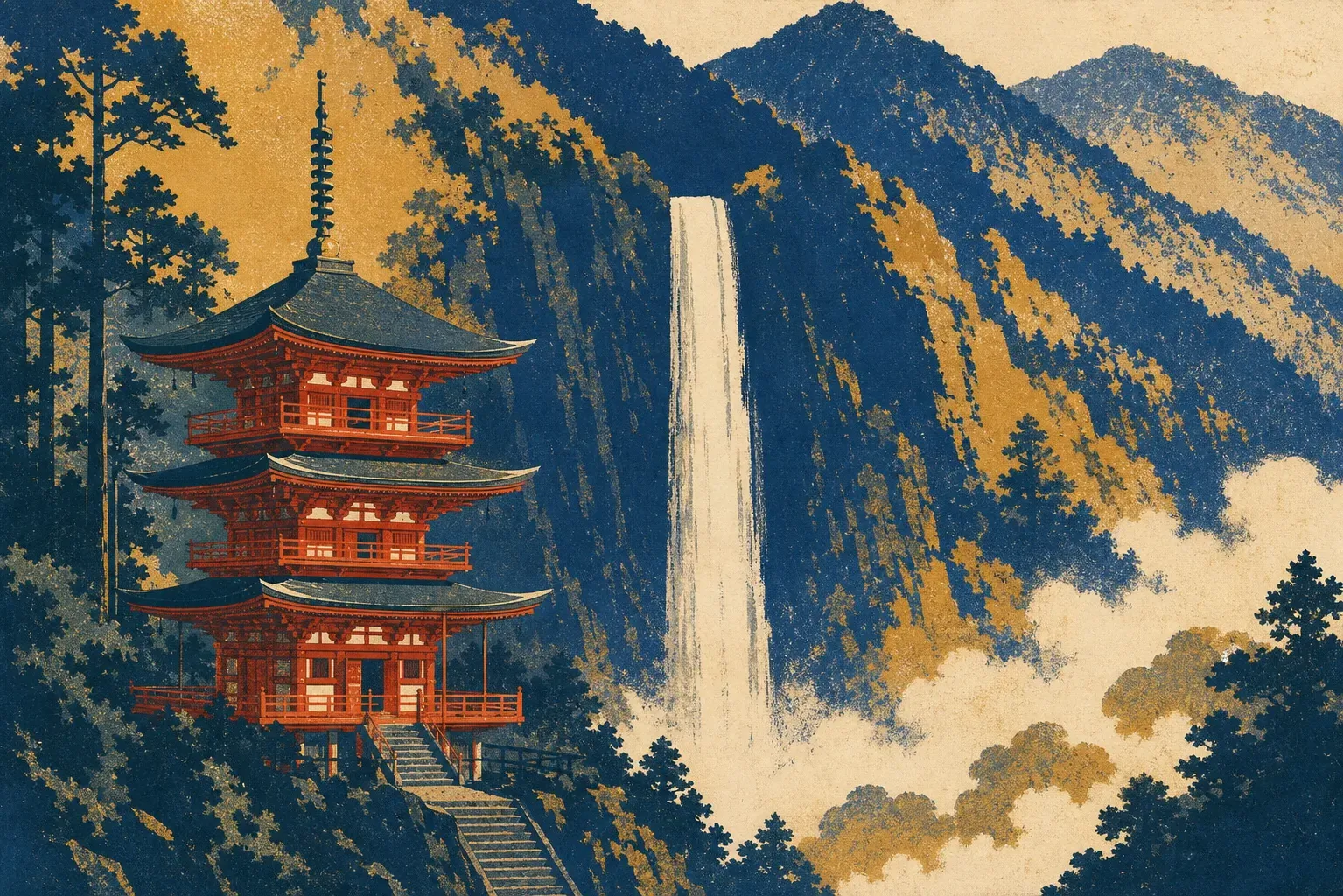
The classic finale. Come up Daimon-zaka, the cobbled staircase that is the traditional approach. At the top, the shrine and the Buddhist temple Seiganto-ji share the mountainside, and the temple's three-story pagoda (500 yen as of 2026) frames the 133-meter Nachi Falls behind it, the tallest single-drop waterfall in Japan and a sacred object in its own right. A closer viewing platform at the base of the falls costs another 300 yen and runs 7:00 to 16:30, with last entry at 16:00; the pagoda shuts at 16:00 too, so the complex winds down earlier than most people assume. Allow two to three hours for the whole thing.
Kinpusen-ji, Yoshino
Over on the Nara side, and worth the detour, Yoshino is Shugendo's headquarters. Kinpusen-ji's Zao-do main hall, a National Treasure rebuilt in 1592, stands 34 meters tall, making it Japan's second-largest wooden building after Todai-ji. The Nio-mon gate is under wraps for a restoration reported to run through fiscal 2028, but the Zao-do itself is open. In cherry-blossom season the surrounding slopes become the most famous hanami mountain in the country, and the crowds match; any other season, you may share the hall with a handful of pilgrims.
Worth knowing
The Kii Peninsula is among the wettest regions in Japan, and the injuries that happen here are mostly unglamorous: slips on wet stone and tree roots. Spring and fall are the seasons to aim for. Summer means starting at first light to beat the heat; August through October is typhoon season, when flash floods and landslides can close trail sections fast, so check tb-kumano.jp each morning. Winter walking is possible, but the mountains go dark by 16:30.
Dress in long sleeves and long pants year-round. Mamushi pit vipers, giant hornets, leeches and ticks are all residents, and cotton that soaks through will make a wet day miserable.
Tell your hosts about dietary restrictions when you book, not at the dinner table; trail lodges cook to an exact headcount. At Yunomine, the World Heritage-registered Tsuboyu bath works on first-come private slots of 30 minutes for one or two people, so queue early. And remember that all of this is in active religious use. The monks serving your breakfast are not hospitality staff.
Highlights
Kumano Sanzan: the three grand shrines Kumano Hongu Taisha, Kumano Nachi Taisha, and Kumano Hayatama Taisha
Nachi Falls (133 m), worshipped as a deity, beside Seiganto-ji pagoda
Koyasan: mountaintop monastic town founded by Kobo Daishi, with Kongobuji Temple, Okunoin cemetery, and shukubo temple lodging
Walking the Kumano Kodo Nakahechi route between Takijiri-oji and Hongu
Yoshino and Omine: Kinpusenji Temple, center of Shugendo mountain asceticism, and Yoshino's famous cherry blossoms
Shojin ryori Buddhist vegetarian cuisine at temple stays
Getting there from Tokyo
For Koyasan: Tokaido Shinkansen Tokyo to Shin-Osaka (~2.5 h), transfer to Namba, then Nankai Koya Line limited express to Gokurakubashi (~1.5 h), cable car (5 min) and bus to the temple town. For the Kumano Kodo/Kumano Sanzan: Shinkansen to Nagoya (~1h40m) then JR limited express 'Nanki' to Shingu (~3.5 h), or Shinkansen to Shin-Osaka then JR 'Kuroshio' to Kii-Tanabe (~2 h) and bus to Hongu (~2 h). For Yoshino: via Kyoto, Kintetsu Railway to Yoshino (~2 h).
Where to base & what to eat
Where to base
Koyasan temple town
A night in a shukubo, with shojin ryori dinner and morning prayers, is the defining experience of the region, but it is the priciest bed you'll book and the town shuts down early.
Yunomine / Kawayu Onsen (Hongu)
Ancient onsen hamlets at the pilgrimage's heart, home to the World Heritage-registered Tsuboyu bath; rooms are so scarce that these villages, not your flights, are what the itinerary bends around.
Kii-Tanabe
Rail-served gateway with business hotels and a genuine izakaya quarter, ideal the night before starting at Takijiri-oji, but two hours by bus from Hongu once you're deep in.
Nachikatsuura
Onsen port town for the Nachi finale, with tuna dinners and easy JR connections onward; it trades mountain-village atmosphere for convenience.
What to eat
Mehari-zushi
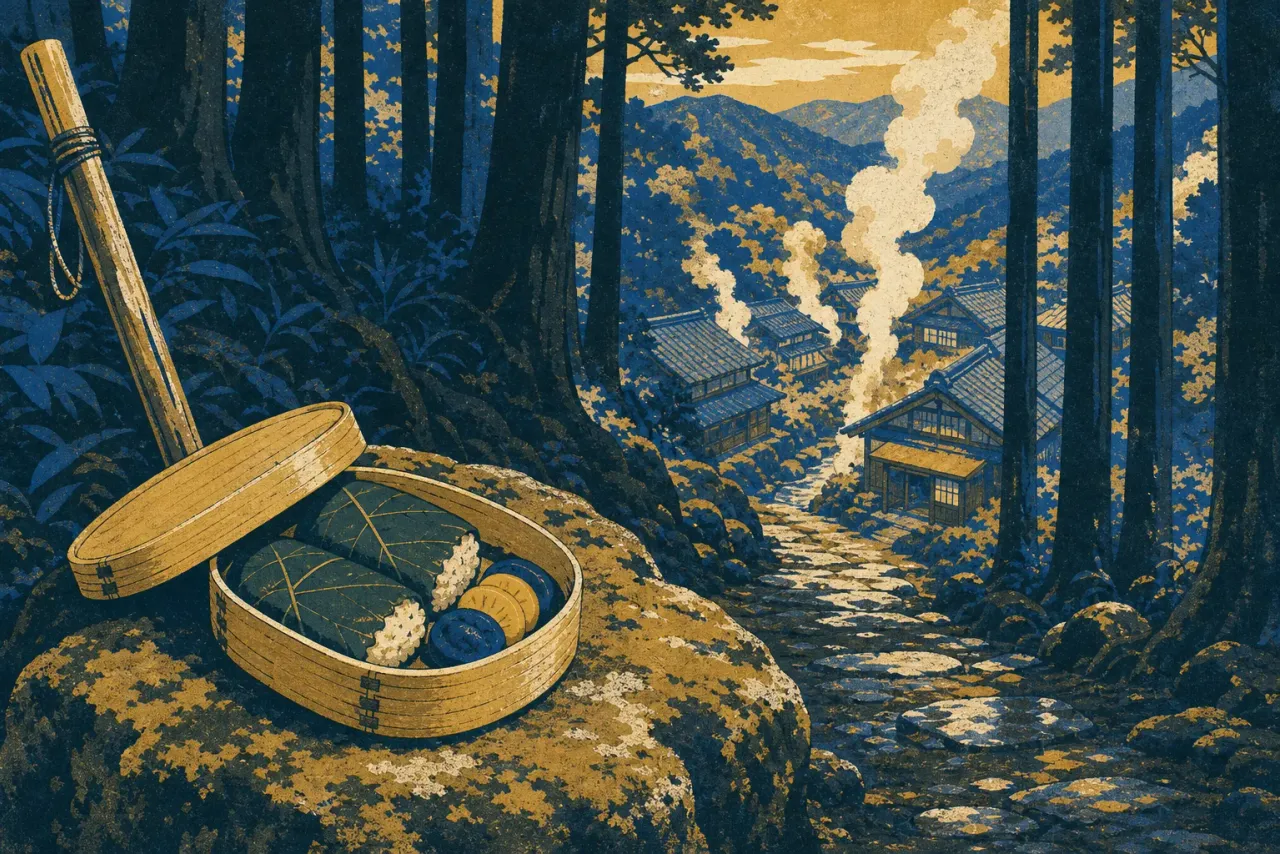
Rice wrapped in pickled takana mustard leaf, the original pilgrim trail food; Sohonke Mehariya in Shingu has made them since 1962.
Goma-dofu
Koyasan's silky sesame tofu, tied to Kukai bringing sesame from China; Kadohama Goma-tofu Honpo and Hamadaya are the long-established makers.
Shojin ryori
Buddhist vegetarian cooking at its source, served at your shukubo; in town, Chuo Shokudo Sanbo holds a Michelin Plate listing.
Katsuura maguro
Tuna from one of Japan's largest ports; the Katsuura Gyoko Nigiwai Market runs weekend fileting shows you can eat straight from.
Kishu ume
The Tanabe area grows nearly half of Japan's ume; umeboshi and craft umeshu are the trail souvenirs that actually get consumed.
Official links
Fares, hours and closures change with little notice. These are the operators' and authorities' own pages — worth a look close to your travel dates.
Related stories
Koyasan or the Kumano Kodo? How to Plan Your First Trip to Japan's Sacred Kii Mountains
One World Heritage listing, two very different trips. Why first-timers should pick either the monastery mountain or the pilgrim trail, and how to do each one properly.
Two Days on the Nakahechi: Walking, Soaking, and Eating the Kumano Pilgrim Way
The classic two-day walk from Takijiri-oji to Hongu, plus the hot-spring hamlets and trail food that reward it.
Sources
- https://whc.unesco.org/en/list/1142/
- https://www.japan.travel/en/world-heritage/sacred-sites-and-pilgrimage-routes-in-the-kii-mountain-range/
- https://en.wikipedia.org/wiki/Kumano_Hongu_Taisha
- https://www.tb-kumano.jp/en/kumano-kodo/nakahechi/
- https://www.koyasan.or.jp/kongobuji/
- https://seigantoji.or.jp/services/