Koyasan or the Kumano Kodo? How to Plan Your First Trip to Japan's Sacred Kii Mountains
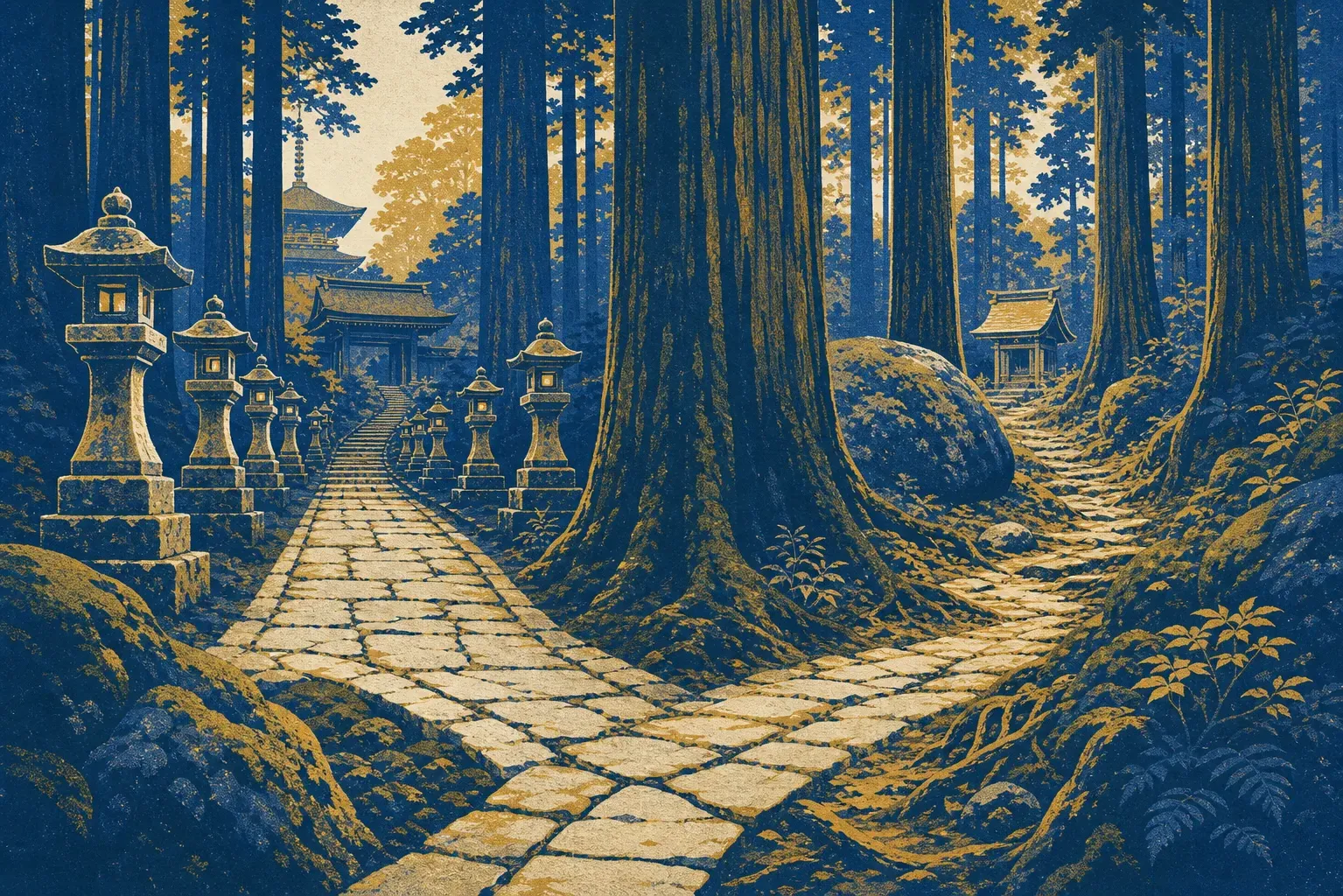
Every few months the same itinerary appears on a Japan travel forum: Kyoto in the morning, Koyasan after lunch, a quick walk on the Kumano Kodo before dinner in Osaka. It cannot be done, and understanding why is the single most useful piece of planning you can do. The World Heritage site inscribed in 2004 as Sacred Sites and Pilgrimage Routes in the Kii Mountain Range is not one place. It is 242 separate elements spread across three sacred areas: Yoshino and Omine in the mountains of Nara, the three Kumano Sanzan shrines near the Pacific coast, and the monastic town of Koyasan. Pilgrim trails link them, and those trails took walkers weeks. Only a handful of pilgrimage route systems appear on the World Heritage list at all; this is one, and the best known of the others are the Santiago de Compostela routes, inscribed separately in Spain and in France. Nobody plans a day trip that "does" the Camino.
So the real first-timer question is which area to pick. The honest answer: Koyasan if you have one night, Kumano if you have two or three, and both together only if you accept either a hard multi-day trek or a long loop back through Osaka.
Koyasan: the one-night trip that actually works
Koyasan is the logistically friendly choice. From Tokyo, take the Tokaido Shinkansen to Shin-Osaka in about two and a half hours, cross the city to Namba, then ride the Nankai Koya Line limited express roughly 90 minutes to Gokurakubashi, where a five-minute cable car hauls you up the mountain and a bus finishes the job. Kukai, the monk Japan reveres as Kobo Daishi, founded this monastery town in 816 as the seat of Shingon Buddhism, and it keeps monastic hours to this day. More than 50 temples take overnight guests. Staying in one, eating the shojin ryori vegetarian dinner, and sitting in on morning prayers is the whole point of the trip. Book well in advance; the temples prepare meals for a known number of guests and do not improvise.
Daytime sightseeing is compact. Kongobu-ji, the head temple, and the Danjo Garan complex with its vermilion Konpon Daito pagoda fill a morning; a 2,500-yen combination ticket (as of 2026) covers the main halls. The Reihokan museum runs 1,300 yen; if you have only one full day, skip it and give the time to Okunoin instead.
Okunoin costs nothing and outweighs everything else. A long cedar-lined cemetery avenue leads to the mausoleum of Kobo Daishi, who believers hold is not dead but seated in eternal meditation. Walk it at first light, before the tour buses arrive, and mind the rules beyond the Gobyobashi bridge: no photography, no food, no drink.
Kumano: slower, wilder, two nights minimum
The Kumano Sanzan take real commitment to reach, which is much of their appeal. From Shin-Osaka the JR Kuroshio limited express runs about two hours down the coast to Kii-Tanabe; a bus then climbs roughly two more hours inland to Hongu. Coming from Tokyo you can instead ride the Shinkansen to Nagoya and the Nanki limited express about three and a half hours to Shingu, approaching from the east.
Three grand shrines anchor the area. Kumano Hongu Taisha sits where every branch of the Kumano Kodo converges. Kumano Hayatama Taisha is in the river town of Shingu. Kumano Nachi Taisha shares its ridge with the temple Seiganto-ji, whose three-story pagoda frames Nachi Falls, at 133 meters Japan's tallest single-drop waterfall and itself an object of worship. The cobbled Daimon-zaka staircase is the classic approach, and it demands proper shoes.
To walk rather than ride, follow the Nakahechi, the so-called Imperial Route: about 38 kilometers from Takijiri-oji to Hongu, classically split into two days with a night near Chikatsuyu, though that split leaves roughly 25 kilometers for the second day and many walkers spread it over three. A daily luggage shuttle moves your bag between lodgings, so you carry only a daypack.
Near Hongu, sleep in Yunomine or Kawayu, two tiny hot-spring hamlets; Yunomine's Tsuboyu is the only hot spring included in a World Heritage listing, and at Kawayu you dig your own bath in the riverbed. Spend the second night in Nachikatsuura, a tuna port with onsen hotels, and see Nachi the next morning. One warning distilled from many travelers' mistakes: every bed in this region must be booked ahead, ideally through kumano-travel.com, the community reservation system, and carry cash, since rural card acceptance is thin.
Don't skip Oyunohara. Hongu Taisha originally stood on this sandbank until a flood destroyed it in 1889; the shrine moved uphill, and since 2000 the old site has been marked by the largest torii gate on earth. It stands a short walk from the current shrine and is the most quietly startling sight in the valley.
Combining them, and what to check first
The pilgrim's way to do both is the Kohechi, the mountain route connecting Koyasan to Hongu, and it is the hard option: a genuine multi-day trek, not a scenic stroll. Everyone else backtracks, riding the cable car down and looping through Osaka by train and bus, which eats most of a travel day. If your whole Japan trip is two weeks, pick one area and do it properly.
A word on the third area, Yoshino and Omine: it is glorious in cherry-blossom season and reachable from Kyoto in about two hours on the Kintetsu line, but the Nio-mon gate of Kinpusen-ji, head temple of the Shugendo mountain faith, is under long-term restoration (the enormous Zao-do hall remains open). First-timers short on days lose little by saving it for a spring return.
Respect the weather, too. The Kii Peninsula is among the wettest regions of Japan, typhoons from August through October close trails with little notice, and winter darkness falls by 16:30. Check the Tanabe tourism bureau's alerts at tb-kumano.jp before walking anything; as of mid-2026, for instance, the coastal Ohechi route is closed between Wabuka and Tako stations until at least April 2027. In these mountains the sights are permanent and the access is not. Book the beds first, then the trains, and let the trail conditions decide the rest.