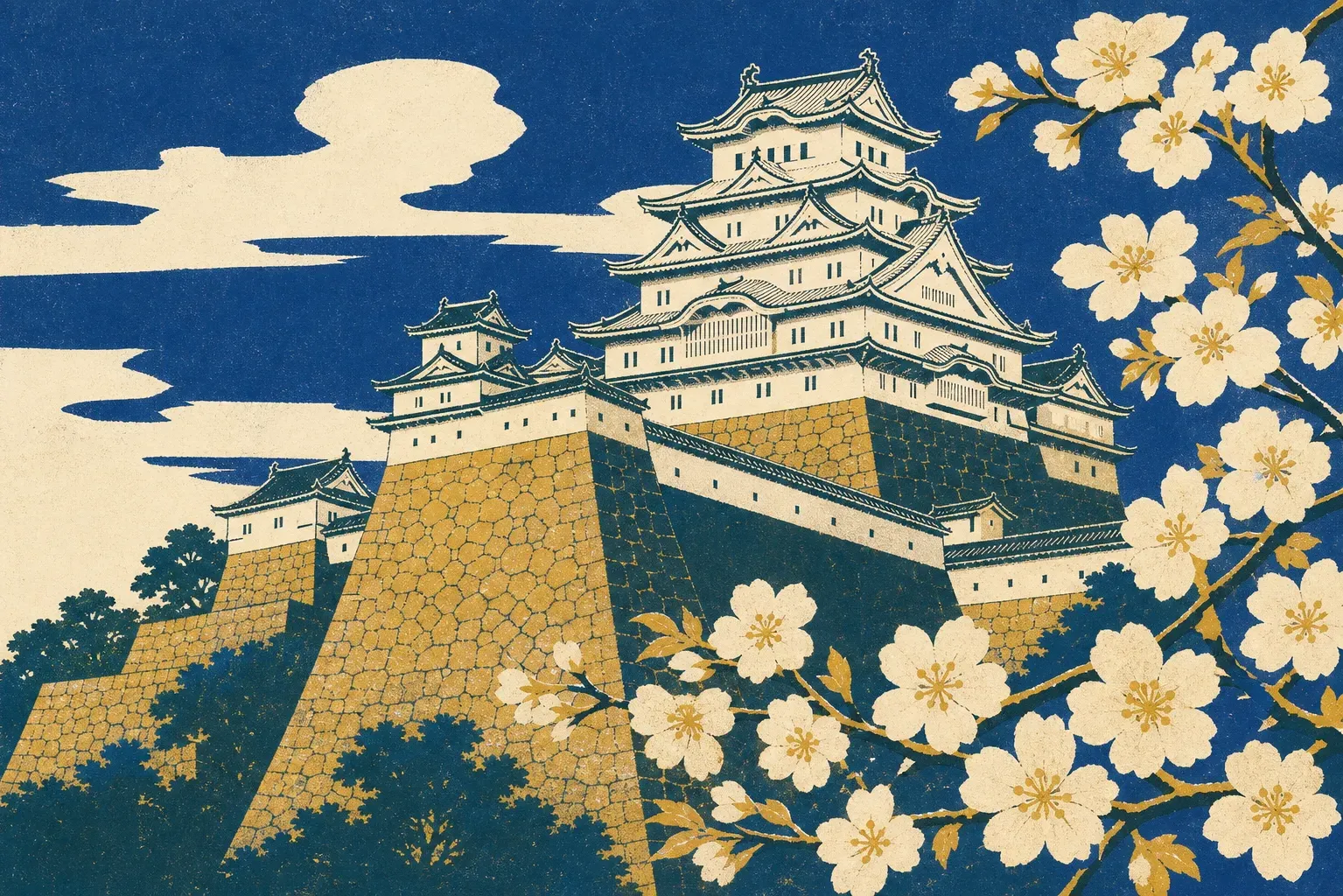
Himeji Castle
姫路城
- JR Himeji Station (Sanyo Shinkansen)
- ≈3.5 h from Tokyo
- Depends on route — see Access
- Early April (cherry blossoms)
Quick facts
- ≈3.5 h from Tokyo
- roughly 16,000-17,000 yen one way on the Nozomi (Hikari/JR Pass routes take slightly longer)
- Depends on route — see Access
- Early April (cherry blossoms) · Autumn (foliage, comfortable weather)
- JR Himeji Station (Sanyo Shinkansen)
- Admission changed in March 2026: adults 18 and over who aren't Himeji residents now pay ¥2,500 (up from ¥1,000) while everyone under 18 enters free, so ignore older guides quoting the old price.
- On peak days (cherry blossom in early April, Golden Week, summer holidays) numbered tickets cap entry to the main keep and can run out; arrive by the 9:00 opening or book a timed QR e-ticket, sold about 90 days ahead.
Overview
Why it's inscribed
Japan built thousands of castles. Twelve still have their original wooden keeps, and Himeji is the largest and best preserved of them, which is why it joined the World Heritage list in 1993 as one of the country's first two cultural sites. UNESCO's citation calls it a masterpiece of construction in wood and the culmination of Japanese castle architecture. For once, the official language undersells nothing.
Two things make the case. First, completeness: 83 buildings survive, not just the photogenic keep but the whole defensive machine around it, with 74 structures designated Important Cultural Properties and the keeps themselves National Treasures. Second, improbable luck. The complex you see was finished in 1609, a nine-year rebuild by Ikeda Terumasa on a hill first fortified in 1346 and expanded along the way by Toyotomi Hideyoshi. It then came through the WWII firebombing of Himeji and every major earthquake since, essentially untouched.
The white plaster that earned the nickname Shirasagi-jo, "White Heron Castle," was never just cosmetic; it resists fire and bullets. Beauty that doubles as armor is the whole idea of the place, and nowhere else in Japan can you still read that idea complete.
What you'll actually see
Everyone moves along roughly the same spiral, so take the complex in this order.
Sannomaru (Third Bailey)
Through the Otemon Gate, before any ticket booth, you reach a broad lawn planted with some of the castle's thousand-plus cherry trees. This is the free zone. If your time or budget is short, you can take in the keep's full exterior from here without paying a yen. In early April the lawn becomes one of western Japan's great hanami spots, which is exactly when you should expect it to be full by mid-morning.
Hishi Gate and the spiral approach
The paid route starts at the Hishi Gate and immediately stops making sense. That's deliberate. Paths narrow and double back, gates shrink until you duck, and the walls above are cut with sama, the triangular, circular, and rectangular loopholes sized for arrows and matchlock guns. Look up at the corners for ishi-otoshi, chutes for dropping stones on anyone below. The approach was engineered so attackers would wander, exposed, under fire. You will briefly lose your bearings on the way up. That is the seventeenth-century design working on you, right on schedule.
Daitenshu (Main Keep)
From outside you count five stories; inside there are six plus a basement, and keep and stone base together rise about 46 meters. Shoes come off at the entrance and stay in a bag in your hand. The stairs approach 45 degrees and feel closer to ladders near the top, so keep a hand free. On the way up, notice what a keep actually was: bare wood, racks that once held weapons, portholes, concealed spaces where defenders could wait. The top floor holds the small Osakabe Shrine and a long view straight down Otemae-dori to the station.
The three small keeps
Three smaller towers, the kotenshu, stand around the main keep and connect to it through roofed corridors, forming a rough square with an inner courtyard. This linked-keep plan, called renritsu-shiki, survives nowhere else at this scale. The courtyard is the spot to stand and understand what the inscription means by building masses and layered roofs: white walls rising in staggered planes, gray tile stacking against the sky. From here it reads less like a fortress and more like composition, which is precisely the double game Himeji plays.
Nishinomaru (West Bailey)
Most people come down from the keep tired and head for the exit. Stay for the West Bailey. This was the household of Princess Sen, Senhime, whose quarters ran along the Hyakken-roka, a long covered wooden corridor tracing the bailey's rim, ending at the Kesho Yagura, her so-called Cosmetic Tower. Because so many visitors skip it, the corridor is often close to empty. The view back at the main keep from this bailey is the best photograph on the property, so save battery for it.
Koko-en
Not part of the castle proper, but directly beside it: nine walled gardens in Edo style, keeping the same 9:00 to 17:00 hours and the same December 29 and 30 closure. The combined castle-and-garden ticket costs ¥2,600 as of 2026, which prices the garden at roughly ¥100 over castle admission alone. At that rate there is no decision to make. An hour among the ponds is the right decompression after the keep's stairs, and it photographs beautifully in maple season.
Worth knowing
Arrival time decides your whole visit. Tour buses land mid-morning; at the 9:00 opening you can climb the keep in something like quiet, while by late morning you may be queuing on the stairs themselves. On peak days (cherry blossom in early April, Golden Week, summer holidays) numbered tickets cap keep entry and can run out, so come early or buy a timed QR e-ticket, sold about 90 days ahead.
A castle notice dated June 1, 2026 asks visitors to bring their own bag for their shoes, since the buildings are shoes-off throughout, and recommends indoor shoes or socks as protection against splinters in the old woodwork. Take that second part seriously: you climb the near-45-degree flights in stocking feet, shoes in hand, and four centuries of wooden stairs are hard on thin socks. Leave the heavy backpack at your hotel for the same reason.
There is no air conditioning anywhere inside. In summer that means a lidded drink and an early start; winter repays you with the clearest light and the thinnest crowds. The exterior is illuminated nightly until midnight, with 15-minute light shows at 20:00 and 21:00, worth timing dinner around. Drones are banned, with fines up to ¥100,000, and tripods are not allowed inside the buildings.
Highlights
Six-story main keep (Tenshu) rising 32 m atop Mt. Himeyama
Maze-like defensive approach with gates, loopholes and stone-dropping devices
74 buildings designated Important Cultural Assets, keep a National Treasure
Nishinomaru (West Bailey) and the Long Corridor linked to Princess Sen
About 1,000 cherry trees — a famous hanami spot in early April
Adjacent Koko-en, nine Edo-style gardens at the castle's foot
Getting there from Tokyo
Tokaido-Sanyo Shinkansen from Tokyo Station to Himeji Station in about 3 hours 10 minutes — only some 'Nozomi' services stop at Himeji, so check the timetable or change at Shin-Osaka for a 'Hikari' or 'Sakura' — then a 15-20 minute walk straight up Otemae-dori Avenue to the castle, or a 5-minute bus/taxi ride.
Where to base & what to eat
Where to base
Himeji Station / Otemae-dori
Plain but well-run business hotels (Daiwa Roynet, Hotel Monterey, Dormy Inn with a natural hot-spring bath) 15 to 20 minutes' walk from the gate; nothing glamorous, but it's the only base that gets you both the 9:00 opening and the nightly illumination.
Osaka as a day-trip base
About 30 minutes by Shinkansen or an hour on the JR Special Rapid, with far better dining and nightlife than Himeji, at the cost of arriving after the quiet early-morning window.
Shiota Onsen, Himeji outskirts
A 300-year-old hot-spring hamlet about 30 minutes' drive from the castle, with historic ryokan like the 140-year-old Yumoto Ueyama; genuinely quiet and traditional, but you'll need a car or taxi to get there.
What to eat
Himeji oden
Simmered skewers eaten with grated-ginger soy sauce, a style a local promotion group named Himeji oden in 2006; the Himeji Oden & Kushikatsu shop in Himeji Noren Street by the station serves it with castle-shaped konnyaku.
Anago (Harima Sea conger eel)
The city's signature seafood; Hiiragi near the station does a lunch set with anago rice bowl for ¥2,530 as of 2026, or try Yamayoshi, a quiet spot just outside the castle.
Almond toast
Himeji's postwar kissaten breakfast; Cafe de Muche runs a ¥500 morning set (as of 2026) from 7 to 11 a.m. five minutes from the station, or go to Tairiku, the city's oldest cafe.
Jokamachi-Dog
A ¥150 corn dog (as of 2026) wrapping cheese kamaboko, made by century-old Yamasa Kamaboko on Otemae-dori; the ideal snack for the walk between station and castle.
Himeji beef
Locally raised Japanese Black wagyu; Yakiniku Azumi, above a butcher shop in business for 50 years, serves a tenderloin assortment for ¥9,800 as of 2026.
Official links
Fares, hours and closures change with little notice. These are the operators' and authorities' own pages — worth a look close to your travel dates.
Related stories
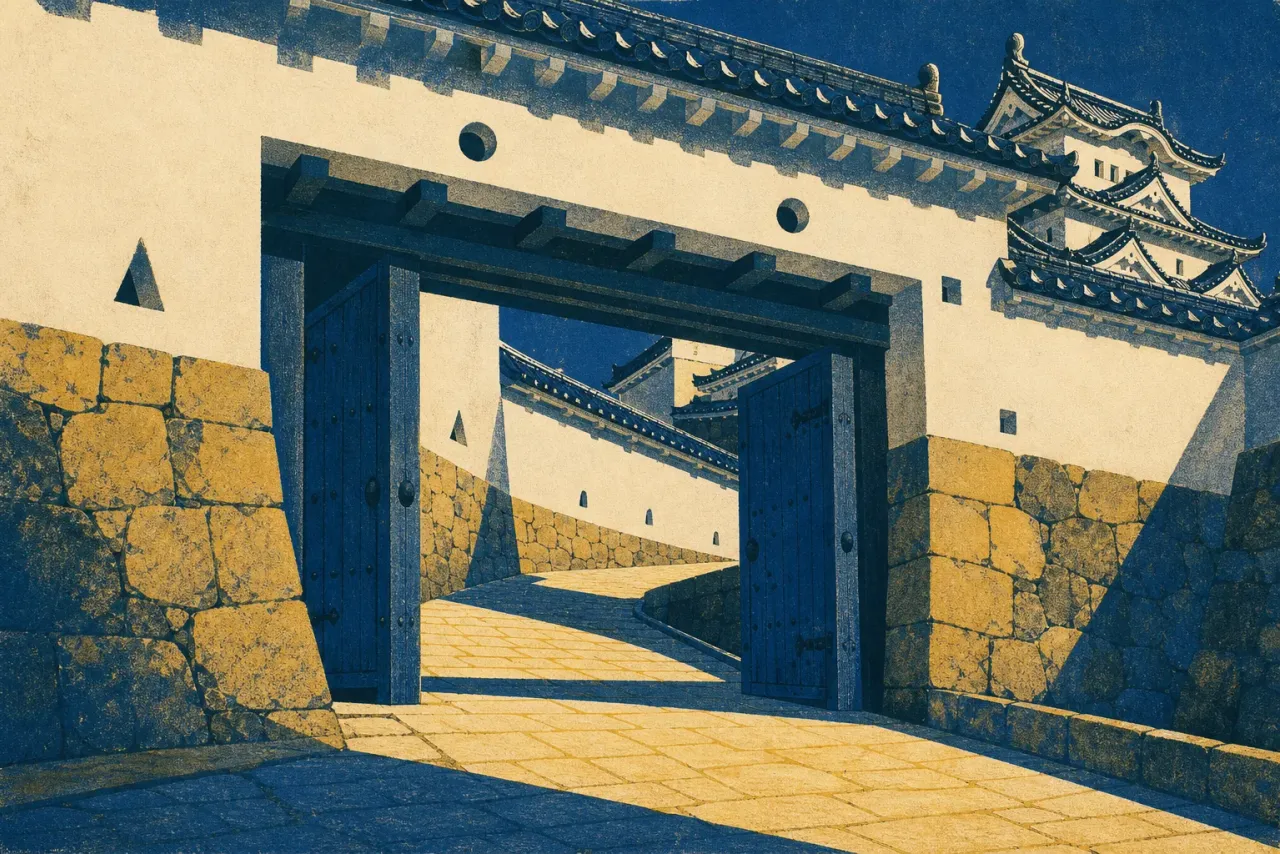
Himeji Castle in Half a Day: Beating the Crowds at Japan's Greatest Original Castle
The difference between a great morning at Himeji and a shuffling one is about ninety minutes. The train math, the new 2,500-yen ticket, and exactly where to be at 9:00.
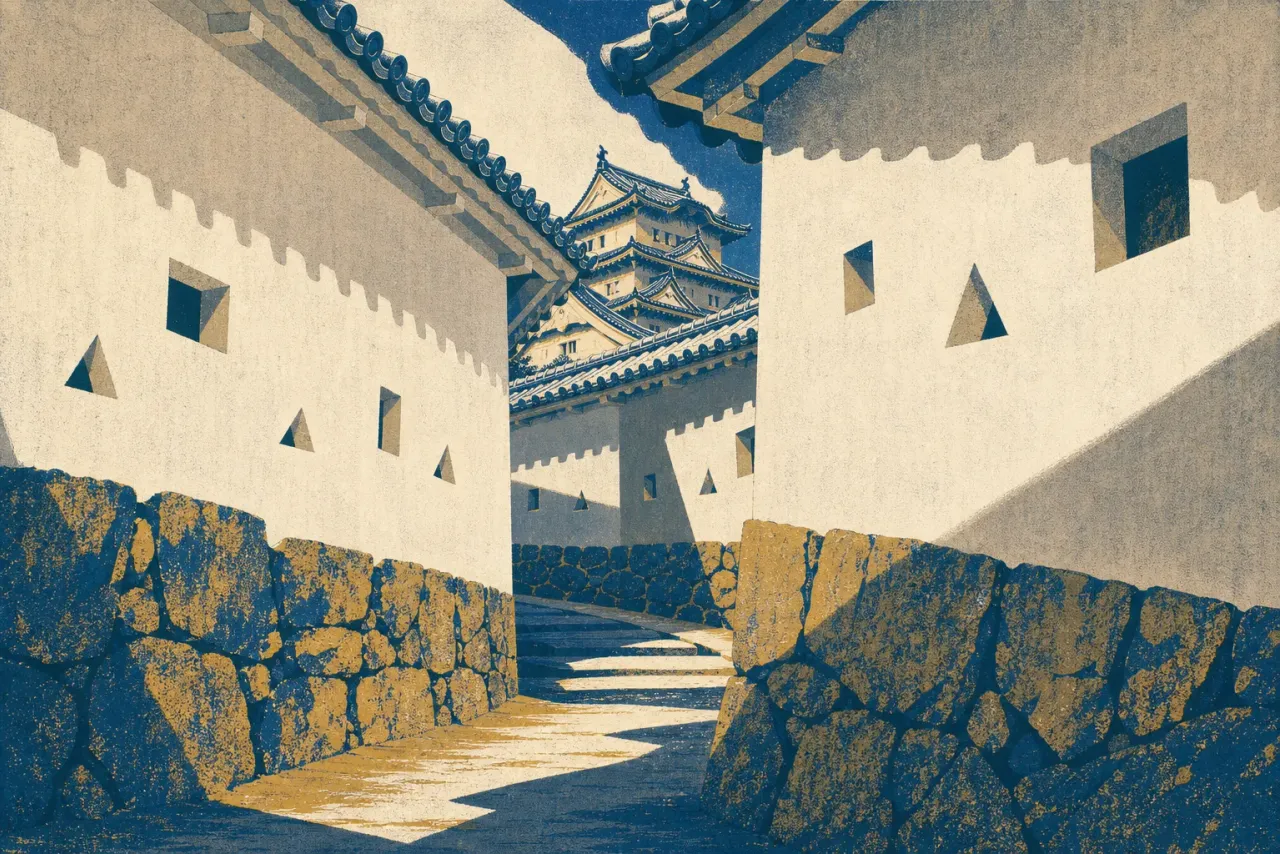
Why the White Heron Still Stands: Reading Himeji-jo as the Masterpiece of Japanese Castle Design
Himeji's white plaster is armor, its ground plan is a weapon, and its new 2,500-yen ticket is a preservation payment. A close reading of the last complete Japanese castle.