Twenty-Two Kilometers Before Breakfast: How to Actually Reach Jomon Sugi
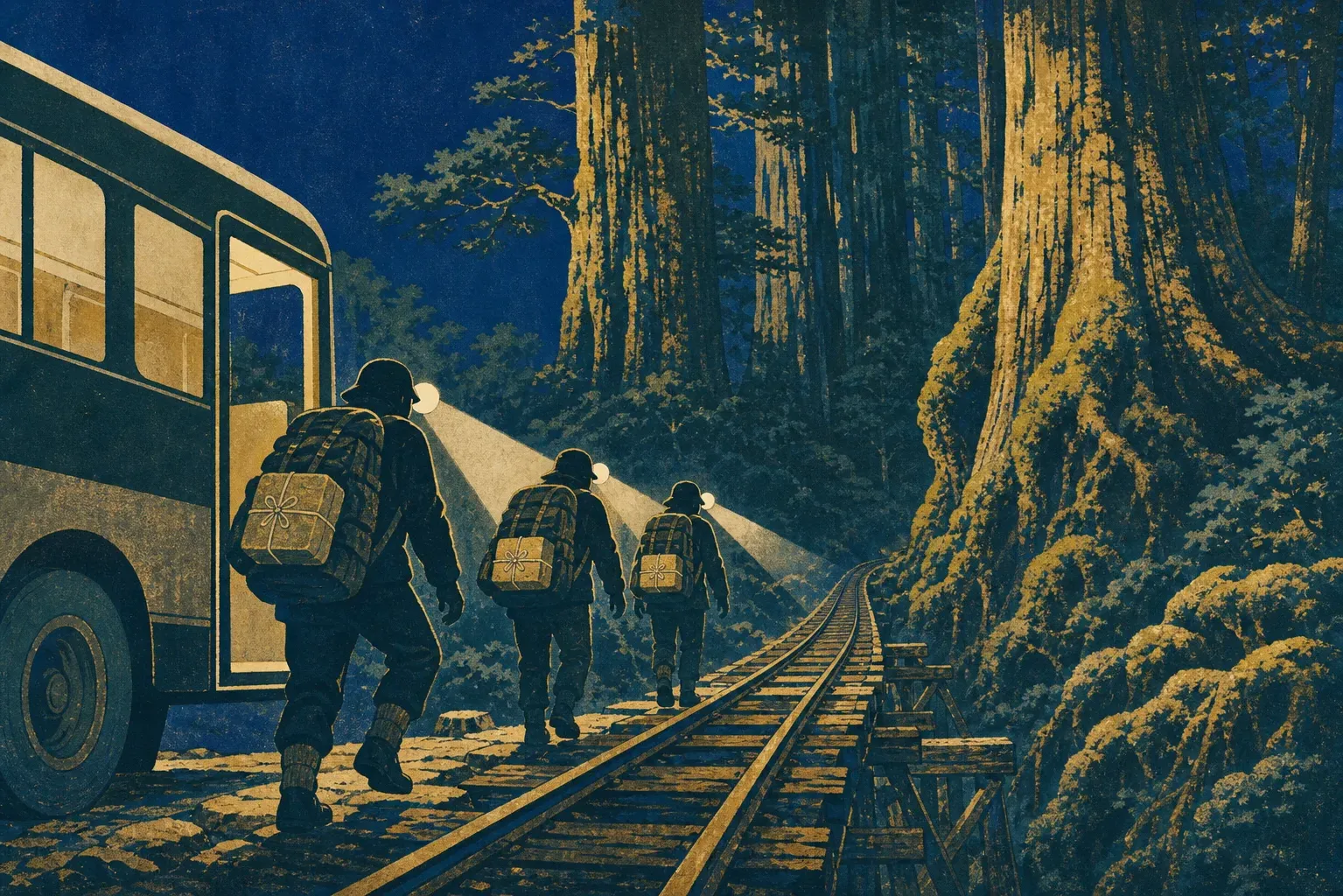
The last morning bus to the Arakawa trailhead leaves at 5:40. Not the first bus. The last one.
That single line of the timetable reorganizes an entire Yakushima itinerary, and plenty of visitors find out standing in a parking lot. From March 1 to November 30, private cars are banned from the Arakawa forest road, the only road that reaches the start of the hike to Jomon Sugi. You get in by taxi or by the Arakawa Mountain Bus, which makes three morning runs from the Yakusugi Museum outside Anbo — 5:00, 5:20 (no service through June) and 5:40 — and then nothing until an afternoon departure at 14:00 that exists for hikers sleeping in the mountains, not for day trippers. Arrive at 6:15 with your boots laced and the day hike is over before sunrise.
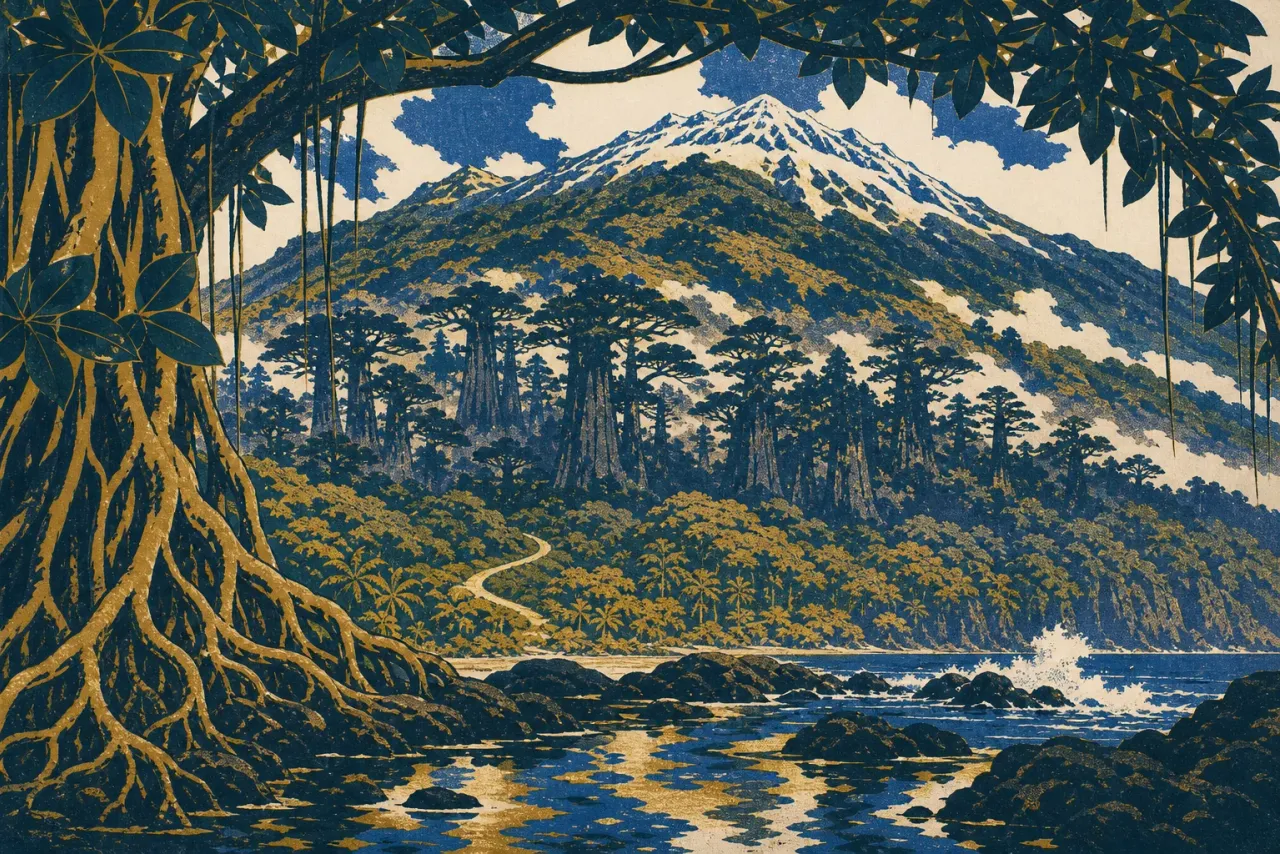
The tree that justifies all this was found in 1966, growing at about 1,300 meters in the island's interior. Estimates of its age run from 2,170 years to 7,200, a spread wide enough to tell you that nobody really knows. What is known precisely is the effort: 21 to 22 kilometers round trip, 10 to 12 hours of walking, a day that begins near 4:00 a.m. and ends around 6:00 p.m. It is not a stroll to a viewpoint. It is probably the longest day of your whole trip to Japan. It is also entirely doable, provided you treat the logistics as seriously as the walking.
Three morning buses, then nothing
A round-trip ticket costs 3,000 yen as of 2026, cash only, and the donation is already inside that number: 2,000 yen of bus fare plus the 1,000 yen mountain conservation donation that every day hiker owes. A one-way ticket is 2,000 yen on the same split. The donation is nominally voluntary. Pay it. If you arrive by taxi or chartered bus instead, the fare covers none of it, and you hand over the 1,000 yen separately at the council booth in front of the Yakusugi Museum or at the Arakawa junction. Sleeping in the mountains raises the donation to 2,000 yen, also handled at that booth.
No reservations exist. Seats go first come, first served, and the early runs fill: when a bus reaches capacity the overflow waits for the next departure, which is a good argument for the 5:00 over the 5:40. Buy the ticket the day you land, at the tourist information counters near the ports or the airport; you can also buy at the museum that morning, though that adds one more task to a 4:00 a.m. brain. These are the fiscal 2026 times and prices, so confirm them when you buy.
Where you sleep matters more than usual here. Anbo, the east-coast port town, is the logistics base for this hike; the museum and bus stop sit just inland, and the town has the island's densest cluster of restaurants for your recovery dinner. Miyanoura, the main ferry port where most people default to staying, is the town farthest from that 5:00 bus.
Food takes forethought, because the island is not awake at 4:30. Shima Musubi, near the main hospital in Miyanoura, makes early-morning trekking bento for exactly this hike. Hotto Motto, across from the hospital, opens at 7:00, useless on hike morning but fine for stocking up the evening before. Pack more than feels reasonable. You are carrying breakfast, lunch, and a margin for a slow return.
Hour by hour on the trackbed
You step off the bus into the dark and start walking by headlamp. The first eight kilometers follow the trackbed of the Anbo forest railway, and they are nearly flat: about two and a half hours of steady rhythm while the sky turns gray, then green. This stretch lulls people. It is easy walking, and it is also eight kilometers you will repeat at the end of the day on legs that have already done everything else.
Where the railbed ends, the real climb begins, and the character of the hike changes from rhythm to work. Budget the middle of your day for it. If you left the museum on the 5:00 bus, a 10-hour pace has you back at the trailhead around 4:00 in the afternoon; a 12-hour pace cuts it close against the final departures. Return buses leave the Arakawa trailhead at 6:20 in the morning, for anyone coming down from a hut night, then at 3:00, 4:00, 4:30 (no service through June), 5:00, and 5:45 in the afternoon. That 5:45 bus is the hard deadline of your day, and there is nothing behind it, so set a personal turnaround time at the tree and honor it however the light is falling on the canopy.
The cedar itself stands at about 1,300 meters. After five-plus hours of walking, simply arriving in front of it is its own event.
Rain, rules, and the two-day escape hatch
Yakushima receives over 8,000 millimeters of rain a year, and the mountain attaches a specific number to your plans: when 220 millimeters fall within 24 hours, or when snow arrives, the trailhead roads close and the bus is suspended. Nobody hikes that day. This is why a buffer day is not a suggestion. Book three nights minimum and let the weather choose which morning you go.
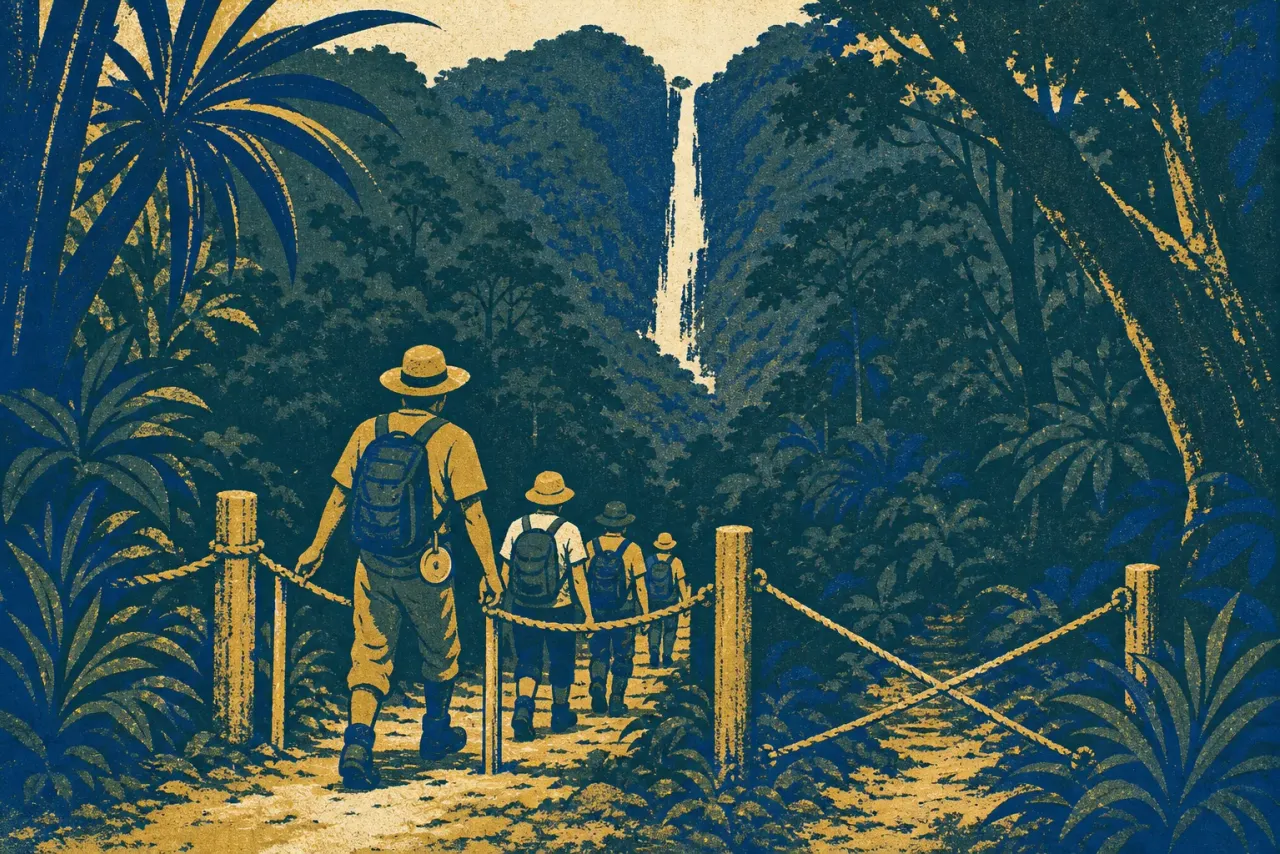
The Ministry of the Environment's requirements are worth knowing before you pack. Carry a portable toilet; they are sold at outdoor shops, souvenir shops, hotels, and rental car offices, and used ones go into collection boxes at the trailhead or the museum, never left in a hut. Trekking poles need rubber tips to protect the vegetation. Submit a trekking registration form before you set off, because it is what search and rescue works from. Bring real rain gear rather than an umbrella, keep the headlamp you already needed at 5:30 a.m., and carry out every scrap of rubbish. Stay on the trail; one boot on the moss does lasting damage.
If twelve hours in one push sounds grim, there is a slower way. Takatsuka Hut stands near Jomon Sugi, free and unstaffed, with no electricity and no running water. Hikers who overnight there split the distance into two humane days and get the tree in evening or early-morning quiet. The price is full self-sufficiency: everything you eat, warm layers for 1,300 meters, that portable toilet, and the 2,000 yen overnight conservation donation instead of the day rate. First come, first served, like everything else on this mountain.
One more thing the photo never shows: sometimes the weather simply wins. If your window closes, the moss ravine at Shiratani Unsuikyo offers, for most visitors, the more beautiful forest at a fraction of the effort, with no bus lottery attached. Jomon Sugi has stood for at least 2,170 years. It will still be there when you come back with a spare day, a fistful of cash, and a 4:00 a.m. alarm.