Blue water and bluefin: the Gono Line side of Shirakami-Sanchi
The mistake that wrecks more Shirakami-Sanchi itineraries than weather or bears is a map-reading error: assuming the famous falls and the famous blue pond sit next to each other. They don't. Anmon Falls drops down the eastern flank of the massif, above the village of Nishimeya; the Juniko lakes lie on the western flank, on the Sea of Japan coast at Fukaura, and no road crosses the mountains between them. Doing both in one day by public transport is not possible. But if your knees or your temperament vote against a flooded gorge trail in rented rubber boots, the western side is the easy side, and it might be the better day: a sightseeing train with live Tsugaru-shamisen, a flat 45-minute walk to a cobalt pond, and the best-value tuna lunch in northern Japan.
One thing to be clear about first: the virgin beech forest that earned the 1993 World Heritage inscription is closed wilderness with no tourist trails, and everything below happens in the buffer zone around it. Nobody should feel shortchanged by that. The buffer zone is where the water turns blue and the fish comes ashore.
The train is the point, not the transfer
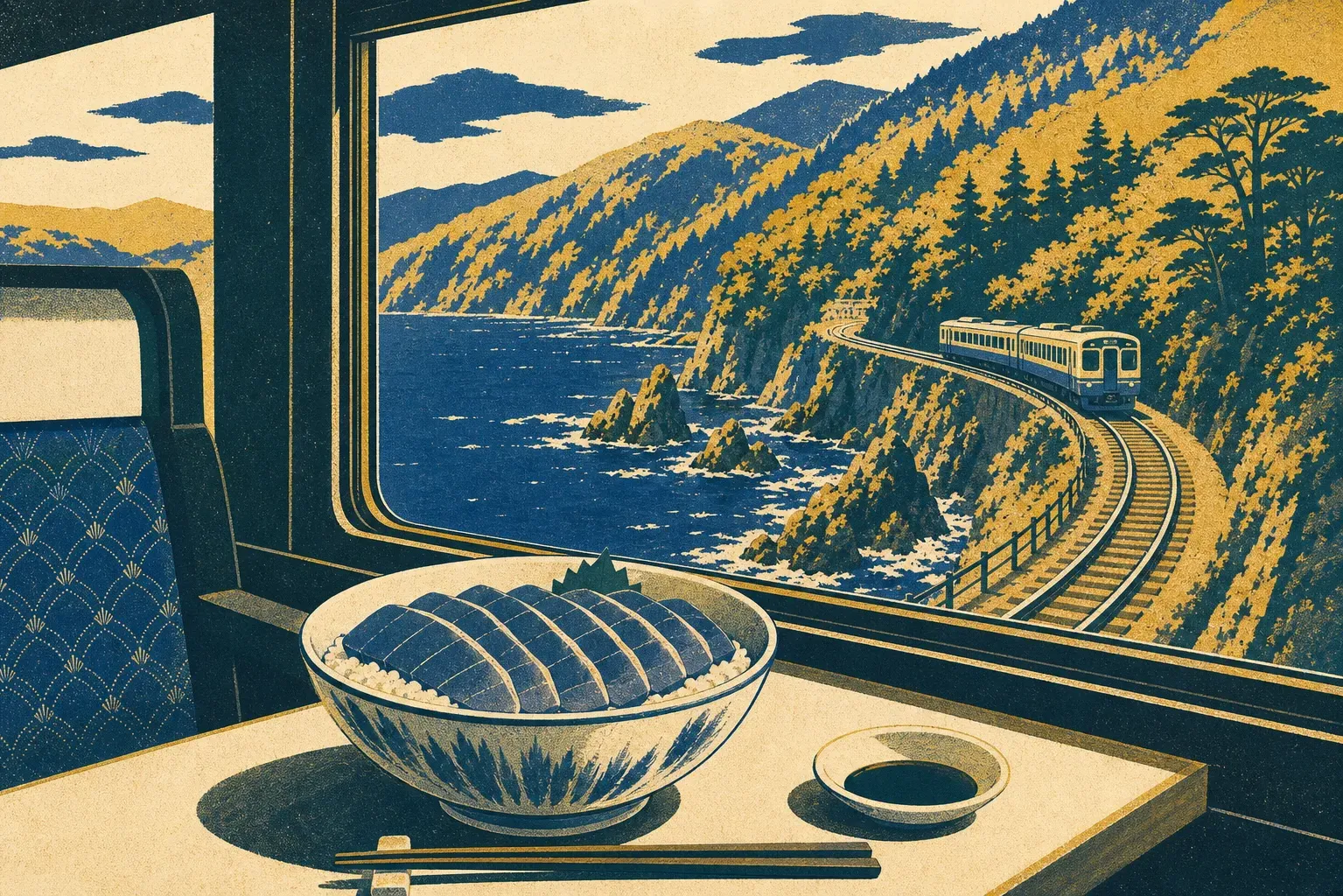
The JR Gono Line traces the coast between Akita and Aomori, and JR East runs a dedicated sightseeing service on it, the Resort Shirakami, in three named trainsets. Buna is themed on the beech forest. Aoike is named for the pond you're headed to. Kumagera, the orange one, takes its name from the black woodpecker that hammers dead beech in the heritage core. Akita to Aomori end to end takes about five hours, and Akita to Hirosaki is most of that, roughly four and a half. If you want a shorter sample rather than the full day aboard, ride one end of the line: Akita to Fukaura runs two and a half hours, Hirosaki to Fukaura about two. Price it on JR East's fare search before you budget, since the Gono Line is a rural-line routing and the reserved seat carries its own charge on top of the fare.
Every seat is reserved. This trips up rail-pass holders constantly: the pass covers the fare, but you still need a seat reservation from a Midori-no-Madoguchi counter, a ticket machine, or Eki-net before boarding. On some services, musicians play live Tsugaru-shamisen in the carriage and local storytellers deliver folktales in thick Tsugaru dialect, which you will not understand and should listen to anyway. The train runs one to three times daily most of the year but only on selected days from December through March, so winter travelers need to check the operating calendar before locking anything in.
Get off at Juniko Station. The Shirakami Juniko Eco-Museum beside it is free and holds coin lockers for your bag, but check the calendar: 09:00–16:30, closed every Monday and Tuesday. The separate Juniko Visitor Center, up in the forest near the lakes, runs 09:00–16:00 from April 1 to November 30. A shuttle bus climbs from the station to the lakes between April 16 and November 30 in 2026; the ride takes about 15 minutes and costs 700 yen one way, fares having gone up this season. From December through March the access road closes outright, and the lakes are effectively unreachable without a guided snowshoe tour. If you're economizing rather than sightseeing, a local train from Higashi-Noshiro reaches Juniko in about an hour and 50 minutes, shamisen not included; check the current fare on JR East's search.
Thirty-three ponds and the one everyone came for
Juniko means "twelve lakes." There are actually 33 ponds scattered across roughly four square kilometers of forested plateau inside Tsugaru Quasi-National Park, the debris field of a landslide set off by an earthquake in 1704. The lakes cost nothing to visit. Parking at Mori-no-Bussankan Kyororo, the forest shop at the main trailhead, is 500 yen, cash only, as of 2026.
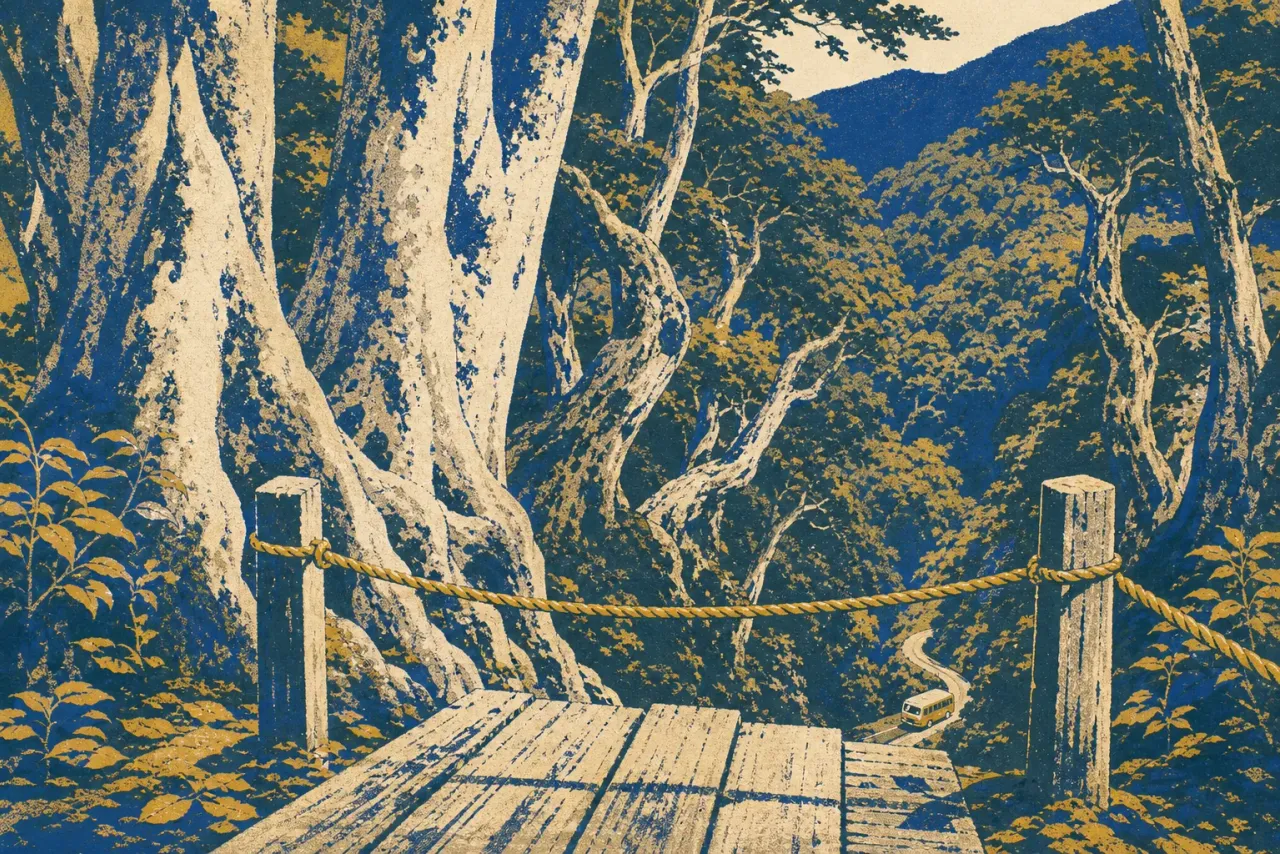
Aoike is ten minutes on foot from Kyororo. The water is a cobalt blue that photographs struggle to exaggerate, with visibility of nine to ten meters; from the wooden boardwalk you look straight down onto sunken beech trunks lying whole on the bottom. The color is real but conditional. It needs direct light, so aim for a clear morning or midday, ideally spring through summer when the canopy around the pond is green. On an overcast afternoon Aoike is a gray pond in the woods, and you will wonder what the fuss was about. Schedule around the light, not around lunch.
From Aoike, keep walking 15 minutes to Wakitsubo-no-ike, a spring-fed pond of a deeper, quieter blue. The full Aoike-and-Wakitsubo loop takes about 45 minutes on maintained paths, and that is the entire physical demand of this side of the World Heritage area. Wakitsubo's spring is one of Japan's officially designated 100 famous waters, and a tiny teahouse called Juniko-an used to whisk matcha with it beside the trail. As of mid-2026 the teahouse is reported as not operating, so ask at Kyororo on the day rather than promising anyone tea.
Anyone wanting more than the loop can call Shirakami Juniko Co. (0173-77-3311), which guides one-to-three-hour treks through the further ponds for 10,000 yen per guide as of 2026, split among however many of you there are, and can arrange wheelchair assistance. That last detail matters. This is the corner of Shirakami-Sanchi that does not require able-bodied hiking to be worth crossing Japan for.
One fish, three bowls, 1,800 yen
Fukaura lands more bluefin tuna than any other port in Aomori Prefecture, and the town has built a civic dish on the fact. The Fukaura Maguro Steak Don is a fixed trio of mini-bowls cut from a single fish: one raw as sashimi, one seared on a single side, one seared on both. Three sauces come alongside, one of them each restaurant's own recipe. The price is held to 1,800 yen, tax included, across the participating restaurants in 2026, so you choose by location and view rather than by menu math; confirm it when you reserve.
Five places currently serve it. Takumiya (11:00–14:00 and 17:00–20:00) and Hiroshime (11:00–19:00) are the in-town standbys; Sunset House (11:30–15:00) looks out over the sea at Bentenjima; Koganezaki Furofushi Onsen plates it at lunch, 10:30–14:00; and Restaurant Akashobin, inside the Aone Shirakami Juniko hotel ten minutes by car from the lakes, is the practical pick if your day is built around the shuttle and the boardwalk. A warning for readers of older blog posts: the town-hall canteen that once served the dish has permanently closed.
Furofushi deserves the detour if you can manage a night. This is the seaside ryokan whose open-air bath sits right at the waterline of the Sea of Japan, and whose name means "never grow old, never die," a promise pinned on the water's high hydrogen-carbonate content. The bath's fame means rooms go early — book well ahead. A soak there at sunset, after a morning of cobalt ponds and an 1,800-yen lunch of three tunas that were one tuna, completes the western Shirakami day about as well as a day can be completed.
Book the train seat before you book anything else; it's the one piece of this day that cannot be improvised at the platform. And if your dates land between December and March, stop and rework them now: the shuttle stands down, the lake road closes, and the mountain keeps its ponds to itself until mid-April.
Sources
- https://whc.unesco.org/en/list/663/
- https://whc.unesco.org/en/list/xml/
- https://www.japan.travel/en/world-heritage/shirakami-sanchi-mountain-range/
- https://aomori-tourism.com/en/spot/detail_73.html
- https://www.konanbus.com/travel/junilake.html
- https://www.fukaurajyuniko.com/access
- https://fukauramaguro.com/shop.html