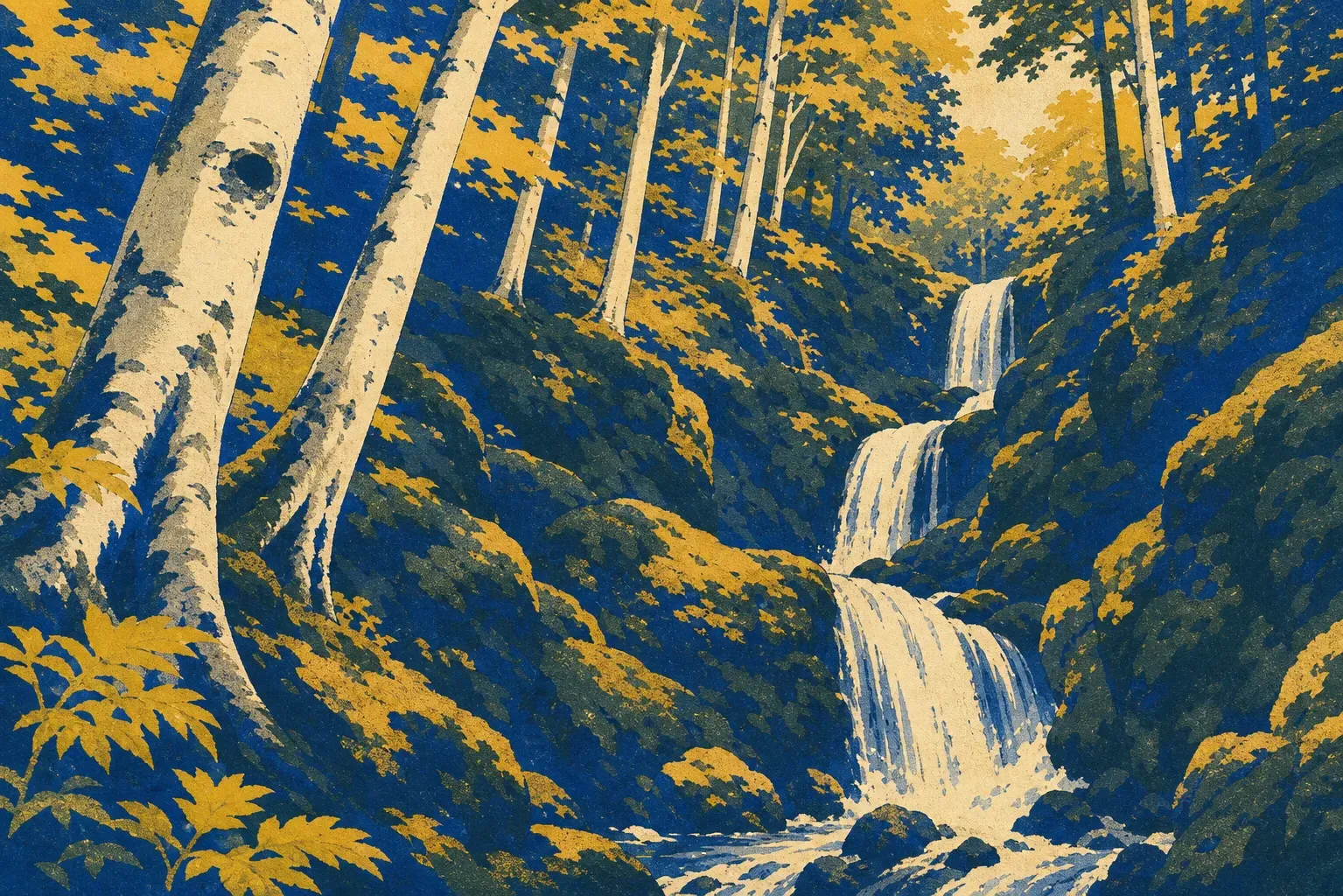
Shirakami-Sanchi
白神山地
- Hirosaki Station (Aomori Prefecture)
- ≈5–5.5 h from Tokyo
- Depends on route — see Access
- Early summer (June-July) for fresh green beech foliage
Quick facts
- ≈5–5.5 h from Tokyo
- roughly 18,000-19,000 yen one way (shinkansen + local train + bus)
- Depends on route — see Access
- Early summer (June-July) for fresh green beech foliage · Autumn (October) for red and gold foliage · Note: trails such as Anmon Falls are closed roughly mid-November to late April due to snow
- Hirosaki Station (Aomori Prefecture)
- The Anmon Gorge Route reopened on August 2, 2026, but only as far as the Third Falls, with part of the path under water and rubber boots needed until it drains. The Second Falls section has been closed for restoration since June 18; an early-August reopening was announced but had not been confirmed on the operator's own status board, so read that board at anmon-shirakami.com the morning you go rather than trusting a date. The First Falls is open only with a guide. Everyone files a tsuko-todoke entry form at the reception hut on the way in, where helmets rent for ¥100.
- The direct Hirosaki-Anmon bus (Anmon Shirakami-go) operates in 2026 only on Saturdays, Sundays, and holidays from September 19 to October 31, so summer and midweek visits to the gorge trailhead need a rental car or taxi; confirm current details with Konan Bus (0172-36-5061).
- Aomori logged 372 black-bear incident reports in the 30 days to early July 2026, including sightings around Hirosaki, so carry a bell, hike mid-day, consider the 500-yen bear-spray rental at Aqua Green Village, and obey any trail closure.
- The Anmon no Yu hot spring at Aqua Green Village ANMON is not operating for the entire 2026 season, so plan your post-hike bath elsewhere, such as Koganezaki Furofushi Onsen on the coast.
Overview
Why it's inscribed
In 1993, Shirakami-Sanchi and Yakushima became Japan's first natural World Heritage sites. What earned the listing here is 16,971 hectares of virgin Siebold's beech forest on the Aomori-Akita border, the largest intact stand of its kind anywhere in East Asia.
The forest is a survivor. Between roughly 8,000 and 12,000 years ago, beech woodland like this covered most of northern Japan; almost all of it has since been cut or cleared. Shirakami escaped. And because Japan's mountain ranges run north to south, its plant communities could slide down the archipelago during the ice ages and migrate back afterward without being trapped and thinned, so the species assemblage arrived in the present essentially complete. Ecologists call it a museum of forest ecosystems: over 540 plant species, 87 species of birds in UNESCO's count, around 2,200 kinds of insect. Golden eagles and black woodpeckers nest in the canopy. Black bears and Japanese serows work the slopes below.
Know one thing before you plan anything: the inscribed core is closed wilderness, with no roads, no huts, no marked trails. Aomori-side entry requires a permit along 27 designated routes; Akita-side entry is banned outright. Everything visitors actually see, from Anmon Falls to the Juniko lakes, lies in the buffer zone around the edge. That is not a consolation prize. It is the same forest, minus the paperwork.
What you'll actually see
Shirakami-Sanchi Visitor Center
Start in Nishimeya Village, on the eastern flank. Admission is free; the 33-minute large-screen film costs 300 yen as of 2026 (free through high school), screens on the hour from 09:00 to 16:00 between April and October, and is worth it precisely because the core forest is off-limits — this is the closest look most people get at the interior. Staff know current trail conditions, which matters more here than at most parks, since the gorge route's opening date moves year to year. Watch the calendar: closed the second Monday of the month April through December (the fourth Monday in August), and both Mondays and Thursdays from January to March.
Beech Forest Walking Trail
An easy loop starting at Aqua Green Village ANMON, and the gentlest way to actually stand inside old beech forest. In 2026 it opened on May 22, which makes it the first walking option of the season, weeks before the gorge. Take it slowly. The pleasure is quiet and specific: smooth gray trunks and the green light that filters through a beech canopy in early summer. If your knees, your schedule, or the weather rule out the waterfall route, this loop alone justifies the trip out from Hirosaki.
Anmon Gorge Route
The showpiece walk: three waterfalls of 26, 37, and 42 meters stepping up a narrow gorge, about 4.2 km and 2 to 2.5 hours round trip to the Third Falls, with only 142 meters of climbing. Sections run through the streambed itself, so rubber boots are essential whenever the path is under water — rentals cost 350 yen in 2026, and the operator's daily status note says whether the day needs them. The 100-yen helmet is required at all times, because the gorge walls shed rock. File the entry form at the cooperation-fee desk before setting off, and expect closure without notice on heavy-rain days. The First Falls, the tallest, has no maintained path and requires a guide.
Resort Shirakami train
Moving between the two flanks is itself an event. The Resort Shirakami runs the JR Gono Line along the Sea of Japan between Akita and Aomori via Hirosaki, stopping at Juniko Station. Three trainsets rotate (Buna, with huge windows and a beech theme, plus Aoike and the orange, woodpecker-themed Kumagera), and some services carry live Tsugaru-shamisen and dialect storytelling. Every seat is reserved; a rail pass alone will not seat you. From December through March the train runs only on selected days.
Juniko and Aoike
"Twelve Lakes" undercounts: 33 lakes and ponds sit on a plateau created when a 1704 earthquake dropped a hillside, now inside Tsugaru Quasi-National Park. The one everybody comes for is Aoike, a small pond of implausibly cobalt water with sunken beech trunks clearly readable on the bottom. A wooden boardwalk overlooks it about ten minutes' walk from the Kyororo trailhead (parking 500 yen, cash only, in 2026). The color runs on direct sunlight.
Wakitsubo-no-ike and Nihon Canyon
Fifteen minutes past Aoike, spring-fed Wakitsubo-no-ike is deep blue in its own right and far less crowded. The Aoike-Wakitsubo loop takes about 45 minutes total, which is why Juniko fits comfortably into half a day. Above the lake district, Nihon Canyon presents white-gray tuff cliffs billed locally as Japan's miniature Grand Canyon; it photographs bigger than it walks.
Worth knowing
Two windows repay the trip most: late May for shinryoku, the fresh-green flush when the beech promenade opens, and October, when the canopy turns gold. The catch is that the gorge route itself has been opening very late (August 1 in 2026), so if the waterfalls are the point, come in early autumn rather than midsummer and check the opening notice first.
Aoike is a morning pond. Its blue depends on direct light, so schedule the lakes for a clear forecast and do the walking before noon.
This is serious bear country in 2026, and etiquette here is partly safety procedure: carry a bell, hike in the middle of the day, and treat any municipal closure as final. On the Anmon route, wear the rental helmet properly; the walls genuinely drop rock. Use the toilet at the trailhead, because there are none beyond it, and pack every scrap of trash out. Stay on the boardwalks and leave the plants alone; fishing is banned throughout the heritage area. Finally, resist cramming both flanks into one day. Anmon and Juniko sit on opposite sides of the massif, and doing both properly means two nights.
Highlights
Virgin beech forest trails (largest primeval beech forest in East Asia)
Anmon Falls three-tiered waterfall hike (about 70 minutes each way)
Juniko (Twelve Lakes) area with the vividly blue Aoike Pond on the Aomori-side coast (Fukaura Town)
Shirakami-dake and Tengu-dake summit hikes
Shirakami-Sanchi Visitor Center in Nishimeya (exhibits and films)
Resort Shirakami sightseeing train along the Gono Line coast
Getting there from Tokyo
JR Tohoku Shinkansen (Hayabusa) Tokyo to Shin-Aomori (about 3h20m), JR Ou Main Line to Hirosaki (about 40 min), then Konan Bus on the Nishimeya Village Office (Tashiro) line to the Shirakami-Sanchi Visitor Center (about 65-70 min); in season the Anmon Shirakami-go continues to Aqua Green Village ANMON for Anmon Falls (Hirosaki Bus Terminal 8:20 to 9:30, about 70 min) and terminates there in 2026, with no service to Tsugaru-Toge. For the Juniko/Aoike side, take the JR Gono Line (Resort Shirakami train) to Juniko Station and a connecting bus.
Where to base & what to eat
Where to base
Hirosaki, Aomori
Business hotels, restaurants, rental cars, and the castle make it the practical base, but you're about 70 minutes from the Anmon trailhead, and in 2026 the seasonal Anmon bus runs only on weekends and holidays from September 19 to October 31, so midweek or summer gorge trips mean a rental car or taxi.
Fukaura / Juniko coast, Aomori
Koganezaki Furofushi Onsen's open-air bath at the waterline and Aone Shirakami Juniko ten minutes from the lakes deliver sunsets, hot springs, and bluefin, but you're on the wrong side of the massif for Anmon Falls and Furofushi books out far ahead.
Aqua Green Village ANMON, Nishimeya
Nine wooden cottages and 16 campsites at the gorge trailhead buy you a dawn start and real forest quiet, but only from July 1 to September 30 in 2026; cottages are room-only, the Center House runs a café and a light-meal counter (11:00-14:00) on weekends and holidays, and the on-site hot spring is closed all season.
Fujisato / Noshiro, Akita
The quiet ecology-first side, with the free World Heritage Conservation Center and small minshuku, but core-zone entry from Akita is prohibited, transport is thin, and there's no showpiece walk to match Anmon.
What to eat
Fukaura maguro steak don
Fukaura is Aomori's top bluefin-landing port, and this fixed-format lunch (1,800 yen including tax in 2026) turns one fish into three mini-bowls, raw, half-seared, and fully seared, at participating spots including Takumiya, Sunset House, Hiroshime, Koganezaki Furofushi Onsen, and Restaurant Akashobin at Aone Shirakami Juniko.
Hirosaki apple pie and cidre
Japan's biggest apple-growing city publishes a free Apple Pie Guide Map rating 43 pies around town, and the Taisho Roman Kissashitsu in Fujita Memorial Garden stocks about seven bakeries' pies at once, with dry local cidre as the natural pairing.
Ajigasawa hirame-no-zuke don
Soy-marinated flounder over rice, the signature bowl of the fishing town of Ajigasawa, an easy Gono Line stop between Hirosaki and the Juniko coast.
Sansai, maitake, and iwana
The mountain side's answer to the coast's tuna: wild vegetables, maitake mushrooms, and char from Shirakami spring-water country, with the Aqua Green Village shop (08:30-17:00, open from July 1 in 2026 within the village's July 1 to September 30 season) the dependable place to buy forest foods.
Official links
Fares, hours and closures change with little notice. These are the operators' and authorities' own pages — worth a look close to your travel dates.
Related stories
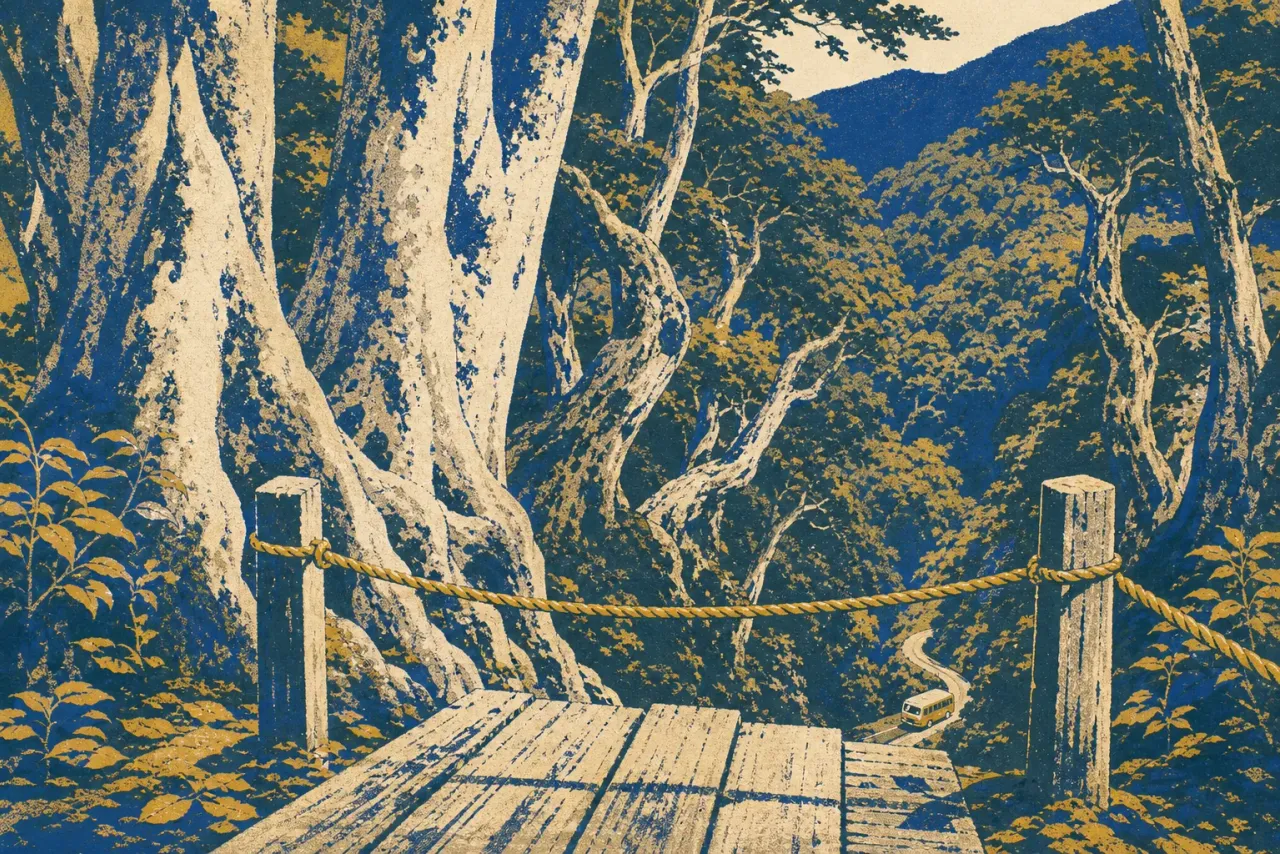
The forest you are not allowed to enter: making sense of Shirakami-Sanchi in one day
The 16,971 hectares Japan inscribed in 1993 are closed wilderness. Here is how to stand at their threshold anyway — and why one bus schedule dictates the whole day.
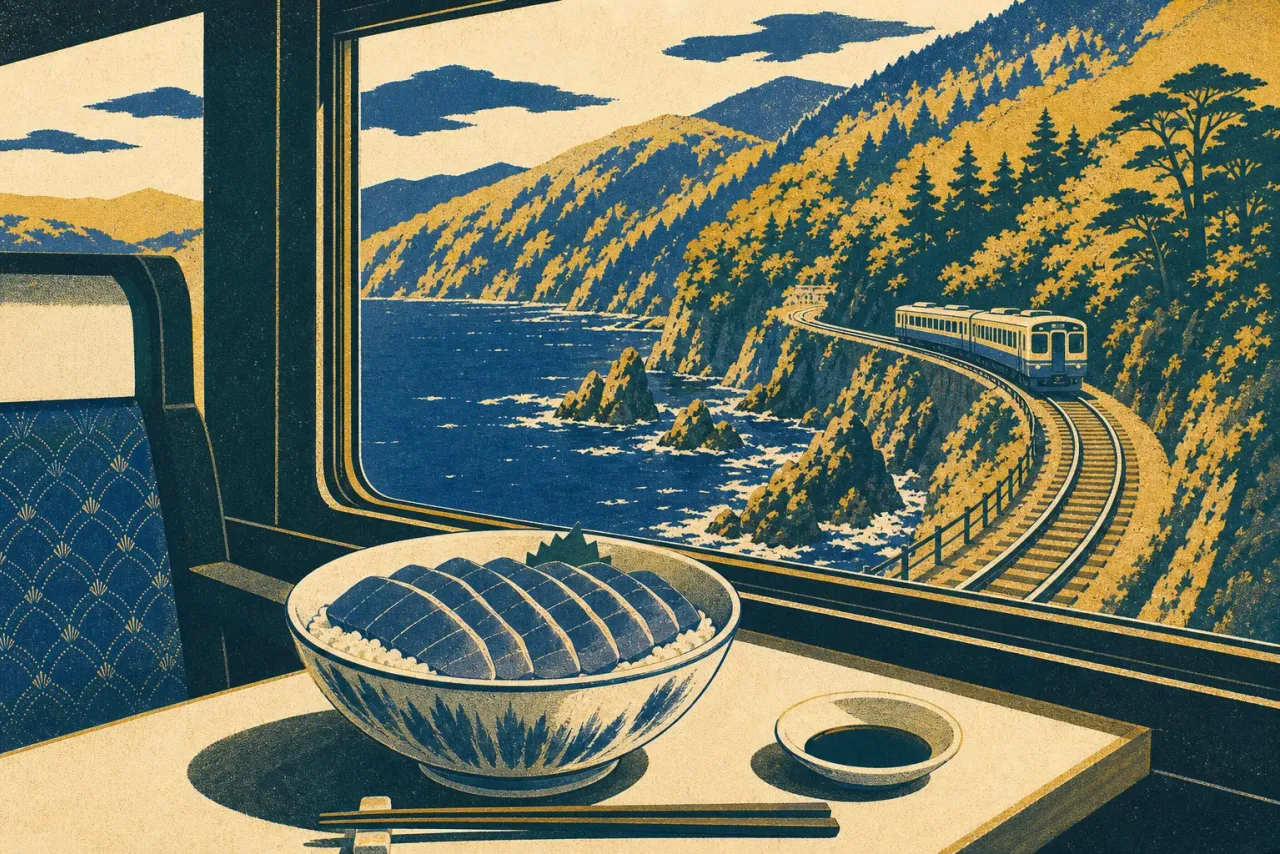
Blue water and bluefin: the Gono Line side of Shirakami-Sanchi
The western flank of Shirakami-Sanchi asks nothing harder of you than a reserved train seat, a flat 45-minute walk to a cobalt pond, and an 1,800-yen bluefin lunch.
Nearby & combine with
Sources
- https://whc.unesco.org/en/list/663/
- https://whc.unesco.org/en/list/xml/
- https://www.japan.travel/en/world-heritage/shirakami-sanchi-mountain-range/
- https://aomori-tourism.com/en/spot/detail_73.html
- https://www.konanbus.com/travel/shirakami.html
- https://www.anmon-shirakami.com/trekking/b1.html
- https://www.anmon-shirakami.com/facilities/centerhouse.html
- https://www.shirakami-visitor.jp/guide.html