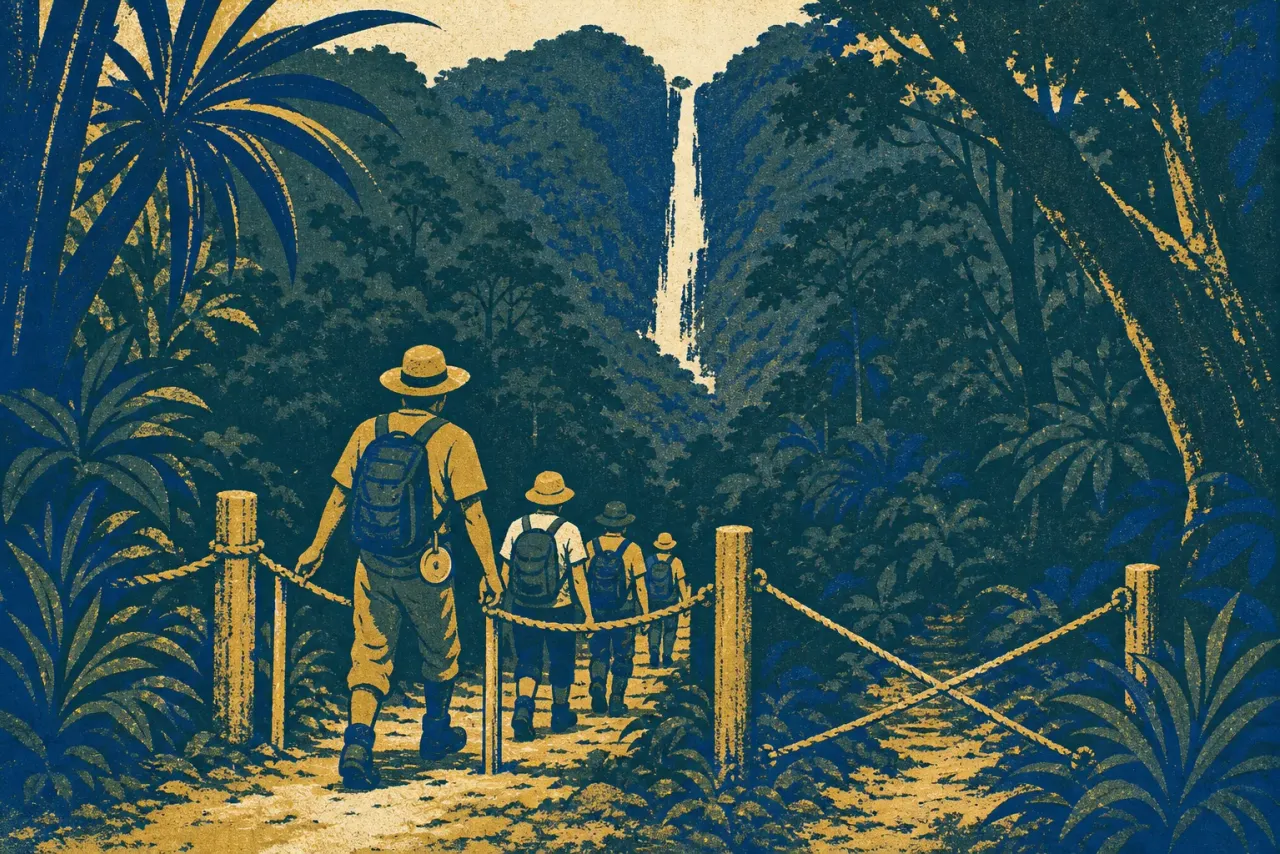
The forest you are not allowed to enter: making sense of Shirakami-Sanchi in one day
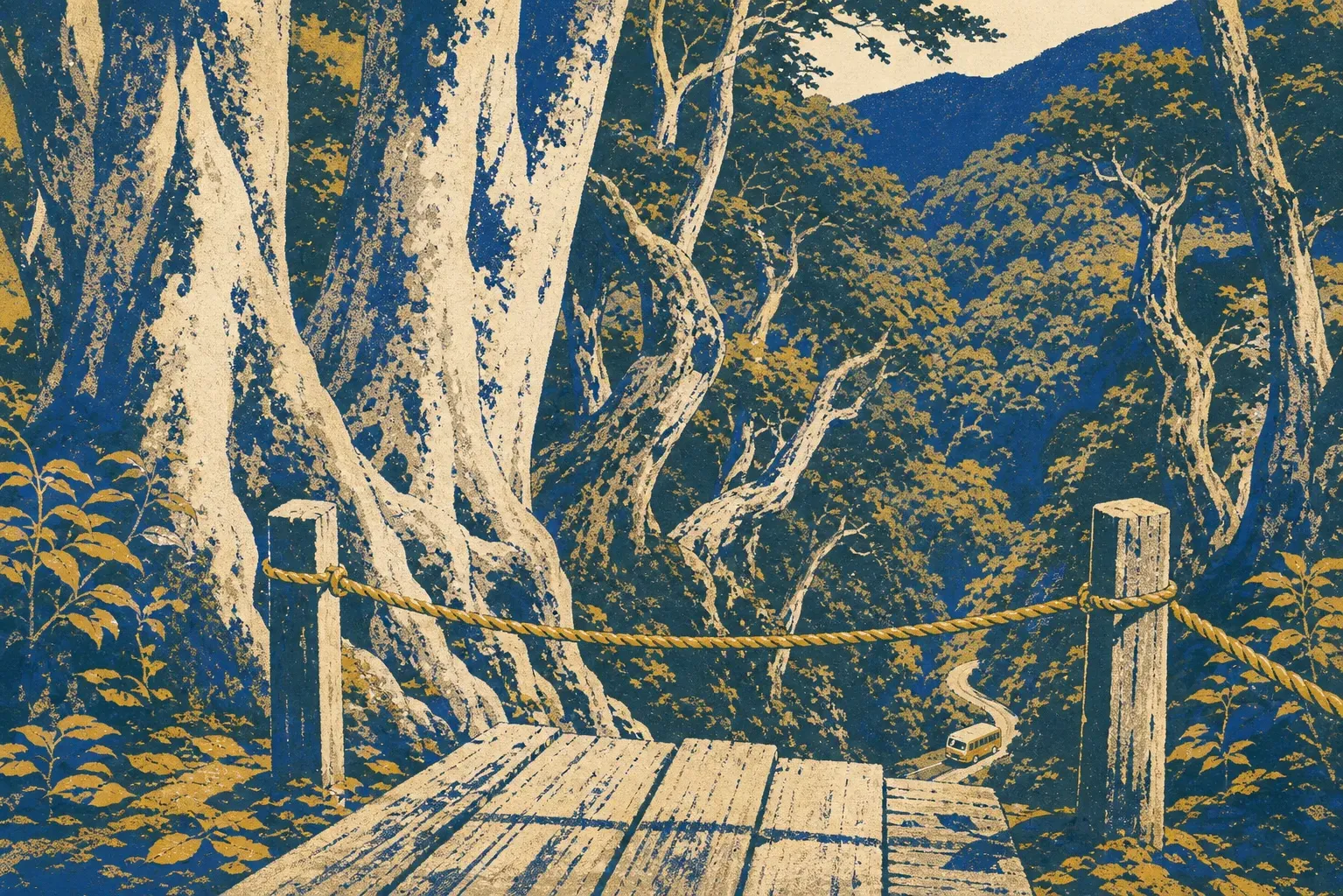
Every June, someone steps off the train at Hirosaki with a plan to "hike Shirakami-Sanchi," and learns at the tourist information desk that no such hike exists. The 16,971 hectares Japan inscribed in 1993, its first natural World Heritage listing, are closed wilderness. No roads cross the core zone. No huts, no signposted trails, not one souvenir stand. From the Aomori side you may enter only with a permit, on one of 27 designated routes; from the Akita side, entry is banned outright. What visitors actually see is the buffer zone around the edges, and once you understand why, that stops feeling like a consolation prize.
The reason is in the trees. Shirakami-Sanchi protects the largest intact stand of virgin Siebold's beech forest left in East Asia, a survivor of the woodland that covered northern Japan after the last glaciation. UNESCO listed the site under natural criterion (ix), which rewards ongoing ecological processes: this forest is still running the same program it ran eight millennia ago, and the entire point of the inscription is that nobody interferes. Including you. The core-zone permit system (Tohoku Regional Forest Office, 017-781-2117; applications by mail at least seven days ahead, or in person at one of nine local offices; Japanese only) exists for experienced parties navigating unmarked terrain, not for a day trip.
A day trip is what the buffer zone is for. From Hirosaki, it works, provided you respect one constraint.
One bus timetable sets the whole schedule
Konan Bus runs a regular line from Hirosaki Bus Terminal, three minutes on foot from the station, out to Nishimeya village. Ride 65 to 70 minutes to the Nishimeya Murayakuba-mae stop (about 990 yen) and the Shirakami-Sanchi Visitor Center is a five-minute walk away. The seasonal Anmon Shirakami-go carries on past the village to the trailhead at Aqua Green Village ANMON, leaving Hirosaki Bus Terminal at 8:20 and pulling in at 9:30 — about 70 minutes, 1,800 yen one way, or 500 yen if you ride it only as far as the village office. In 2026 it runs on Saturdays, Sundays, and holidays from September 19 through October 31 only.
That 8:20 is the day's single through run, but it is not the day's only option. Three later departures on the regular village line, 9:00, 11:30 and 13:00, reach the trailhead on the same ticket with a transfer at the Nishimeya Village Office. Returns from ANMON leave at 9:45, 12:15, 13:45 and 15:30, the last of them running through to Hirosaki Station by 16:40. Take the 8:20 out and the 15:30 back and the day has slack in it; take a later departure and the gorge gets whatever hours are left. Outside the autumn window, the stretch past the village means a rental car or a taxi.
Give the Visitor Center a real half hour rather than a pass-through. Admission is free, and the large-screen film costs 300 yen per adult as of 2026, free through high school age. It compresses the forest's year, including the buried-in-snow months when no bus runs at all, into 33 minutes, and it is the best interpretation you will get in any language. From April to October the center opens 08:30 to 17:00 and closes on the second Monday of each month, except August, when the closure moves to the fourth Monday. The exhibits also put faces on the neighbors you are statistically unlikely to meet: the golden eagle and the black woodpecker, the two flagship residents of the core zone.
One thing not to attempt is adding Aoike, the famous blue pond of the Juniko lake district, to this same day. Juniko sits on the far, seaward flank of the massif. There is no direct link across, and travelers who chase both usually end up with neither. Two separate days, ideally two nights, is the honest minimum.
Into the gorge, as far as they let you
The walk everyone comes for is the Anmon Gorge Route, upstream along a river to three waterfalls of 26, 37, and 42 meters. The round trip to the Third Falls is 4.2 kilometers and takes 120 to 150 minutes, and the climbing is almost nominal, about 142 meters of gain from a trailhead at 240 meters. Slope is not the difficulty here. Sections of the path run through the river itself, and when the water is up and the walkway is flooded, rubber boots are not optional; the trailhead rents them for 350 yen (2026), and the operator's daily status note tells you whether the day calls for them. The helmet is the standing rule, compulsory whatever the water is doing, 100 yen at the reception desk, because the gorge walls shed rock. That desk is also where you file a tsūkō-todoke, an entry form, before starting. None of this is theater, and neither is the rule that the route shuts without notice on heavy-rain days. Use the toilet at the trailhead; there is nothing along the trail.
Now the fact that should shape your booking dates. In 2026 the gorge route did not open until August 1, and then only as far as the Third Falls, with the stretch toward the Second Falls closed for restoration works begun on June 18, due to finish in late July and to reopen in early August; the Visitor Center recorded the route as actually passable from 12:50 on August 2. This is not an anomaly, just a sharp version of the annual pattern: snowmelt keeps the water high and hazardous deep into summer, so the route opens late and closes again by late November. A July itinerary built around Anmon Falls is a gamble. A June one will lose. Check the official opening notice before you pay for anything nonrefundable, and if the gorge is shut, walk the Beech Forest Walking Trail instead, an easy loop from Aqua Green Village ANMON at the trailhead that puts you under old beech canopy with no helmet involved.
Bears, and where the path ends
You will be walking through serious habitat in a serious year. Aomori Prefecture logged 372 black-bear reports in the 30 days to early July 2026, with sightings around Hirosaki city itself, and beech forest is precisely where Asiatic black bears live, alongside the Japanese serow, a goat-antelope that sometimes watches hikers from the slopes with complete indifference. Bear spray rents at the trailhead for 500 yen (2026, returned the same day) if it reassures you. More useful still: hike in the middle of the day, make noise on blind corners, and treat any municipal trail closure as final.
The Third Falls is where the maintained world stops. Past it the valley climbs toward the inscribed core, trail-less and permit-locked, and the correct move is the one the whole site is organized around: look, then turn back. You will be standing about 142 meters above the trailhead, at the threshold of the biggest primeval beech wilderness in East Asia, having spent less on equipment than on lunch. Leave the falls with margin to spare. The last bus out of the trailhead goes at 15:30 and will not wait, and the forest, which has waited eight thousand years, is not going anywhere.