Shuri Castle rises again: a first-timer's half-day in the Ryukyu royal capital
Pull out a 2,000-yen note, if you can find one, and you'll see a gate. It's Shureimon, twin-roofed and red-columned, the ceremonial entrance to Shuri Castle in Naha. What the bill doesn't mention: that gate dates to 1958, rebuilt thirteen years after American naval shells flattened the original, and the entire palace behind it, in the Battle of Okinawa. The palace was rebuilt between 1992 and 2000. Then, on October 31, 2019, an electrical fault started a fire that gutted the Seiden main hall and roughly 4,200 square meters of buildings around it.
So if you're landing at Naha and wondering whether Shuri Castle is "back," the answer is: almost, with an exact date attached. The rebuilt Seiden opens to visitors on November 23, 2026, the day after its completion ceremony. Go before then and you won't see a finished palace. You'll see something rarer.
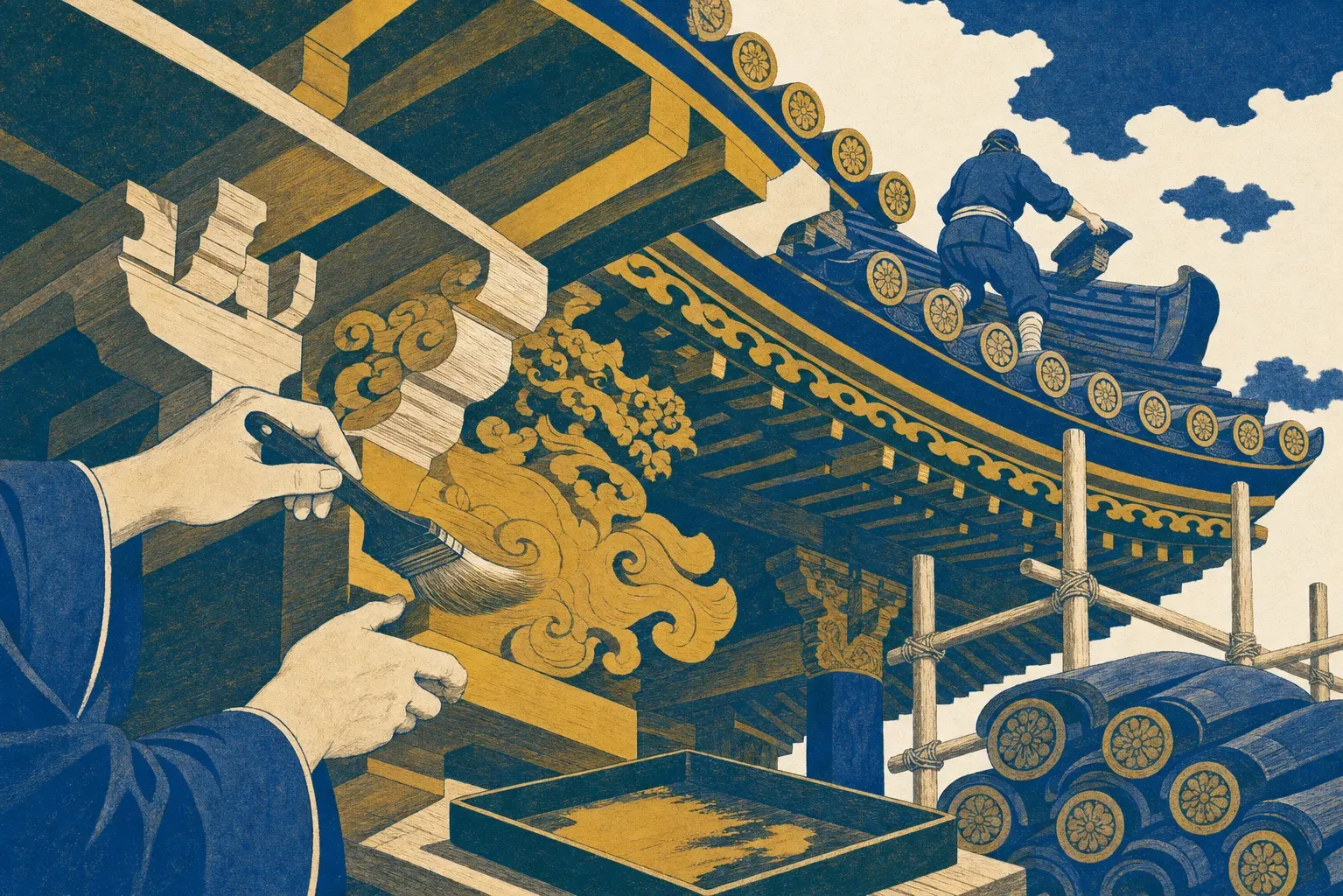
Inside the paid area, observation decks overlook the work site itself, where craftspeople are finishing the Seiden using the traditional Ryukyuan methods of the original: lacquer applied by hand, red roof tiles shaped the old way. The park calls this "visible reconstruction," and it's not a consolation prize. Once the hall opens, the scaffolding comes down and the view is gone for good. A morning spent watching lacquerers work is, I'd argue, a better story than one more freshly painted hall.
First, unlearn the word "castle"
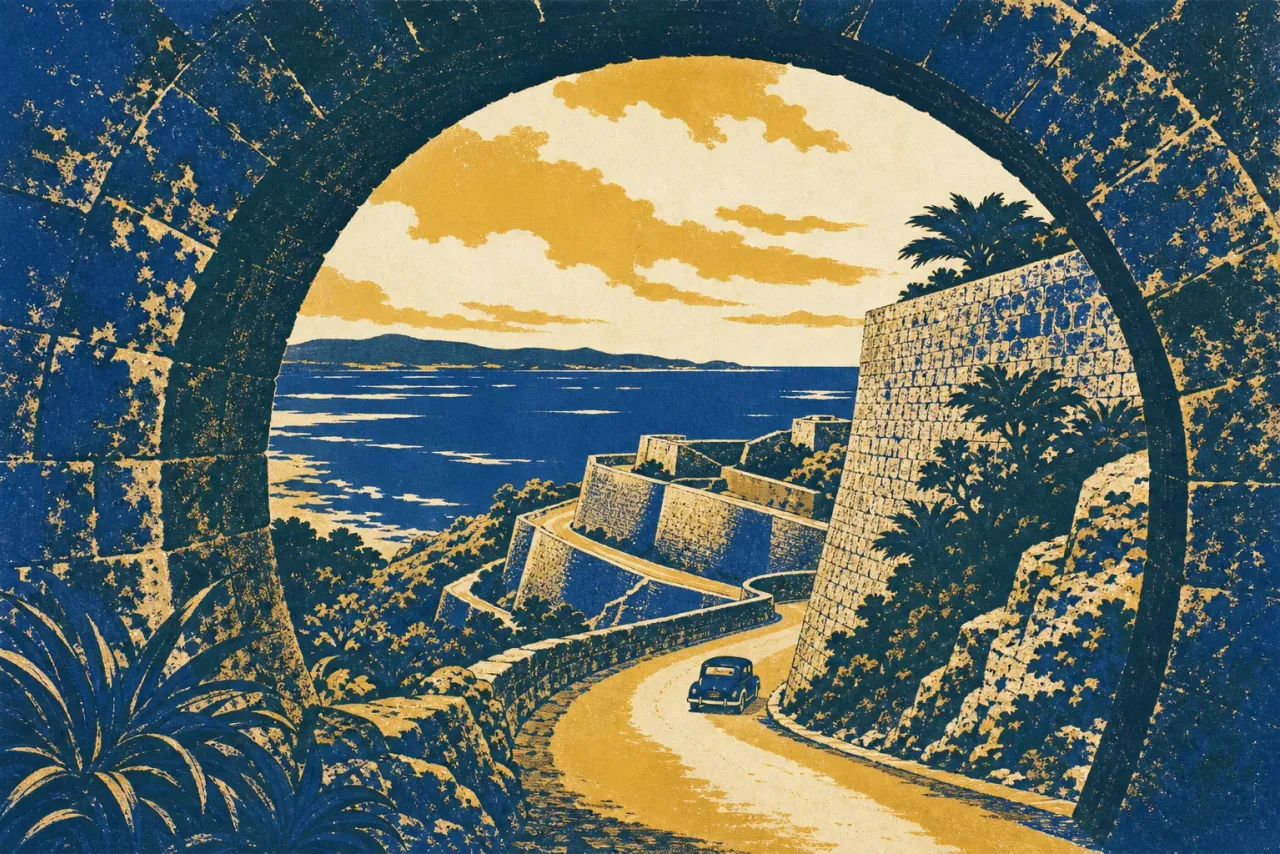
Shuri looks nothing like Himeji, and it isn't trying to. Until 1879, Okinawa wasn't Japan. It was the Ryukyu Kingdom, an independent maritime trading state that unified in 1429 and spent four and a half centuries at the crossroads of China, Japan, and Southeast Asia. Its royal seat was a vermillion palace, Chinese in its lacquer and dragon ornament, Japanese in parts of its structure, crowning a hill 120 to 130 meters above the port of Naha. The limestone walls curve with the terrain instead of stacking into keeps.
UNESCO inscribed the site in 2000 as one of nine Gusuku Sites of the Kingdom of Ryukyu scattered across Okinawa's main island, and the listing is precise: it covers the original foundations and walls, not the buildings reconstructed on top. This matters more than it sounds. The World Heritage part is under your feet the entire visit, unbothered by fire. The wooden palace has burned and risen twice in eighty years; the stones have simply stayed.
The half-day, hour by hour
From Naha Airport, the Yui Rail monorail runs to Shuri Station in about 27 minutes for 360 yen as of 2026. Watch for your stop: Shuri is the fifteenth of nineteen stations, not the terminus, and the line carries on through Ishimine and Urasoe-Maeda to Tedako-Uranishi. Lockers at the park handle luggage if you're coming straight off a flight. From the station it's a 15-minute walk to the castle, uphill the whole way. Royal capitals sit on hills for defensive reasons, and your calves will confirm the logic.
The free area opens at 8:00, the paid zone at 8:30, and going early beats both the heat and the tour groups. Admission to the paid area is 400 yen for adults as of 2026, restoration-period pricing; show a Yui Rail pass and it drops to 320 yen. Ignore older articles quoting 820 yen, which was the pre-fire fee for the full complex — and check the date on your ticket, because the reopening resets the price. From November 23, 2026, adult admission goes to 1,000 yen, high school students to 760, elementary and junior high to 370; under-sixes stay free. The park closes for annual maintenance on the first Wednesday of July and the following day. As for hours, the paid zone runs to 19:00 from April through November with ticket sales stopping at 18:30, and to 18:00 from December through March. There is no late-evening opening, whatever older articles promise, so the answer to a humid August afternoon is to be here at 8:30 instead.
Give the park 1.5 to 2 hours and wear real shoes. The whole hill is stone paving and stairs, slick after rain, and the park can shut outright in a typhoon; the season peaks from August into early October. If you can choose your window, October and November hover around 25°C and are the kindest weeks Okinawa offers.
Walk down past the kings
Two of the quietest components of the same World Heritage listing sit within a few minutes of Shureimon, and most visitors miss both.
Tamaudun, a short walk west, is the royal mausoleum King Sho Shin built in 1501 for his father, Sho En. Seventeen of the nineteen Second Sho Dynasty kings are entombed behind its carved stone facade, shisa lions standing guard over a coral-paved forecourt. Admission is a few hundred yen; confirm the exact figure at the gate, since English sources disagree. Unlike the palace above, what you're looking at here is precisely what UNESCO listed: original stone, five centuries old, no reconstruction required.
Sonohyan-utaki is easier still. It's a stone gate from 1519, standing beside Shureimon, where kings paused to pray before any journey out of the capital. You view the gate only; the sacred grove behind it remains off-limits, because utaki are living religious sites, not ruins. It's free and takes five minutes, which is perhaps why people stride past without noticing they've walked by a World Heritage monument.
For the way down, take the Kinjo-cho stone road, the old paved lane dropping steeply below the castle. It's hard on the knees and better than retracing your steps.
Then eat. Shuri Soba, in a house down a side street near the castle, draws a line for its Okinawa soba, wheat noodles in a pork-and-bonito broth topped with braised pork; arrive before noon or budget the wait. Near Shuri Station, Tonkatsu YAMASHiRO has spent more than 55 years serving home-style champuru and pork-tamago set meals to a neighborhood crowd. Or ride the monorail back toward the center and get off for Daiichi Makishi Public Market, just off Kokusai-dori, where you buy fish downstairs and pay the second-floor restaurants to cook it, a system locals call mochiage.
However lunch goes, if your change ever includes a 2,000-yen note, look at it closely. You'll recognize the gate now. Better, you'll know which gate it is: the 1958 one, the first piece of its royal capital Okinawa rebuilt, thirty-four years before the palace and sixty-eight before the Seiden opens its doors again this November.