Ryukyu Gusuku Sites (Shuri Castle, Okinawa)
琉球王国のグスク及び関連遺産群
- Naha Airport / Naha city (Yui Rail Shuri Station for Shuri Castle)
- ≈4–5 h from Tokyo
- Depends on route — see Access
- spring (Mar-Apr, mild and before rainy season)
Quick facts
- ≈4–5 h from Tokyo
- flights roughly 10,000-35,000 yen one way depending on carrier and season; monorail 360 yen
- Depends on route — see Access
- spring (Mar-Apr, mild and before rainy season) · late autumn to early winter (Oct-Dec, after typhoon season) · avoid Aug-Sep typhoon peak
- Naha Airport / Naha city (Yui Rail Shuri Station for Shuri Castle)
- The rebuilt Seiden main hall at Shuri Castle opens to the public on November 23, 2026; until then the paid area shows the restoration work from observation decks, not a finished palace. Admission rises the same day from ¥400 to ¥1,000 for adults (¥760 high school, ¥370 elementary and junior high, free under 6).
- Construction restricts Sefa-utaki through the 2026 season: the Sansharo-Yuinchi stretch is closed July 1 to November 1, 2026 at the normal fee, and from November 2, 2026 to January 5, 2027 everything past the Ujoguchi entrance is off-limits, including the Sangui triangular passage — only Ujoguchi and the Kudaka-jima viewpoint stay open, with free admission during that phase.
- Sefa-utaki admission rises on October 1, 2026 from ¥300 to ¥600 for high-school age and above, and from ¥150 to ¥300 for elementary and junior-high students (groups of 20 or more, ¥500 and ¥300).
- Sefa-utaki also rests about six days a year for rituals, on the first through third days of the fifth and tenth lunar months — roughly June 15-17 and November 9-11 in 2026 — plus Dec 29-Jan 3, so confirm with Nanjo City before making the trip from Naha.
- Nakijin Castle admission rose to ¥1,000 for adults (¥500 junior-high and high-school, elementary free) on September 1, 2025, so ignore older fee listings.
Overview
Why it's inscribed
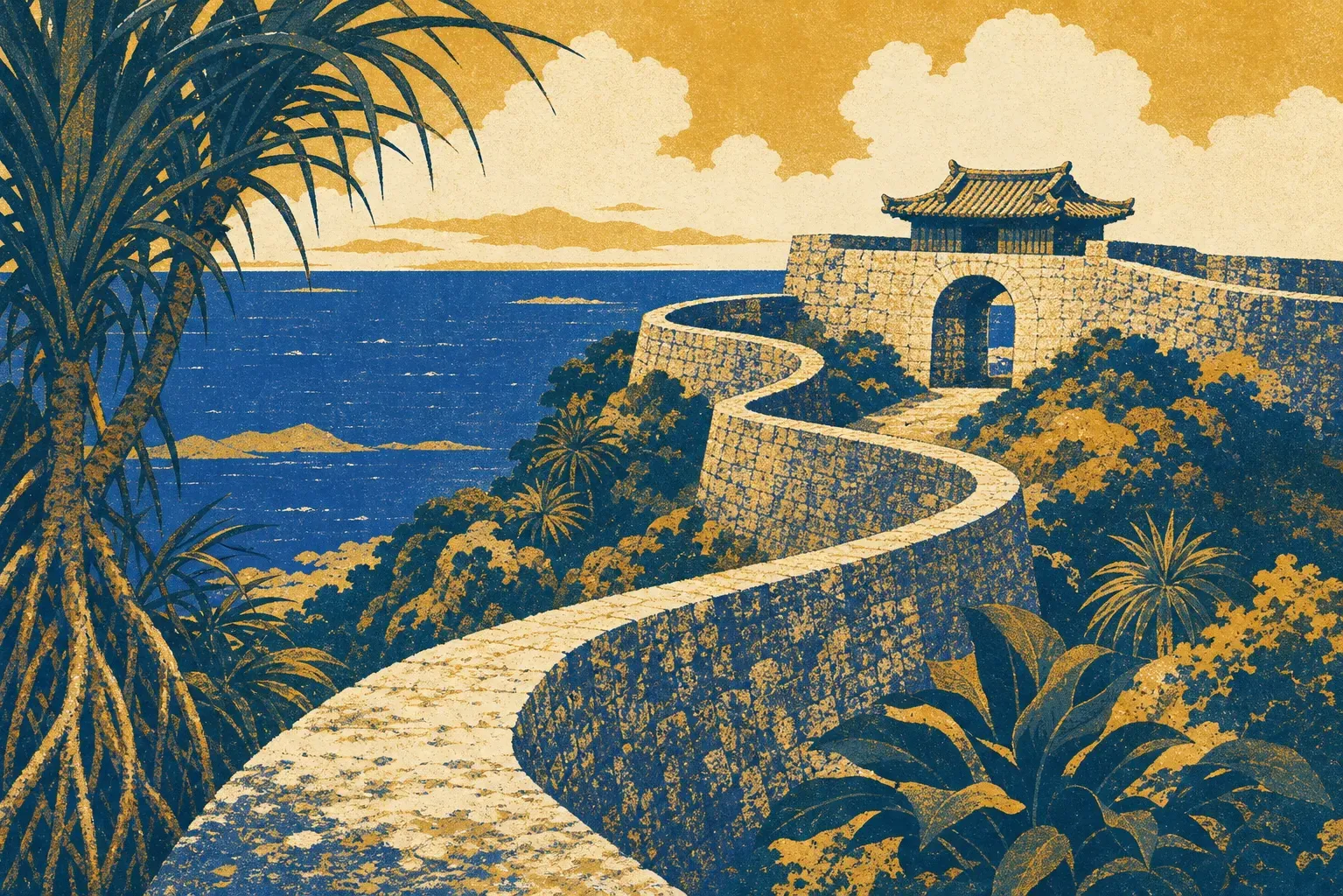
Okinawa was a country before it was a prefecture. From 1429 until Japan annexed it in 1879, the Ryukyu Kingdom governed itself from Shuri, a hilltop capital above Naha, and made its living as a maritime middleman between China, Japan, and Southeast Asia. The nine sites inscribed in 2000 are the physical record of that state: five castle ruins, a royal mausoleum, a garden built to entertain Chinese envoys, and two sacred groves.
The castles come first for most visitors, and they should. A gusuku is not a Japanese castle. Its limestone walls curve, tracing ridgelines in long arcs that have no counterpart on the mainland, and the palace that stood inside the largest of them was vermillion-lacquered and dragon-ornamented in a distinctly Chinese key. That synthesis (Chinese surface over Japanese structure, set in Okinawan stone) is the whole argument of the inscription.
Half of the listing is quieter and matters just as much. The utaki, sacred groves of Okinawa's indigenous nature-worship religion, never stopped being used; people still pray at Sefa-utaki, where the kingdom's highest priestess once held her rites. One honest caveat before you go: at Shuri, what UNESCO actually lists is the original foundations and walls. The buildings above them are reconstructions. Knowing that upfront makes the site more interesting, not less.
What you'll actually see
Shuri Castle Site
The royal palace crowned a hill about 130 meters above Naha. The complex burned in the 1945 Battle of Okinawa, was rebuilt between 1992 and 2000, then burned again in October 2019, when an electrical fault gutted the Seiden and several surrounding halls. The rebuilt Seiden opens November 23, 2026; until then, observation decks inside the paid area (¥400 for adults until that date, ¥1,000 after it) look directly onto craftspeople finishing the lacquer and tilework, which is its own kind of spectacle. Don't skip the Shureimon gate, the one on the ¥2,000 note, or the stone gate of Sonohyan-utaki beside it — a separate inscribed site that most people walk past without noticing.
Tamaudun
A short walk west of the castle, this is the royal mausoleum King Sho Shin built in 1501, where most of the Second Sho Dynasty kings were eventually entombed. It reads more like a fortress than a tomb: carved stone chambers watched over by weathered shisa lions. Most Shuri visitors walk straight past it. Give it twenty minutes; the quiet is the point.
Shikinaen
The kings kept a second residence south of Shuri, finished in 1799, where they received the Chinese investiture envoys who formally confirmed each new ruler. Its stroll garden mixes Chinese touches into Japanese garden grammar around a central pond. Like nearly everything else here it was destroyed in the war; restoration ran from 1975 to 1995 and was done patiently enough that you'd never guess. It's the one Naha-area site you may have nearly to yourself, and the best place to understand the kingdom as something other than walls.
Sefa-utaki
About an hour's drive from Naha on the Chinen Peninsula, this is the kingdom's holiest place: a forest sanctuary where the kikoe-ogimi, the realm's highest priestess, conducted her rituals. The famous view is through a triangular passage formed by two enormous leaning rocks, opening toward Kudaka, the sacred island offshore. There are no buildings and nothing is explained loudly, which is correct. People still worship here, so dress modestly, keep your voice down, and stay on the paths. Entry is ¥300 through September 2026 and ¥600 from October 1, with last admission 30 minutes before closing. Check the construction calendar before you drive out: maintenance work shuts the middle of the grove from July 1 to November 1, 2026, and from November 2 to January 5, 2027 nothing past the Ujoguchi entrance is open at all — the triangular passage included — leaving the entrance area and the Kudaka viewpoint, free of charge.
Nakagusuku Castle Site
If you want to see what gusuku masonry looked like before any restorer touched it, this is the one. Its walls step along a ridge in mid-island Nakagusuku village and are the best-preserved originals of any castle in the group. Admission is ¥500 for adults as of 2026, ¥300 for junior-high and high-school students and ¥200 for elementary-age children. A rental car is the realistic way in.
Katsuren and Zakimi castle sites
Two more central-island ruins reward a driving day. Katsuren, on a cliff in Uruma, was the stronghold of Lord Amawari; entry is through the Amawari Park visitor complex at its base. Zakimi, in Yomitan, is an early-15th-century fortress with arched gates so cleanly fitted they look modern, and the ruins themselves are free to walk.
Nakijin Castle Site
The northernmost site, on the Motobu Peninsula, was the capital of Hokuzan, the northern principality Shuri's kings conquered on their way to unifying the island. Its walls sweep across a hillside with the ocean behind them, and in late January and early February the grounds hold Japan's earliest cherry blossoms. Admission is ¥1,000 for adults as of 2026, up sharply from earlier years, and worth it.
Worth knowing
October and November are the sweet spot, with temperatures around 25°C and typhoon season winding down; August through early October brings storms that can shut Shurijo Castle Park and the outdoor sites without much notice. Don't count on an evening visit to dodge the heat, either: Shuri's paid zone runs 8:30 to 19:00 from April through November, with ticket sales stopping at 18:30, and 8:30 to 18:00 from December through March. The free area gives you an extra half hour at each end. An early start is the only real answer to an Okinawan summer afternoon.
Plan the geography honestly. The nine sites span the entire main island, and only the four in and around Naha are practical without a car. Trying to fold Sefa-utaki into a Naha afternoon is the classic mistake; between the ride out and the 30-minutes-before-closing entry cutoff, people arrive to locked gates. Sefa-utaki also rests about six days a year for rituals, on lunar-calendar dates that work out to roughly June 15-17 and November 9-11 in 2026, so check before going.
Two smaller things. Photos and prices from before the 2019 fire still dominate search results, including a defunct ¥820 admission figure for Shuri. And the stone underfoot turns slick in any rain; wear real shoes, and never climb the walls, anywhere. At the utaki, treat everything as an active shrine rather than a ruin, because that is exactly what it is.
Highlights
Shuri Castle, the royal seat of the Ryukyu Kingdom in Naha (main hall exterior restored 2025 after the 2019 fire; full reconstruction due autumn 2026)
Tamaudun, the stone-cut royal mausoleum of the second Sho dynasty
Nakijin Castle ruins on the Motobu Peninsula with sweeping sea views
Nakagusuku Castle ruins, one of the best-preserved gusuku stone walls
Zakimi and Katsuren castle ruins with distinctive curved fortifications
Sefa-utaki, the kingdom's most sacred worship site, and Shikinaen royal garden
Getting there from Tokyo
Fly Haneda (or Narita) to Naha Airport, about 2.5-3 hours; then Yui Rail monorail from Naha Airport to Shuri Station (about 27 min; Shuri is the 15th of 19 stops, not the terminus) and a roughly 15-minute walk to Shuri Castle Park. Other gusuku sites (Nakagusuku, Zakimi, Katsuren, Nakijin, Sefa-utaki) require rental car or bus, roughly 1-3 hours from Naha.
Where to base & what to eat
Where to base
Naha (Kokusai-dori / Shuri)
Monorail and city buses reach Shuri Castle, Tamaudun, Sonohyan-utaki and Shikinaen, plus the island's best eating, but there's no beach and it's a long drive to every castle outside the city.
Chatan / American Village
A beachy mid-island base that puts Zakimi, Katsuren and Nakagusuku within an easy rental-car radius, if you can live with the boardwalk-mall atmosphere.
Motobu Peninsula
The natural base for Nakijin Castle and its late-January cherry blossoms, with resorts near the Churaumi Aquarium, but budget roughly two hours from Naha by car.
What to eat
Okinawa soba
Wheat noodles in pork-and-bonito broth under soki ribs or rafute pork belly; Shuri Soba, in a house near the castle, is worth its line.
Goya champuru
Bitter-melon stir-fry with tofu, egg and pork (often Spam), the island's everyday dish; order it at a Naha izakaya like Mikado.
Awamori
Okinawa's indigenous rice liquor, once brewed under royal license in Shuri itself; tasting shops cluster around Shuri and Kokusai-dori.
Daiichi Makishi Public Market
Pick your fish downstairs and have the upstairs kitchens cook it (the mochiage system) at the renovated market just off Kokusai-dori.
Kokusai-dori street food
Taco rice, sata andagi doughnuts, beni-imo sweets and Blue Seal ice cream along Naha's 1.6-kilometer main drag.
Official links
Fares, hours and closures change with little notice. These are the operators' and authorities' own pages — worth a look close to your travel dates.
Related stories
Beyond Shuri: driving the gusuku trail through Okinawa's lost kingdom
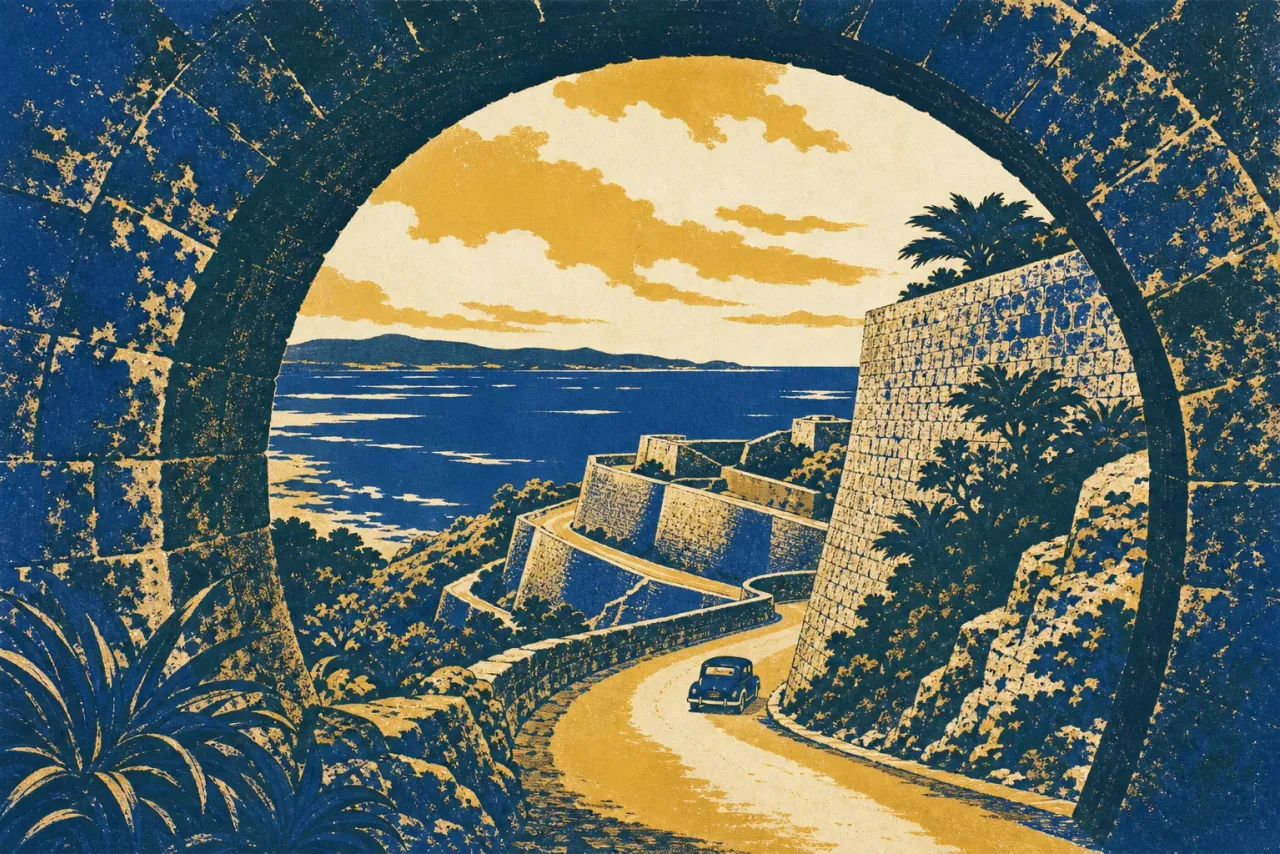
Five of Okinawa's nine World Heritage gusuku sit an hour or more from Naha, and several keep their original six-hundred-year-old walls. A rental-car route through Nakagusuku, Katsuren, Zakimi, Nakijin, and the sacred grove of Sefa-utaki.
Shuri Castle rises again: a first-timer's half-day in the Ryukyu royal capital
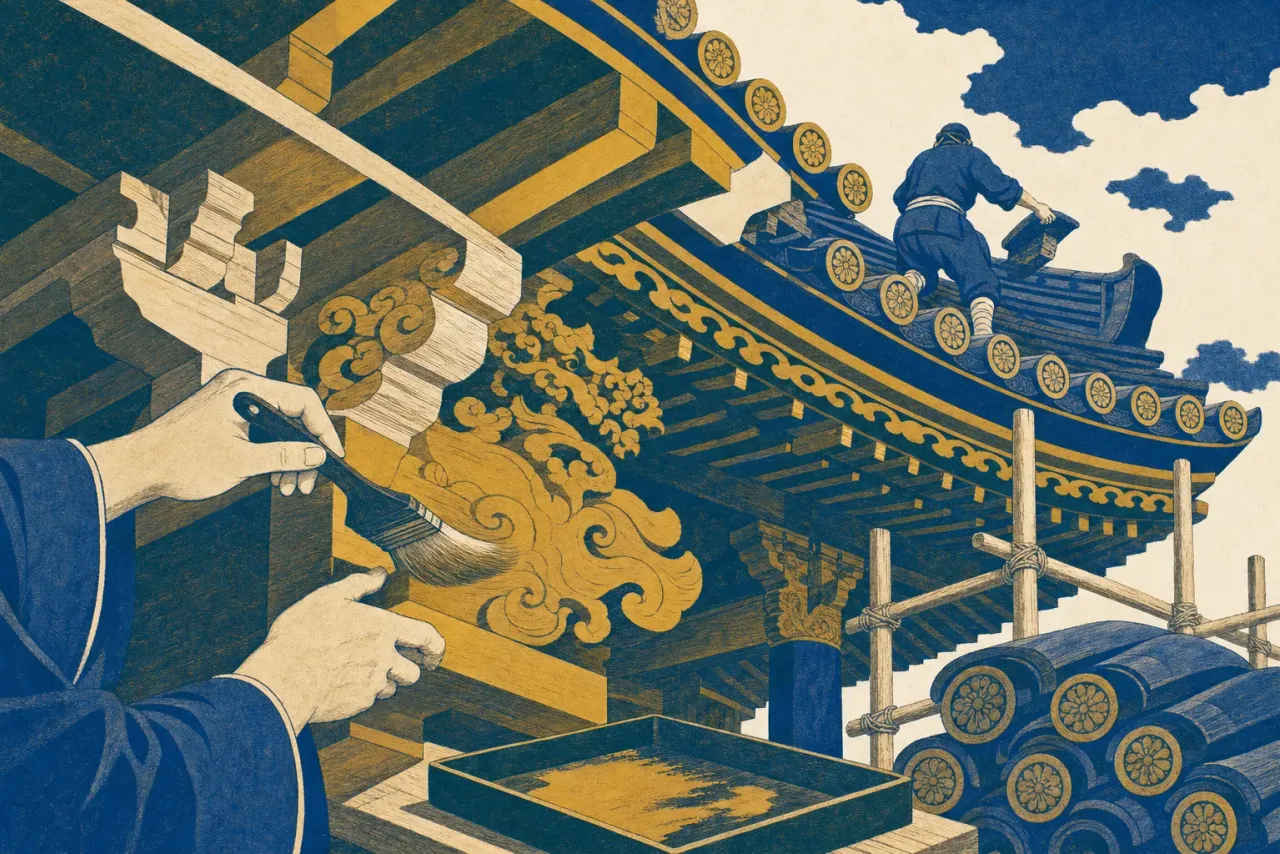
The rebuilt Seiden opens November 23, 2026. Go before then and you'll catch something rarer: lacquerers and tile-setters finishing a palace by hand, plus two royal sites most visitors walk right past.