Seven boats a day: planning the Munakata and Oshima World Heritage run
Oshima's two sightseeing buses, the Miare-go and the Granshimaru-go, made their final circuits on September 30, 2025, and were retired. Much of the English-language internet has not caught up. Arrive on the island expecting to flag down a loop bus to the distant-worship hall and you will instead be standing outside the ferry terminal, downloading an app, because the replacement is an AI-dispatched on-demand service that works best when you book it before you ever board the boat.
That is only the newest wrinkle in a day trip that was always governed by a timetable. The Munakata World Heritage sites split between a mainland shrine complex and an island 7 km offshore, and the island is served by exactly seven municipal sailings a day in each direction. Seven out, seven back. Plan around those boats and the rest of the day arranges itself. Plan around the shrines and you will lose either the museum's 16:00 last entry or the ride home.
Get to the boat before you think about shrines
The approach from Fukuoka is short. JR Kagoshima Main Line from Hakata to Togo Station takes 30 to 40 minutes and costs 660 yen (2026). At Togo the road forks: a 10-minute bus to Munakata Taisha-mae for the mainland shrine (260 yen in 2026), or a 20-to-25-minute bus to Konominato Hatoba, the ferry port (410 yen in 2026). Take the port bus first. The reasoning is defensive. The Genkai Sea cancels boats at short notice, the mainland museum admits nobody after 16:00, and the shrine grounds stay open until 19:00. Do the fragile half of the day while the weather is holding, and keep the forgiving half in reserve.
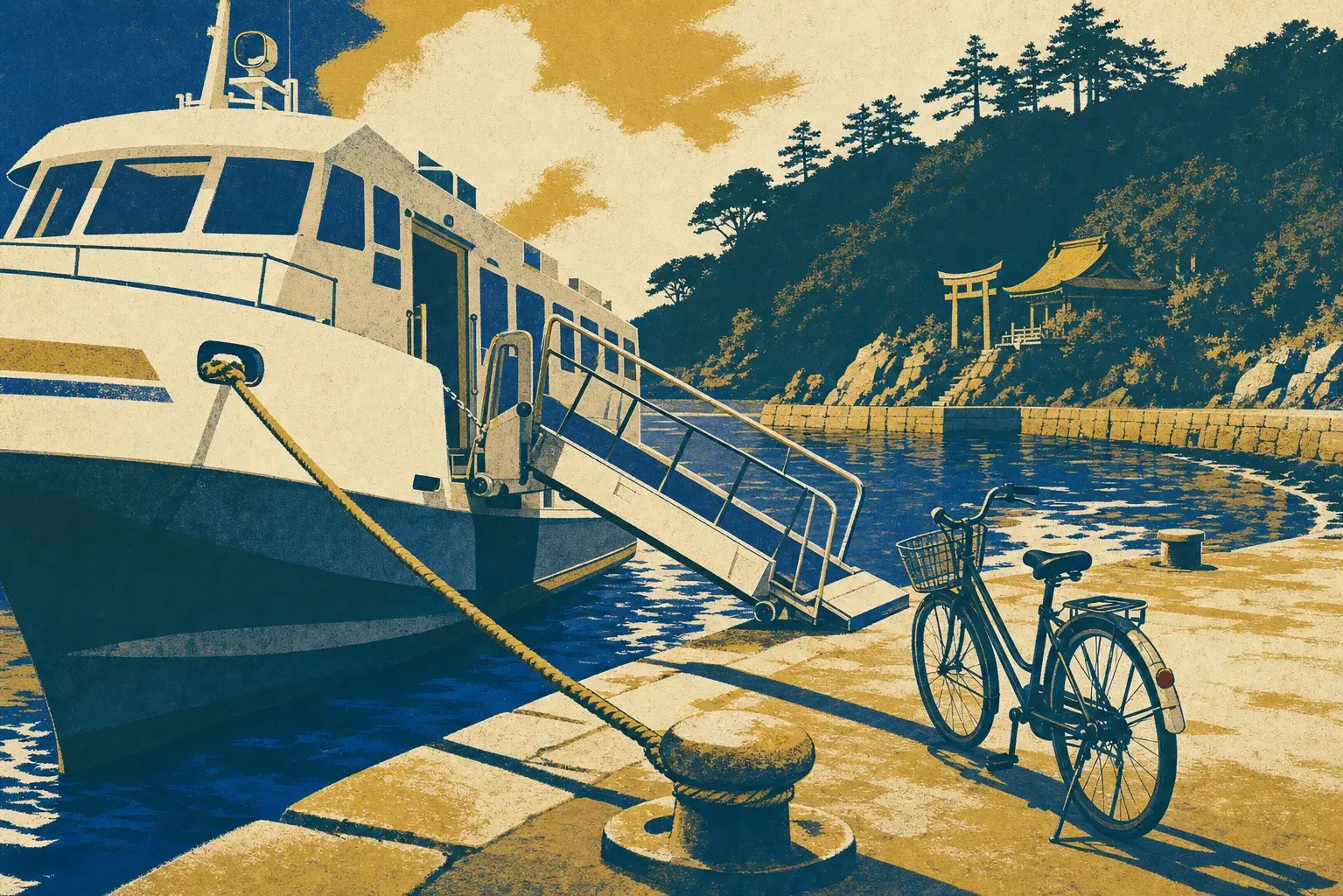
At Konominato, do not look for a reservation counter. There isn't one. Passenger tickets are first come, first served, from vending machines in the terminal, cash only — 570 yen one way for adults, 290 for children (2026). Two vessels work the route: the car ferry Oshima, about 25 minutes, and the passenger boat Shiokaze, about 15. The first departure leaves Konominato around 07:40 and the last around 19:00; boats come back from the island between roughly 06:50 and 18:00. Screenshot the posted table when you arrive, because the rest of your day is written on it.
The island without its bus
Since October 1, 2025, Oshima's public transport is Noruto, an on-demand minibus with 32 stops, no fixed route, and no timetable. A ride costs 300 yen, a day pass 1,000 yen (2026), payable in cash or by IC or credit card. You summon it through an app or by phoning 050-3172-2063, up to seven days ahead, and booking ahead is not paranoia: the service runs only from about 08:15 to 17:00, with gaps in the middle of the day, and it does not run at all from December 31 through January 3. English support amounts to Google Translate. If that sounds like more administration than you want on a day trip, there are two honest alternatives. The tourist office inside the ferry terminal rents bicycles for 1,500 yen (2026), 08:00 to 18:00. Or you walk.
Walking, in fact, covers the essential island. Nakatsu-miya, the shrine of the goddess Tagitsuhime, is five minutes from the port. The Okitsu-miya Yohaisho is a 25-to-30-minute walk over the hill to the north coast; it is the hall built for worshipping Okinoshima from a distance, since no traveler will ever be allowed to land on the sacred island itself. On a clear day Okinoshima sits on the horizon beyond it. The windmill observation deck and the WWII gun-battery ruins are about an hour on foot, and that stretch is where the bicycle or the Noruto day pass starts earning its keep.
Eat on the island, and eat early. Sayoshima, the fisheries co-op shop directly in front of the terminal, runs 09:00 to 16:00, closed Tuesdays, and sells bento along with dried fish and the island's signature akamoku seaweed. Kaihomaru is a fisherman-run canteen doing sashimi set meals; Kotobukiya is the other lunch standby. Most island kitchens close after midday service. The exception, Harunohi, takes exactly one group per day at 11,000 or 16,500 yen (2026) and wants your reservation three days in advance, which makes it a plan, not a backup.
The mainland half and the timing math
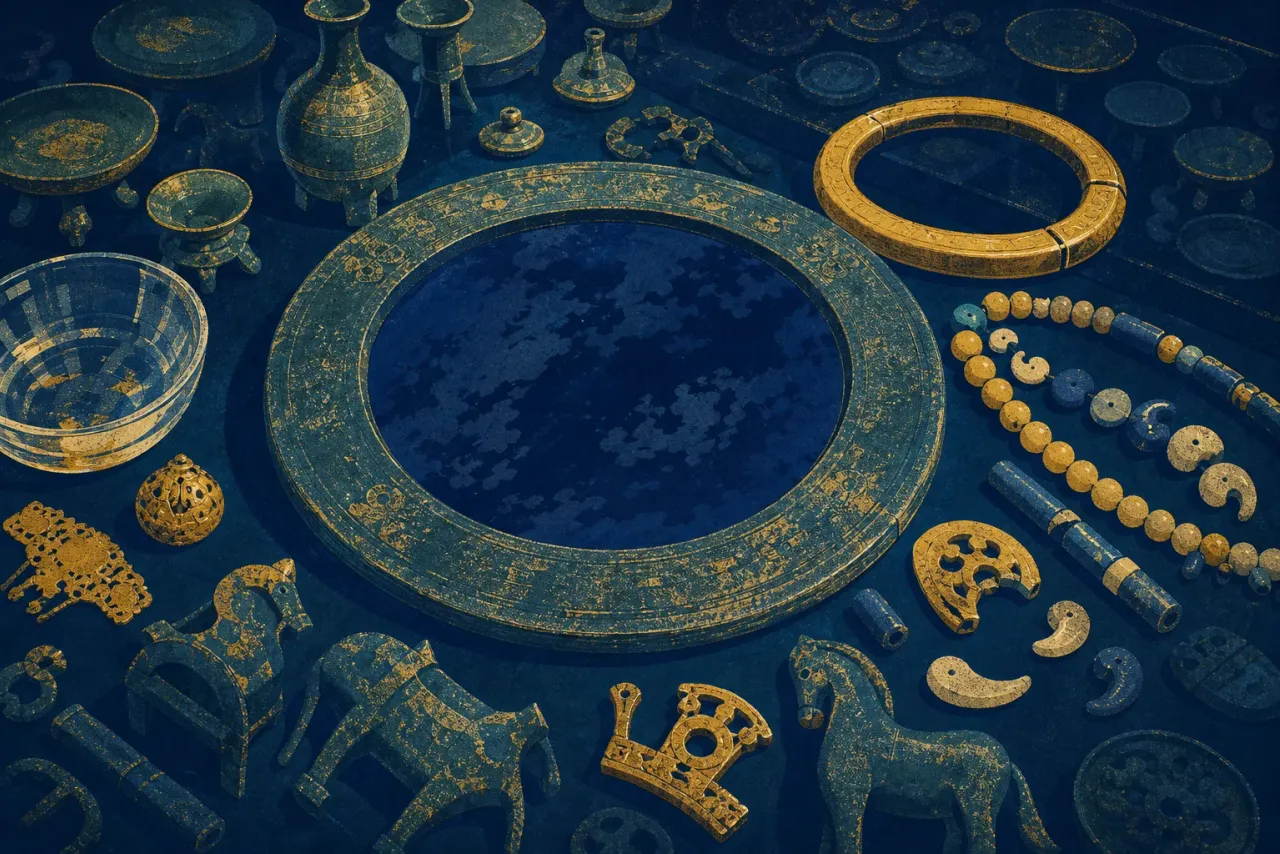
Aim to be back at Konominato by early afternoon, which leaves the mainland block unhurried. Ride the bus to Munakata Taisha-mae, then walk one minute into Hetsu-miya, the head shrine, open 06:00 to 19:00, free. Give it more than the 20 minutes most visitors do. The 1578 Main Hall is the postcard, but the World Heritage story lives up the wooded steps behind it at Takamiya Saijo, an open-air ritual ground with no building at all, and inside the Shimpokan museum, where the roughly 80,000 objects excavated on Okinoshima, collectively designated a National Treasure, rotate through the cases: bronze mirrors, gold rings, fragments of Persian cut glass. Shimpokan hours are 09:00 to 16:30 with last entry at 16:00, 800 yen for adults (2026). That last entry is the hard deadline of your afternoon. Miss it and you have seen the shrine but not the reason it is on the list.
Three minutes' walk from the bus stop, the free Uminomichi Munakatakan museum (09:00 to 18:00) runs a 3D theater that puts you on the forbidden island virtually. It is closed Mondays, which is worth checking before you fix your date, and it makes a sensible first stop if rough seas force you to run the day shrine-first instead.
Two things do not fit in this itinerary. Shimbaru-Nuyama, the Munakata clan's tomb group of 41 mounds, is in Fukutsu, a different city off a different station: about 25 minutes by bus from Fukuma Station plus a 15-minute walk, or an 8-minute taxi from Hetsu-miya if you insist on folding it in. Better to give it its own half day. And the weather always gets a vote. From November through March the Genkai Sea grounds sailings with little warning, and when the boats stop, even the island's Koryu-kan visitor hall closes in sympathy. If whitecaps kill the crossing, the mainland half plus the 3D theater is a legitimate consolation day, not a failure.
Before you leave Fukuoka, then: book Noruto or resolve to walk. Carry 1,140 yen in cash for the round trip, and check the live ferry status on Kyushu Norimono Info from the train. When the last boat leaves Oshima around 18:00, be on it. The islanders build their lives around these seven crossings, and for one day, so do you.
Sources
- https://whc.unesco.org/en/list/1535/
- https://www.okinoshima-heritage.jp/en/
- https://www.japan.travel/en/world-heritage/sacred-island-of-okinoshima-and-associated-sites-in-the-munakata-region/
- https://en.wikipedia.org/wiki/Okinoshima_(Fukuoka)
- https://www.japan-guide.com/e/e4840.html
- https://www.okinoshima-heritage.jp/en/know/hetsumiya.html