Half a Day, One Cathedral, One Coast Road: Nagasaki's Hidden Christian Sites for the Short-Stay Visitor
Eight of the twelve places inscribed as the Hidden Christian Sites of the Nagasaki Region will turn you away if you arrive unannounced. That isn't a technicality. These are working Catholic parishes and inhabited fishing villages; the person at the door is usually a volunteer from the congregation, and the notice system exists so your visit doesn't collide with a funeral. The official operator puts it bluntly: these are churches that "function as places for religious events" and prayer, not tourist facilities.
For a visitor with one day in Nagasaki, that rule sorts the property fast. Only three components need no booking at all, and just one of them, Ōura Cathedral, is in the city. (The others, Hara Castle and Kasuga Village on Hirado, sit half a day away in opposite directions.) The pair of churches on the Sotome coast north of town do require notice, but they take it through a web form at kyoukaigun.jp, which opens six months ahead and stops accepting applications two days before your visit. Miss that cutoff and the fallback is the Nagasaki Churches Information Center, which takes late requests by email or by phone on +81-95-823-7650, answered 10:00 to 17:00.
So the day builds itself. Ōura in the morning, Sotome in the afternoon, one web form filed before the two-day deadline.
Morning: Ōura, and the afternoon the hiding ended
Tram line 5 drops you at Ōuratenshudō; the cathedral is a five-minute walk up the slope. Doors open at 8:30, admission is 1,000 yen as of 2026 with the adjoining Christian Museum included, and last entry is 17:30. From November through February the whole site closes at 17:30, which pulls last entry back to 17:00. There is no parking on site, which is one more reason the tram wins.
The building itself is easy to summarize: founded in 1864 by priests of the Paris Foreign Missions Society and dedicated to the 26 Martyrs executed in Nagasaki in 1597. It is the oldest standing church in Japan, and the first Western-style building ever designated a National Treasure.
What earns it a place in this particular World Heritage property, though, is a single conversation. On March 17, 1865, villagers from Urakami approached the French priest Bernard Petitjean inside the new church and revealed that their families had kept a version of the Catholic faith alive for more than 250 years, through generations with no priests and no sacraments, disguised inside Buddhist parish registration. Contemporaries called it a miracle of the Christian world. Every church you'll see in the afternoon exists because of what happened in this room. Go early and stand there a moment; a modern parish church was built alongside in 1975 precisely so the old one could receive visitors like you.
One honest caveat: the Christian Museum's captions are mostly Japanese. The fix is to start your day at the free Nagasaki Churches Information Center on the second floor of Dejima Wharf (10:00–17:00), which has exhibits and a short film, plus staff who can register your Sotome notice on the spot if you never got around to the web form.
Budget 60 to 90 minutes for church and museum together. Then eat. Shinchi Chinatown, Japan's oldest, is a short ride back along the tram line; order chanpon, the pork-and-seafood noodle dish that is this port city's signature, and be at Nagasaki Station in time for the early-afternoon bus you picked off the timetable that morning.
Afternoon: the coast road to Sotome
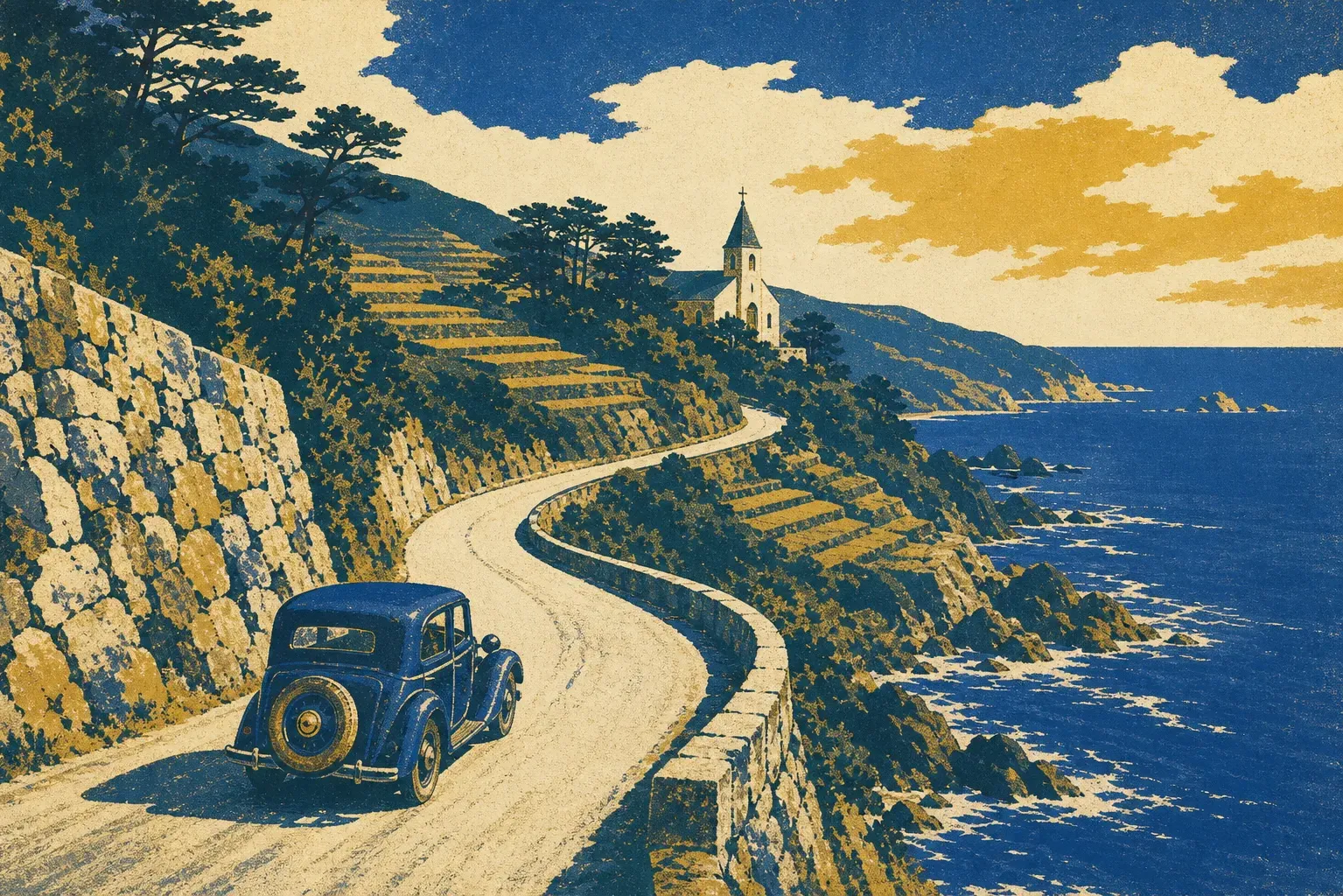
Buses for Sotome leave from in front of JR Nagasaki Station on the Ita-no-ura service and reach Shitsu Bunkamura in about an hour and fifteen minutes. Check the timetable the night before, because only the morning and evening runs go straight through; board in the early afternoon and you will change at Sakura-no-Sato Terminal, which is simple enough but adds a wait to the far end of your day. Buy your ticket on board and reckon on roughly a thousand yen each way. The ride is part of the argument. Sotome mattered to the hidden Christians precisely because it was remote: when the Ōmura domain cracked down in 1657–58, believers survived here because the coast was far from the castle and lightly policed. Watching that shoreline scroll past for an hour and a quarter teaches the geography better than any caption could.
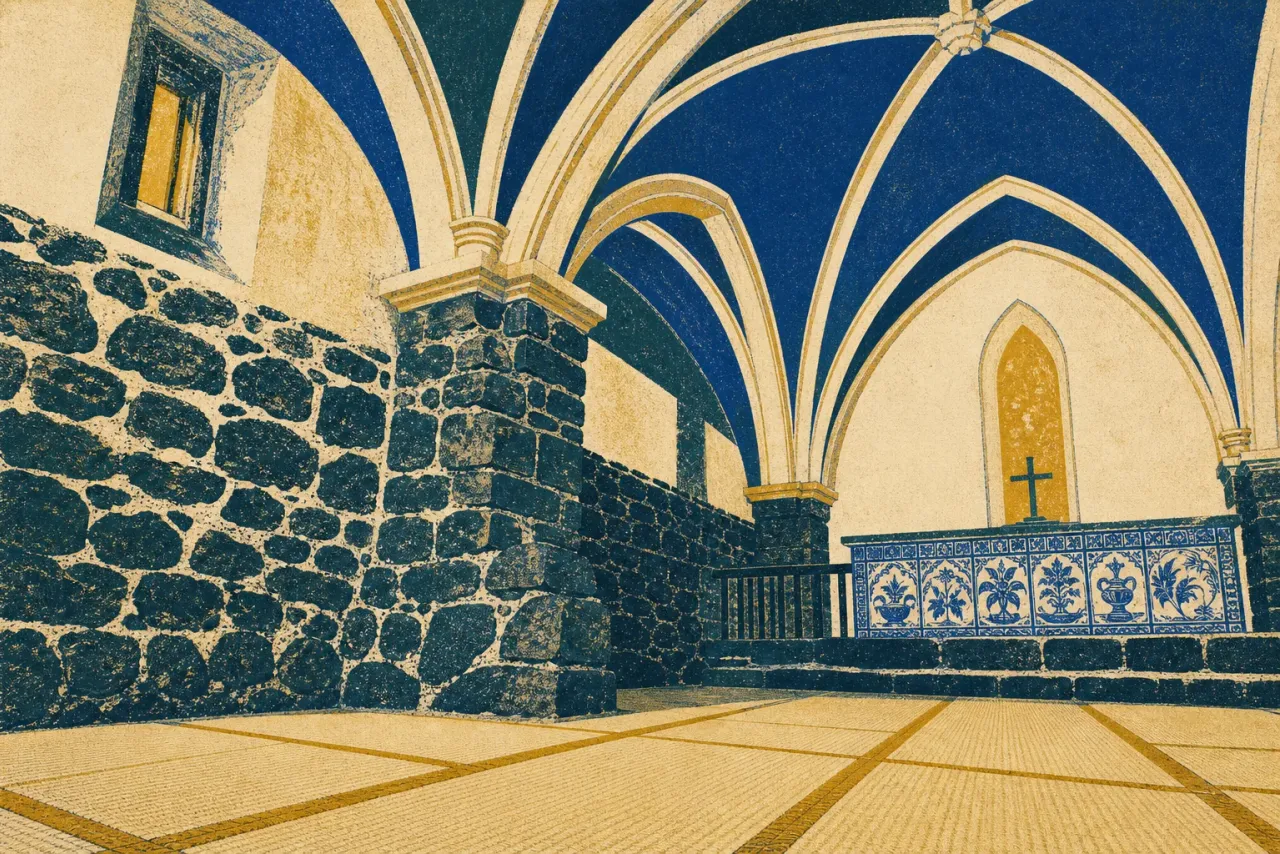
Shitsu Church is the warm half of the afternoon. Built 1881–82 by Marc Marie de Rotz, a French missionary with an engineer's practical streak, it has been an active parish ever since; Mass still runs 9:00 to 10:00 on the first and third Sundays, and the state listed the building as an Important Cultural Property in 2011. Visiting hours are 9:00 to noon and 13:00 to 17:00, free, with an attendant present. This is the booking you filed, so give your name at the door. If you're running more than 30 minutes off schedule, call ahead; less than that, just apologize.
De Rotz is the figure to hang the whole village on. Nearby, the Shitsu Aid Center (700 yen as of 2026; 9:00–17:00 Monday through Saturday, 11:00–17:00 Sunday, last entry 16:30, open every day but December 29 to January 3) preserves the vocational school he opened in 1883, where local women learned weaving, bread-making, and literacy. The de Rotz Memorial Museum rounds out the picture for 310 yen (also 2026). Between them they reframe the man from church-builder into something closer to a rural development worker a century ahead of the term.
Ono Church, a separate stop on the same coast, is the other de Rotz building, finished in 1893 and known for its "de Rotz wall" of rubble basalt set in mortar, a construction found in no other church in Japan. Two warnings, stated plainly. First, the interior is permanently closed because of the building's age; you view it through opened windows, and in rain or rough weather the attendants may leave them shut, so treat a wet day as a coin flip rather than a certainty. Second, if you're navigating yourself, know that another "Ono Church" exists in Sasebo City and regularly hijacks GPS searches.
Quiet is the point at Ono; it is a chapel of ease, not a parish seat. Interior photography, meanwhile, is forbidden in every one of these churches, a blanket rule of the Catholic Archdiocese of Nagasaki and the one visitors break most often. Stay out of the chancel around the altar, and dress for a place of prayer rather than a beach.
What one day can't reach, and shouldn't pretend to
The nine remaining components are a different scale of commitment. Hara Castle, where the 1637–38 Shimabara–Amakusa rebellion ended with more than 30,000 rebels dead and buried inside the razed grounds, needs no booking but sits on the Shimabara Peninsula, its own outing. Kasuga Village's terraced fields on Hirado are about two hours away by train and bus. Kuroshima requires a ferry from Sasebo; Sakitsu lies across the prefectural line in Kumamoto and books through Kyushu Sanko rather than the Nagasaki center; the four Gotō island churches spread across separate islands and honestly want three or four days with boats in between. Every guide to the region repeats the same advice because it's true: outside Nagasaki city, rent a car.
There is no shame in the short version. Ōura is where the hidden centuries ended and Sotome is where they were endured, so a single day touches both poles of the story. Just do the last small thing the system asks: if your plans change, cancel the notice. The person who would have waited for you at Shitsu is a parishioner giving up an afternoon, not an employee, and the whole arrangement runs on visitors showing up when they said they would.