Timing the tide: a first-timer's perfect day on Miyajima
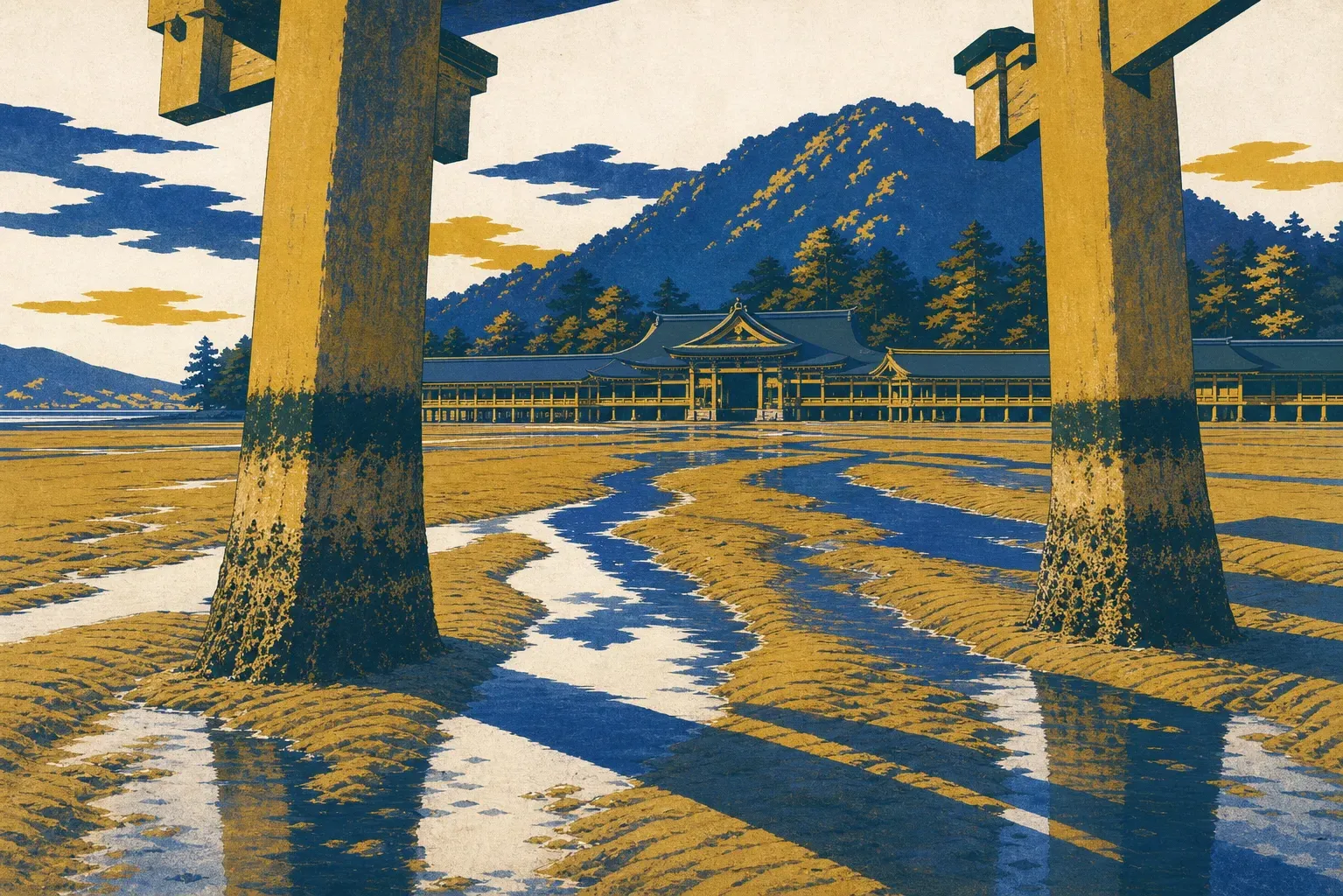
Somewhere on Miyajima's waterfront right now, a first-time visitor is staring at the great vermilion gate of Itsukushima Shrine and wondering where the sea went. The gate stands in wet sand, ringed by people photographing what the guidebook promised would float. The water will come back; tides on this stretch of the Seto Inland Sea swing roughly every six hours. But if that visitor booked an afternoon train onward, the floating picture is gone for good.
That six-hour swing is the whole game, and it is worth stating plainly: Miyajima rewards one well-planned day more than two careless ones. At high tide, the shrine and its 16.6-meter O-torii appear to ride on the water. At low tide the bay drains and you can walk across the seabed to stand beneath pillars of camphor wood roughly 9.9 meters around. Both are available in a single visit if you schedule it right. The Miyajima Tourist Association publishes a tide table online. Check it for your exact date before you book anything else, and build the day around what it says.
Get the logistics out of the way first
From Tokyo, the Nozomi shinkansen reaches Hiroshima in about four hours. Change to the JR Sanyo Line for a 30-minute ride to Miyajimaguchi, then board the JR ferry: ten minutes across, 200 yen one way as of 2026, and covered by the JR Pass. The island has also charged a 100-yen visitor tax per entry since October 2023, which puts the outbound crossing at 300 yen all in. It is normally collected with the ferry fare, but JR Pass users have to buy a separate 100-yen tax ticket at the terminal. Forgetting it is one of the island's classic small mistakes. From the pier on the island side, the shrine is a ten-minute walk along the waterfront.
Shrine admission is 300 yen for adults in 2026, or 500 yen combined with the Treasure Hall. From March 1 through October 14, hours run 6:30 to 18:00 with no closing days. That 6:30 opening is the most useful fact in this article. Miyajima absorbs about three million visitors annually, and by late morning the corridors move at shuffle speed. At 6:45 you can have long stretches of the roughly 260 meters of East and West Corridors nearly to yourself. One asterisk for 2026: the East Corridor, the walkway you enter through, is being structurally reinforced on a schedule that runs to December 2026, so expect hoarding on part of the approach.
One wardrobe note comes straight from the shrine's admission page: wear flat shoes. The floorboards are laid with deliberate gaps that vent the pressure of seawater at high tide, and those gaps swallow heels whole.
A day that catches both tides
Here is the shape that works. Ride an early ferry and be at the shrine when it opens. Whatever the sea is doing at 6:30, it will be doing the opposite about six hours later, comfortably inside the long-season hours. If you arrive to high water, spend the morning inside the shrine while it floats, then walk out to the gate after lunch. If you arrive to mudflats, reverse it.
The shrine deserves an unhurried hour. What you are walking through is essentially a Heian aristocrat's palace laid over the sea: Taira no Kiyomori built the complex in this form in 1168, in the shinden-zukuri style, and UNESCO inscribed it in 1996 with a property boundary that includes the water in front, because the tide is part of the architecture. The main sanctuary, rebuilt in 1571 under the warlord Mori Motonari, enshrines three goddesses who protect sailors. The Noh stage of 1680 is the only one in Japan that rests on the sea. As for the gate, the current one is the ninth generation, raised in 1875, and it is not anchored to anything. It stands on the seabed under its own weight, which you can verify with your own eyes at low tide.
One photographic caution for 2026: the Five-Storied Pagoda on the hill beside Senjokaku is wrapped in scaffolding for roof re-shingling until November 20, 2027. Frame your shots low.
The gap between tides is where Miyajima gets good. The classic filler is Mt. Misen, the island's 535-meter sacred peak. The ropeway from Momijidani starts running around 9:00, costs roughly 2,000 yen round trip as of 2026 (posted fares vary slightly, so confirm at the station), and the last descent leaves around 16:30. Budget another 30 minutes for the ridge hike from the top station to the summit observatory. If a mountain sounds like too much on a warm day, Daisho-in temple at the base of the same slope is free, open until about 17:00, and quieter than anything near the pier.
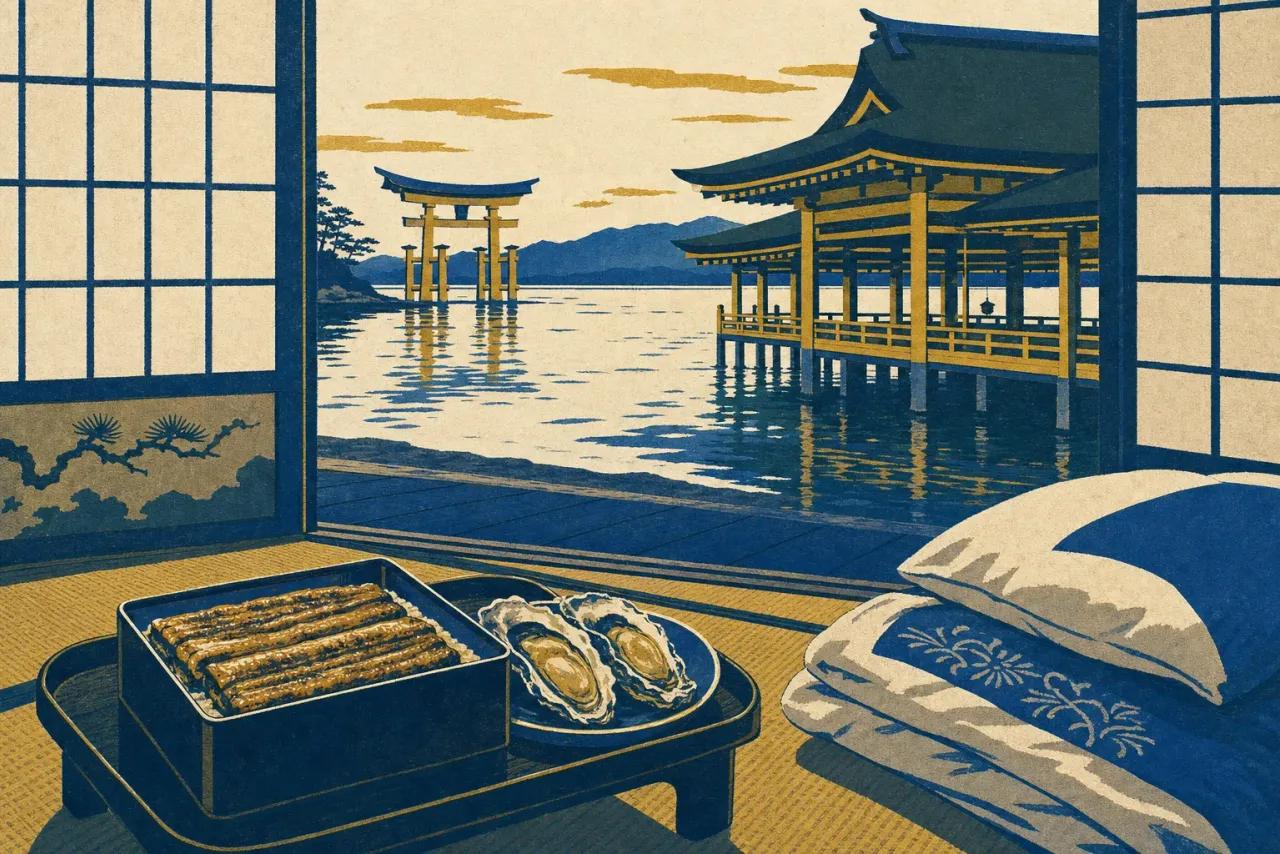
Eat somewhere in there. The island dish is anago-meshi, broiled conger eel over rice, lighter than freshwater unagi; Mametanuki serves a good version on the island, and Hiroshima Bay oysters grill in their shells all along Omotesando, the shopping street between pier and shrine. Finish with a warm momiji manju from any stall. Hold everything firmly; the free-roaming deer snatch food and paper alike, and feeding them is discouraged.
Don't leave with the crowds
Around 16:00 the day-trippers begin draining toward the pier, and this is precisely the moment to stay put. Shrine entry closes at 18:00 in the long season, but the buildings and the gate are illuminated nightly until about 23:00, all of it visible from the free shore path. A 25- to 30-minute evening boat cruise slides past the lit torii for about 2,000 yen for adults and 1,000 yen for children as of 2026, with six sailings between 17:55 and 21:15. Reserve it at least two hours before departure, through your ryokan, the tourist information office, or the operator online; nobody boards on a whim at the pier.
Sleeping on the island turns the evening from a bonus into the main event, though the historic ryokan are expensive and dinner is usually included because island restaurants close early. On a tighter budget, sleep at Miyajimaguchi across the water and catch a first ferry, or base yourself in Hiroshima city, about 40 minutes door to pier, which also puts the Peace Memorial on the same trip.
However you leave, check tomorrow's tide table before you go. The gate has been holding its ground since 1875, and the sea will keep leaving and returning every six hours whether anyone times it or not. Your job is just to be on the right side of the water twice.