Eel, oysters, and a night on the sacred island: the case for sleeping on Miyajima
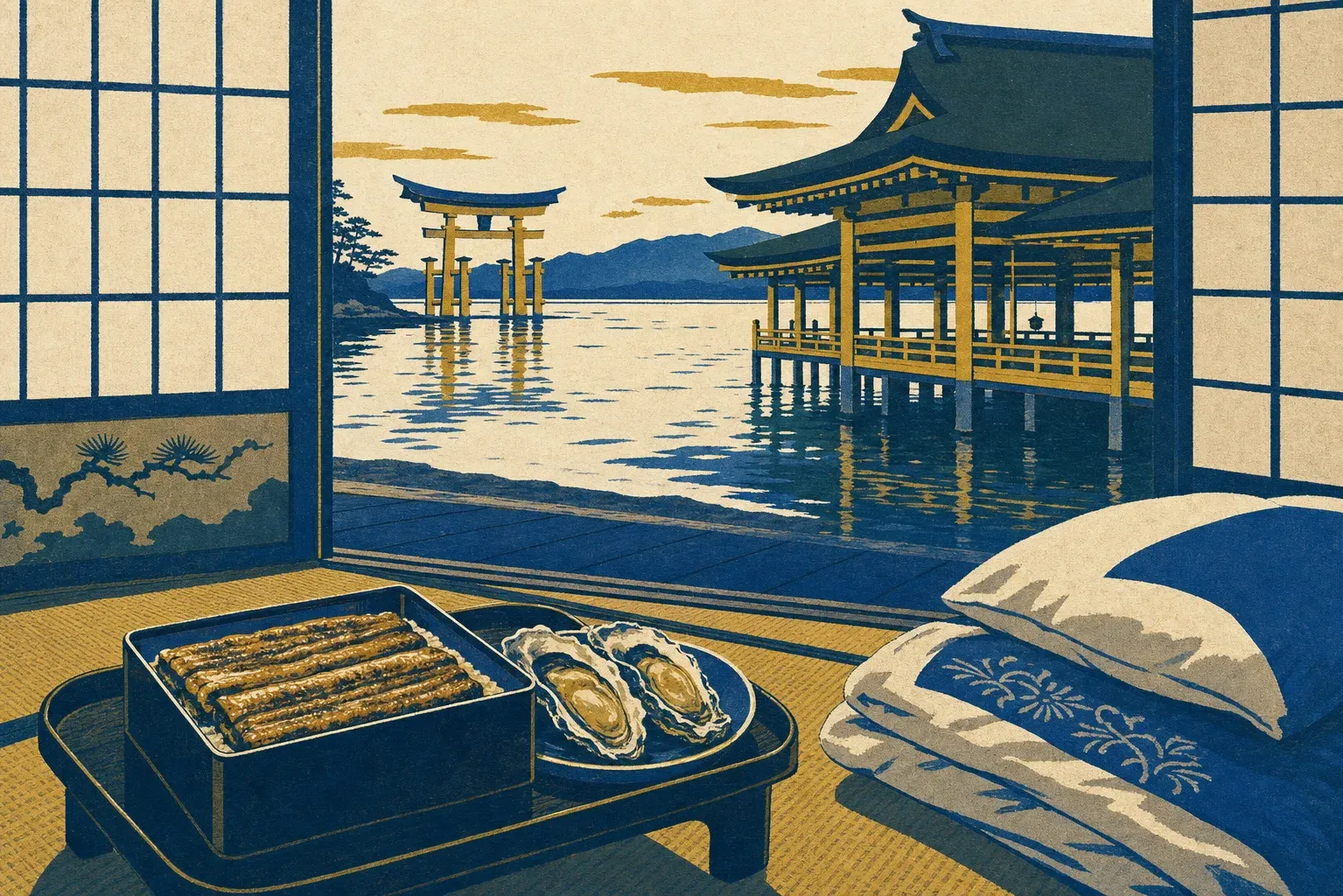
The line outside Anagomeshi Ueno forms before the doors open, and it forms on the wrong side of the water. Ueno sits in front of JR Miyajimaguchi Station on the mainland, which surprises people who assume Miyajima's most famous dish must live on Miyajima. It doesn't. This restaurant has been broiling conger eel over rice since 1901, and its dining hall is walk-in only, so when the queue looks hopeless the smart move is the one train passengers have made for a century: buy the wooden-box ekiben and carry it onto the ferry. Better still, phone ahead and reserve the box, which the shop encourages. The bento counter runs 9:00 to 19:00 (18:00 on Wednesdays) and the dining hall opens at 10:00; both stop when the day's eel runs out. Anago is saltwater eel, lighter than the fatty freshwater unagi most visitors know, and it tastes best exactly there, eaten from a still-warm box on a ten-minute crossing toward a shrine that stands in the sea.
That crossing costs 200 yen one way on the JR ferry as of 2026, plus the 100-yen visitor tax the island has collected since October 2023, so 300 yen to get there. Rail-pass holders ride the boat free but still owe the tax; a separate 100-yen ticket machine waits at the terminal, and forgetting it is a classic small mistake.
Around three million people make this trip every year, and most of them compress the island into the hours between mid-morning and late afternoon, then leave together in one long column back down to the pier. The island they see is real but partial. The full version requires a toothbrush.
Eat your way up Omotesando, slowly
Omotesando Shotengai is the shopping street connecting the ferry pier to Itsukushima Shrine, and treating it as a corridor to hurry through is the second classic mistake. Hiroshima Bay is Japan's largest oyster producer, and midway along the street sits Yakigaki no Hayashi, which claims to be the first shop in Japan to have sold grilled oysters and cooks with large oysters raised for a full three years. The size shows in the shell. Order them grilled in-shell first; the fried version, kaki-furai, is for the second round.
The street's other signature is momiji manju, maple-leaf-shaped sponge cakes named for the maples of Momijidani, the valley behind the shrine. Fillings run from classic bean paste to custard, chocolate, and cheese, and shops along the arcade sell them warm. The one to eat standing up is age-momiji, the deep-fried version, a street-food favorite with a crisp shell and a molten center. Watch your snacks while you do: the island's deer roam free and are entirely shameless, snatching paper as readily as food. Feeding them is discouraged anyway.
If you skipped Ueno on the mainland, the island has its own respected anago house, Mametanuki. But all of this eating operates on day-trip hours. Kitchens wind down as the crowds thin, and by early evening most of Omotesando has its shutters pulled. Which brings us to the actual question.
Two old ryokan and the island after dark
Should you sleep on Miyajima? If the budget allows it once, yes, and the reason is arithmetic. The shrine opens at 6:30 in the morning, and the vermilion O-torii is illuminated every night until around 23:00. Day-trippers, tied to ferry timetables and dinner plans back in Hiroshima, get neither end of that day. Overnight guests get both, nearly alone.
Two historic ryokan anchor the island's high end. Iwaso has stood in Momijidani since 1854; the heritage building trades modern polish for maximum atmosphere, with kaiseki dinners, an onsen, and rooms that show their age in ways you will find either romantic or trying. Kinsuikan is roughly 120 years old but was remodeled in 2021; it has private onsen baths and sits closest to the flow between ferry and shrine. Both are expensive, and both fold dinner into the rate. That is not an upsell but a necessity, because the island closes early, and a dinner-included booking is how you avoid discovering that fact at 7 p.m.
What the rate actually buys is the hours. Once the last big wave of departures clears, the lanes between pier and shrine go quiet enough to hear the tide working under the boardwalks. You can walk the shore path at 10 p.m. and watch the lit gate with a handful of other guests, or book a 25- to 30-minute evening boat cruise past it for about 2,000 yen as of 2026 (1,000 yen for children), one of six sailings between 17:55 and 21:15. Reservations close two hours before departure and there is no walk-up boarding, so arrange it through your ryokan or the tourist information office earlier in the day.
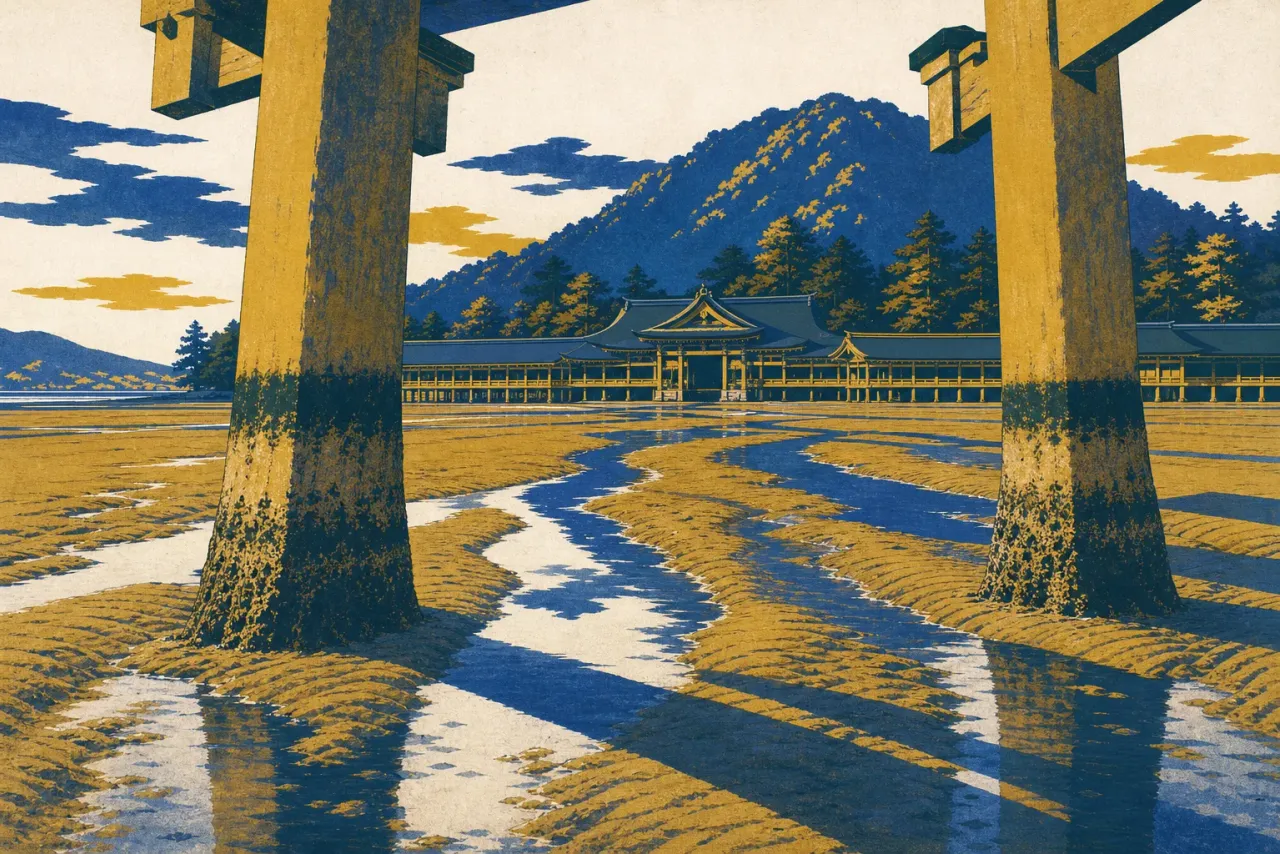
Then set an alarm. At 6:30 the next morning you can pay your 300 yen admission (the 2026 price) and walk the shrine's over-water corridors with deer for company and almost no one else. Check the tide table before choosing your hour: high tide floats the whole complex, low tide opens the walk across the seabed to the torii, and a night on the island is the only comfortable way to catch both states without loitering away an entire day.
If the ryokan math doesn't work
There is a respectable middle path. Miyajimaguchi, the mainland ferry town, has mid-range hotels such as the Aki Grand Hotel & Spa, with island views and a shuttle to the pier; you lose the nighttime island but keep the early start, since the first boats put you ashore before the day-trip wave builds. Hiroshima city is the value play, about 40 minutes door to pier, with the widest choice of business hotels and restaurants, and it pairs naturally with a morning at the Peace Memorial.
One more date for the calendar. If you can choose your timing in 2026, consider July 30. That is Kangensai, the shrine's biggest festival, its date set each year by the lunar calendar, when boats carrying gagaku court musicians cross the water in front of the shrine. The music carries over the same channel your ferry crossed, and if you have planned it right you will hear it from the island side, eel box long finished, with nowhere else you need to be.