The ruin you can't enter, the city you can: reading Meiji Nagasaki from the hillside
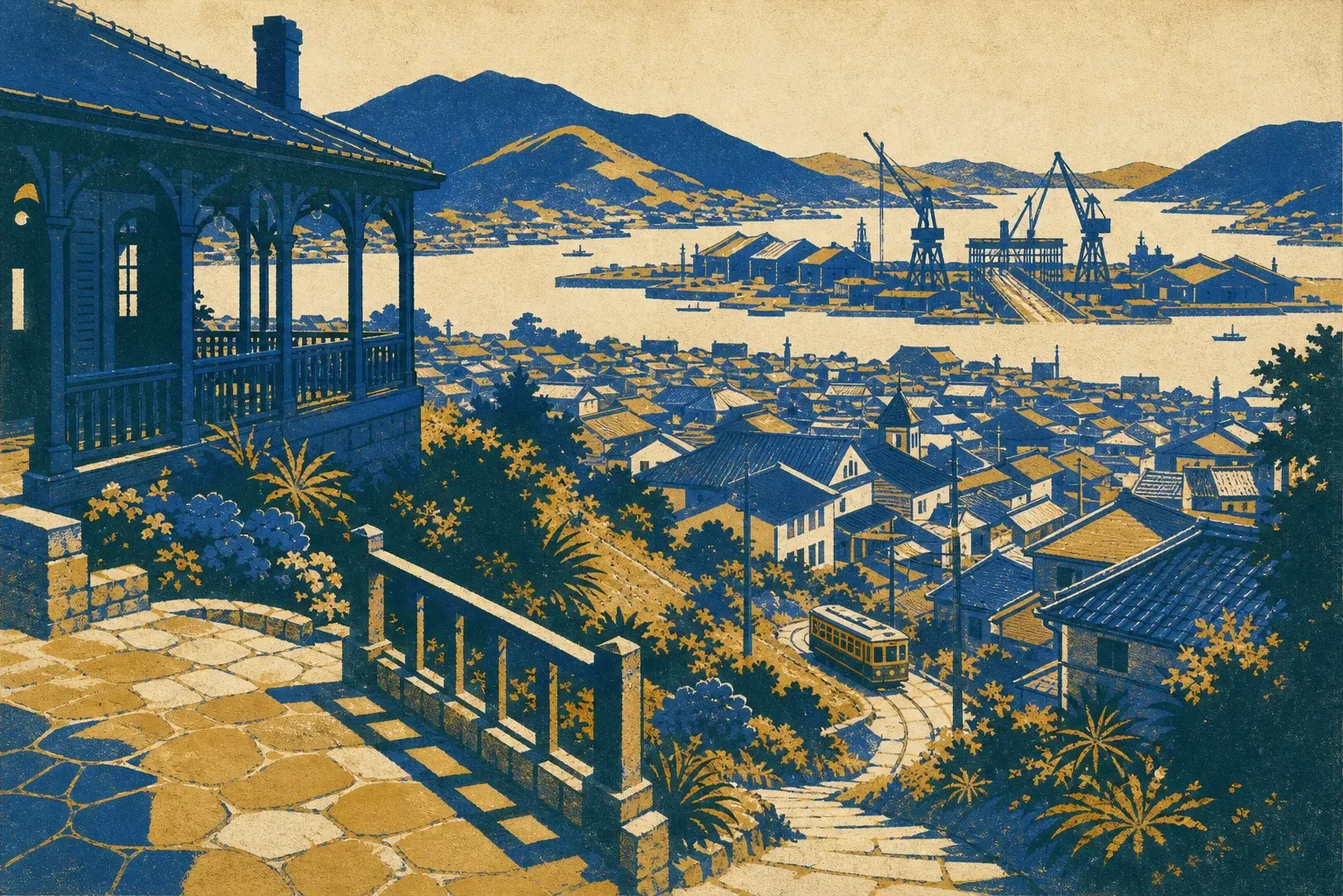
From the top terrace of Glover Garden, you can watch a World Heritage Site do its job. The Mitsubishi Giant Cantilever Crane, bolted down in 1909, still swings loads over the shipyard on the far side of Nagasaki harbor. Below it sits the No. 3 Dry Dock, flooded and drained since 1905, and a Pattern Shop from 1898 where casting molds were once made. Up the slope stands Senshōkaku, the company guest house of 1904. All four carry UNESCO inscription numbers. None of them can be visited. They sit inside a working Mitsubishi yard, and short of booking a harbor cruise, this hillside is as close as you will get.
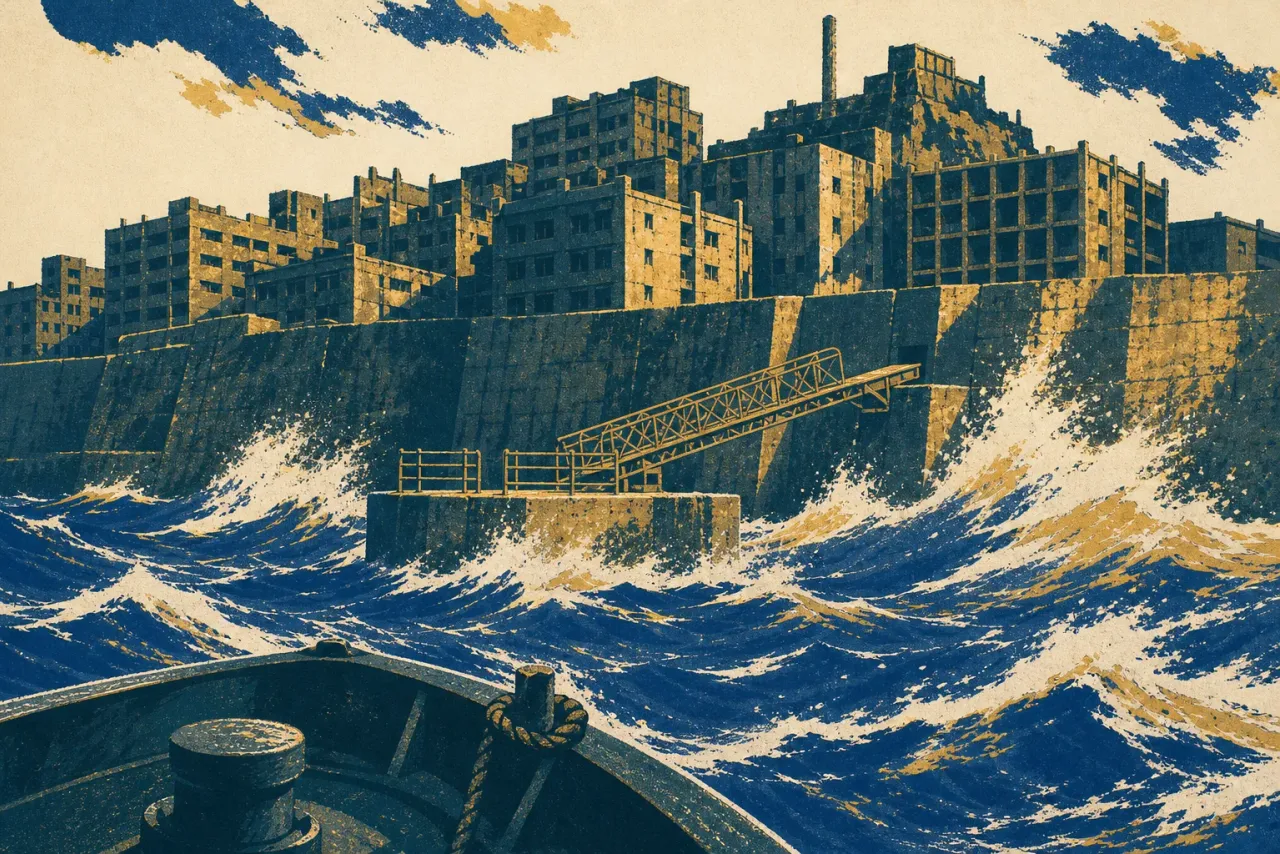
That single fact should reorganize your day. Most people come to Nagasaki for Gunkanjima, take the boat, and leave believing they have seen "the World Heritage Site." They have seen one component out of twenty-three. Nagasaki alone holds eight inscribed structures, and the ones nobody plans for explain the inscription better than the famous ruin does. The listing is not about a place. It documents a process: how Japan went from closed feudal state to industrial power in roughly fifty years, largely by importing Western technology and rebuilding it in Japanese terms. You can read that whole argument in one day, on foot and by tram, without boarding anything.
The tram is the right tool for it. Nagasaki Electric Tramway charges 150 yen a ride or 600 yen for a day pass (2026 prices), and every stop on this route is on the network. Ōhato, the stop for the ferry terminal you already know from cruise day, is three minutes from Nagasaki Station.
Start with the house, not the harbor
Ride line 5 to Ōuratenshudō and walk five minutes uphill past the church to Glover Garden. It opens at 08:00 and closes at 18:00, often extended to 20:00 or even 21:30; admission is 1,300 yen as of 2026, roughly double what older guidebooks print. Go early. The light on the harbor is better, and the tour buses are still at breakfast.
The reason to come is the Former Glover House of 1863, the oldest surviving Western-style building in Japan. Look at how it is made before you read any panel. The stone verandas and French windows say Europe. The frame underneath is Japanese post-and-beam carpentry, set on boulders rather than a poured foundation, and the tile roof carries onigawara, the demon-head guardian tiles you would otherwise find on a temple. A Japanese master carpenter named Koyama Hidenoshin built a Scottish merchant's bungalow using the structural grammar he already knew. Foreign form, local method. That one building is the entire World Heritage thesis in miniature, and everything else you see today, including lunch, repeats it.
Those same terraces are the designated grandstand for the shipyard components across the water. The crane is unmistakable; bring binoculars if you own a pair small enough to pack, and do not plan on getting closer by land, because there is no closer. Ringer House (1865) and Alt House are worth the extra half hour if you have it.
Lunch follows the same import-and-adapt logic
Back downhill in Matsugae-chō, minutes from the garden gate, Shikairō has been trading since 1899 and is credited with inventing champon, the dish that defines Meiji Nagasaki. Pork and seafood get stir-fried in lard with vegetables, a chicken-and-pork-bone soup is poured over, and the noodles are boiled directly in that soup rather than in a separate pot. It is a one-burner solution to feeding people cheaply and well. Nagasaki's Chinese community is overwhelmingly Fuzhounese, and champon grew out of that kitchen the same way the crane grew out of a Scottish drawing office. Sara udon, the same topping ladled over crisp fried noodles, appears on every menu that serves its sibling.
For the afternoon, take the tram to Shinchi-Chūkagai. Shinchi Chinatown began as the warehouse quarter for Chinese merchants during the centuries when Nagasaki was Japan's only open port, an era when traders were confined to their district at night on pain of arrest. Today it is a compact grid of restaurants where you can eat a steamed kakuni manjū, a braised pork belly bun, standing up. Nagasaki and Fuzhou have been sister cities since 1980, which tells you how long this relationship has mattered.
Save room for castella. The sponge cake arrived with Portuguese traders in the 16th century as bolo de Castela, and Japanese bakers rebuilt it with mizuame syrup and a layer of coarse sugar crystals that settles at the base. Three historic houses still make it in the city center: Fukusaya since 1624, Shōōken since 1681, Bunmeidō since 1900. Buy a small box from two of them and run your own comparison; the differences are real. If you want the whole thesis served on one table, book shippoku ryōri for dinner, Nagasaki's banquet cuisine fusing Japanese, Chinese and Portuguese courses around a round red-lacquered table. It is a reservation affair, not a walk-in; look in the Shianbashi quarter.
The part the plaques undersell
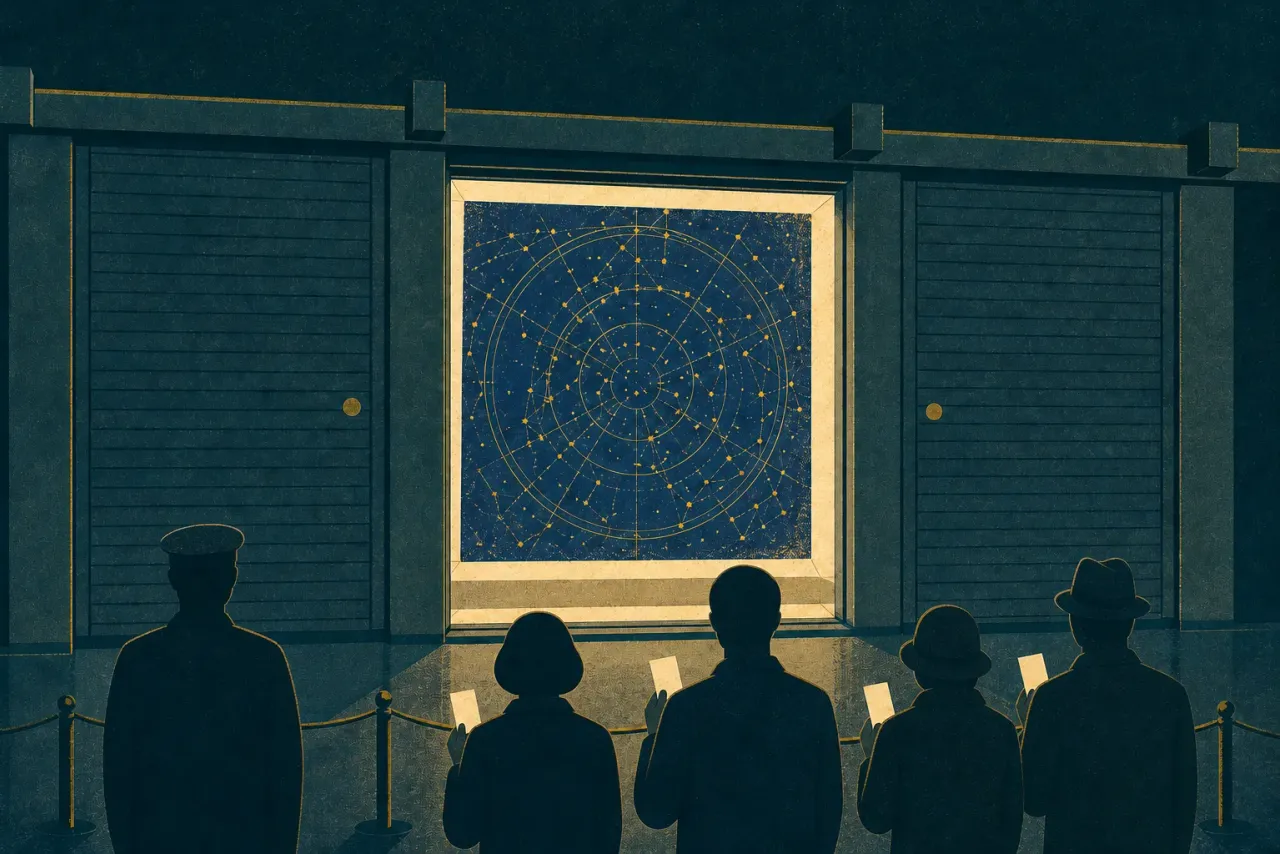
You should know one more thing before you take any of this at face value. When the twenty-three sites were inscribed in 2015, the World Heritage Committee attached a condition: Japan would take measures allowing visitors to understand that large numbers of Koreans and others "were brought against their will and forced to work under harsh conditions" at some of these sites during the wartime years. Japan opened an Industrial Heritage Information Centre in Tokyo in June 2020 to answer that condition. A June 2021 UNESCO report found the centre's displays conveyed the opposite message, suggesting no forced labor had occurred, and the twenty-one other nations on the committee called for the exhibit to be revised.
None of this is a reason to stay away. It is a reason to arrive informed, and to treat a guide's framing as one version of events rather than the complete record. The crane and the dry dock are genuinely remarkable machines. The people who ran them, including those who had no choice, deserve more than the official telling currently offers.
End the day where the harbor turns into a map. Mt. Inasa, reached by ropeway or the Inasa slope car, is the other legal vantage point over the shipyard and the only one that works after dark. Nagasaki's night panorama was named one of the World's New Three Great Night Views in 2021, and locals call it the ten-million-dollar night view. From the observation deck, the whole route rearranges itself below you: Glover's hillside, the Chinatown grid, the tram lines stitched in light, and across the water the yard where a 117-year-old crane will clock in again tomorrow. Ropeway schedules shift with the season, so confirm the last descent before committing to dinner at ITADAKI, the restaurant one level under the deck. Or ride down early, walk into Shianbashi, and let the shippoku table close the argument the carpenter Koyama opened in 1863.
Sources
- https://whc.unesco.org/en/list/1484/
- https://www.japan.travel/en/world-heritage/sites-of-japans-meiji-industrial-revolution-iron-and-steel-shipbuilding-and/
- https://www.japansmeijiindustrialrevolution.com/en/
- https://en.wikipedia.org/wiki/Hashima_Island
- https://www.japan-guide.com/e/e2018_nishikyushu.html