Fewer than 160 days a year: how to actually land on Gunkanjima
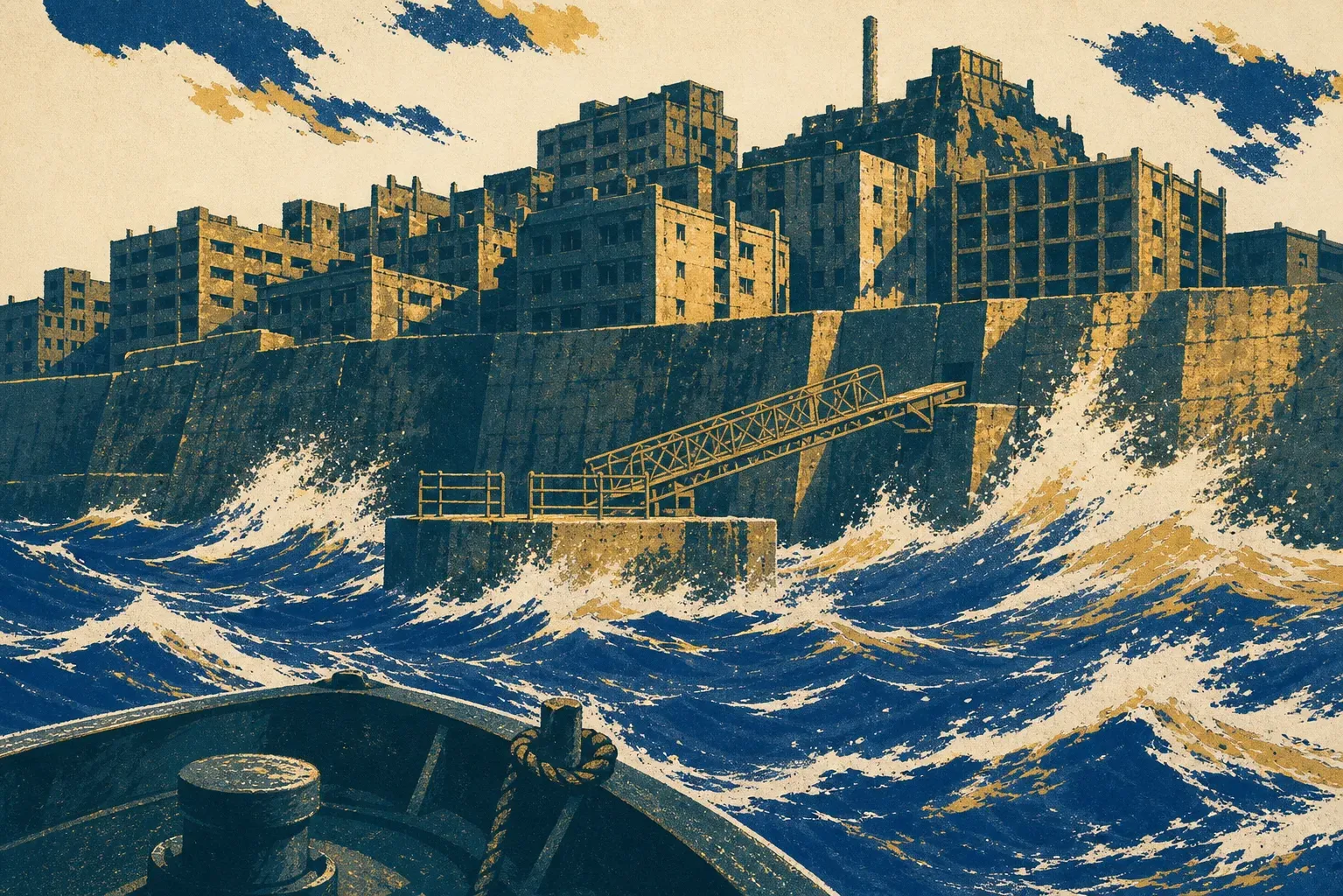
Thirty minutes before departure, a captain in Nagasaki looks at three numbers and decides whether you set foot on Gunkanjima. Waves must be 50 centimeters or lower. Wind can't exceed 5 meters per second. Visibility has to reach 500 meters. Fail any one of those and the boat still sails — it circles the island while you photograph the gray apartment blocks from the water, then returns to port without ever touching the pier.
This happens a lot. Sea conditions permit landing on fewer than 160 days a year, which means the honest framing isn't "book a tour to Battleship Island" but "engineer decent odds of standing on it." The good news: the odds respond to planning. The bad news: most visitors plan it exactly backward.
Give yourself two chances, not one
The classic mistake is booking the cruise for the last day of a Nagasaki trip. Do the opposite. Reserve a morning sailing for your first full day and keep the afternoon of day two unscheduled. Because the go/no-go call comes only half an hour before departure, a canceled landing leaves you standing at the terminal at 8:30 a.m. with your whole trip still ahead of you. That's recoverable. A cancellation on departure day is not.
Season shapes the probability more than anything else. June and July are Nagasaki's rainy season, and rain is a visibility problem; the 500-meter rule fails in exactly the weather that looks merely gloomy from your hotel window. August and September bring typhoons, which cancel sailings outright and make the unshaded concrete island brutal even when boats do run. Winter looks tempting with its clearer skies, but the seasonal northwest wind regularly pushes past the 5-meter-per-second limit. Spring and autumn give the best odds. One caveat inside the autumn window: October 7–9 is Nagasaki Kunchi, the city's biggest festival, and rooms disappear.
Where you check in is not where you board
Nagasaki Prefecture licenses five operators to land passengers on Hashima. Three of them do most of the English-language business: Yamasa Kaiun, Gunkanjima Cruise and Gunkanjima Concierge. The other two, Takashima Kaijō Kōtsū and Daishichi Ebisu Maru, are worth keeping in your back pocket when the first three sell out — Daishichi Ebisu Maru's landing-and-cruise course runs 3,900 yen for adults, 3,500 for high-school students and 2,000 for elementary-school children, cash only.
The part that costs people their morning is that check-in and boarding are different addresses for two of the three main operators. Yamasa Kaiun does both at window 7 of the Nagasaki Port Ferry Terminal, 17-3 Motofuna-machi, by the Ōhato tram stop three minutes from Nagasaki Station. Gunkanjima Cruise checks you in at its own office at 11-22 Motofunamachi and says outright that turning up at the pier instead will not get you aboard. Gunkanjima Concierge is the one that catches visitors out: reception is at the Gunkanjima Digital Museum in Matsugae-chō (095-895-9300), and only after checking in there do you go to Tokiwa Pier, about 15 minutes from Nagasaki Station on tram lines 1 and 5, to board. Its sailings leave around 10:30 and 13:40, with standard fares from 5,500 yen as of 2026 plus the same landing fee. Note that this is not the Nagasaki Port Ōhato terminal, which is where a reader who skims tends to end up. Read your confirmation email carefully and screenshot both addresses.
Yamasa's landing cruises leave at 09:00 and 13:00 and reach the island around 09:30 and 13:30. Fares as of 2026 are 4,700 yen for adults and for junior-high and high-school students, and 2,350 yen for elementary-school children, plus the island facility fee collected separately at 650 yen an adult and 320 yen for students and children. Individuals who book 5, 10, 15 or 20 days ahead pay a discounted adult fare between 3,800 and 4,500 yen. The round trip runs about two and a half hours with under an hour ashore, and there is no separate cruise-only ticket to book by mistake: if the captain calls off the landing, your sailing simply becomes a 110-minute circuit of the island and Yamasa refunds the facility fee plus 10 percent of the fare.
Gunkanjima Cruise's 09:10 and 14:00 sailings cost 3,600 yen online for adults plus a 650 yen landing fee (2026 rates), and they carry a quiet bonus: the boat stops for 30 minutes at Takashima on the way out. Takashima Coal Mine is itself a component of the UNESCO listing, so the roughly three-hour trip covers two World Heritage components for less money than the direct run. Arrive at least 20 minutes early; boarding closes 10 minutes before departure.
Payment is not uniform, so check before you travel light on cash. Gunkanjima Cruise settles in cash only at boarding. Yamasa Kaiun takes VISA, Mastercard, American Express and JCB, but only for payment on the spot on the day, not when you reserve. Every passenger signs a waiver before boarding, so build in time for paperwork. Families should note the age rules: Gunkanjima Cruise won't take children under 4 at all, and Yamasa carries preschoolers on the boat but doesn't allow them to land.
The museum is not the consolation prize
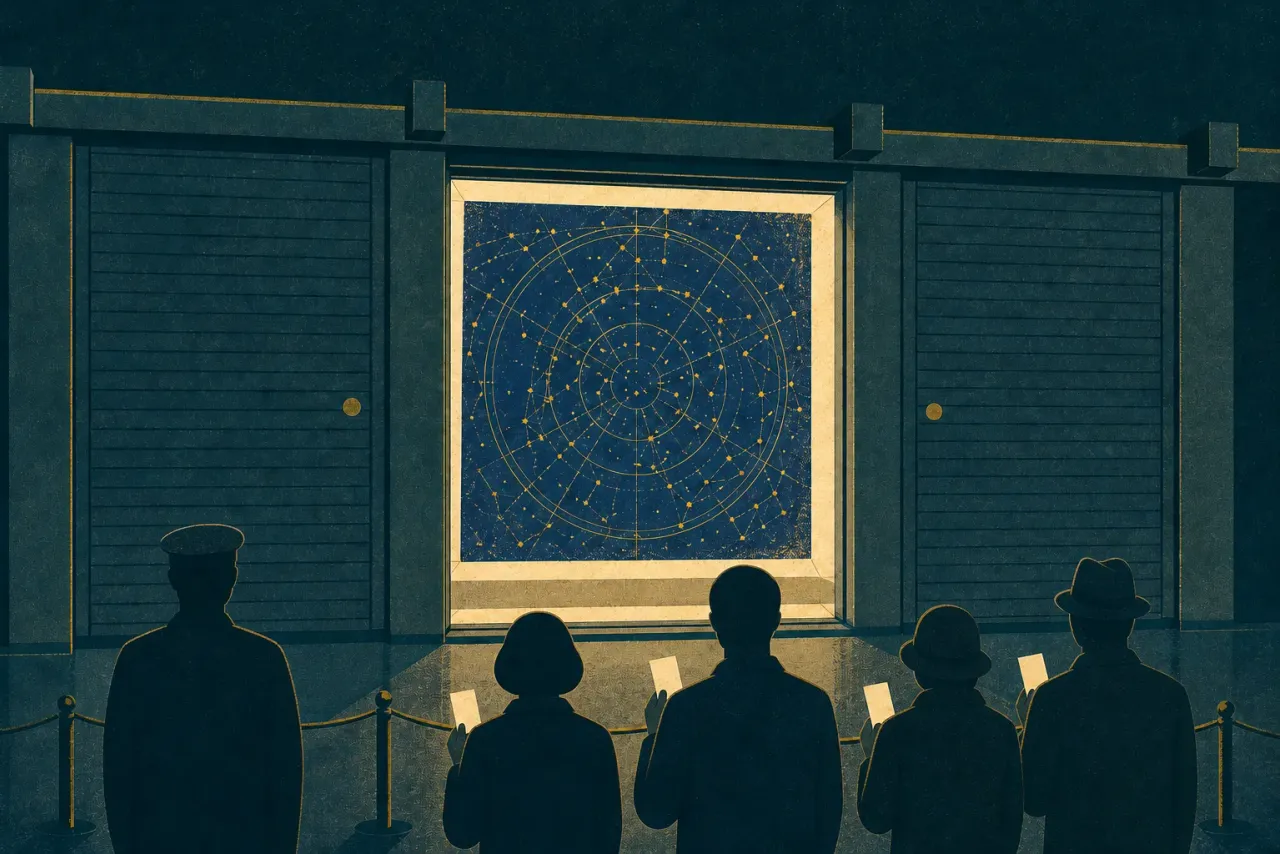
Here's the part most itineraries get wrong: the Gunkanjima Digital Museum belongs in your plan whether or not you land. More than 95 percent of the island is permanently off-limits. What you get ashore is a 220-meter boardwalk on the southern tip and less than an hour to walk it. You will not enter an apartment block, a school, or a mine shaft. The museum, at 5-6 Matsugae-chō near the Ōuratenshudō tram stop, is where those interiors actually exist for visitors: VR reconstructions, projection mapping, more than 4,000 photographs, and a 30-meter screen showing the sealed 95 percent.
So go before the cruise, not after a cancellation. Seen cold, the boardwalk is an hour among fenced rubble. Seen after 90 minutes in the museum, the same rubble resolves into specific addresses. The museum runs 09:00 to 17:00 with last entry at 16:30, costs 1,800 yen as of 2026, and takes 45 to 90 minutes; English support comes through headsets and is workable rather than great. One date matters this year: it closes September 2–4, 2026 for maintenance, so a September traveler counting on it as the fallback should check the calendar first.
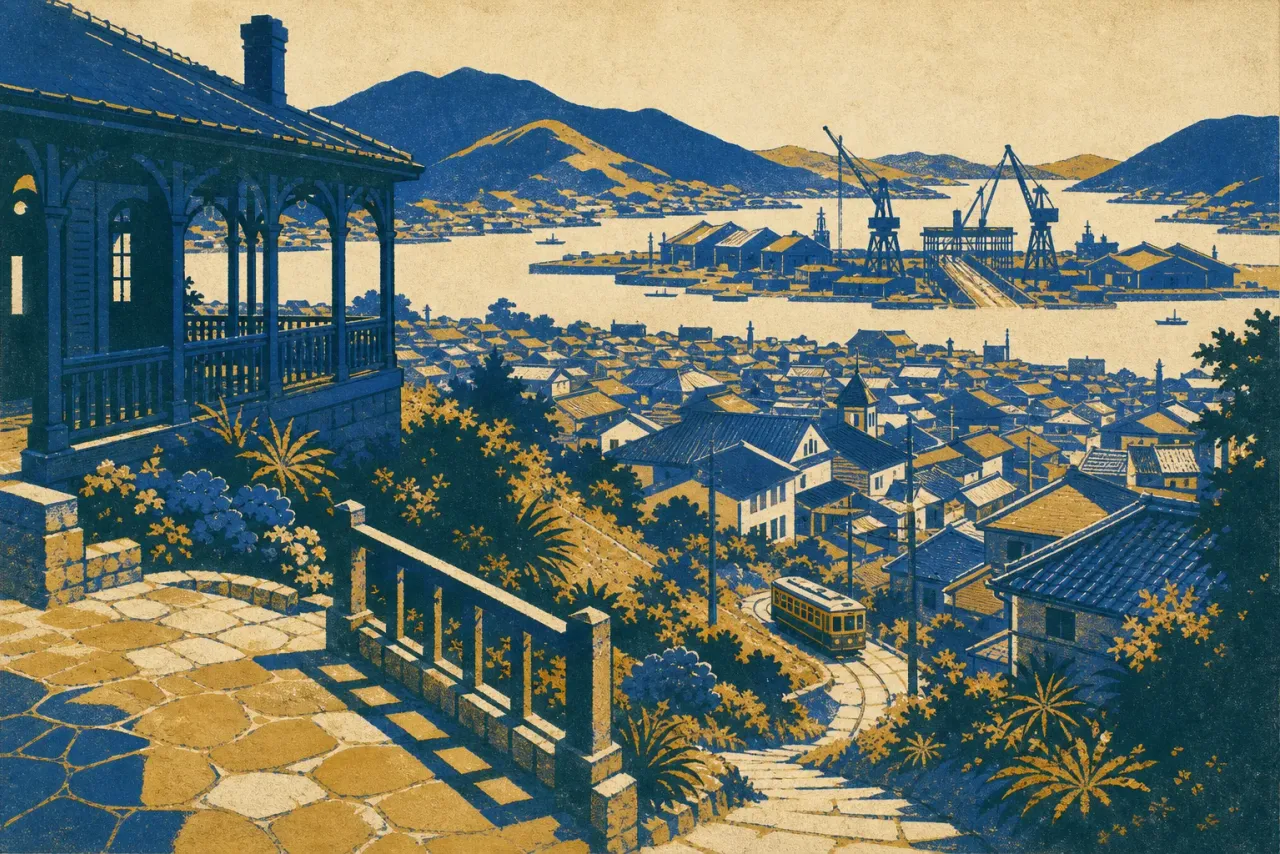
If your landing does get scrubbed, the salvage plan is solid. Ride the circuit around the island that your sailing turns into, keep your held second slot, and spend the freed hours at the museum and at Glover Garden a few minutes uphill (1,300 yen as of 2026). The garden's hillside is also the standard vantage point over the Mitsubishi shipyard, where four more components of the same World Heritage listing sit inside the working yard and can only be seen from a distance. The tram makes all of this trivial: 150 yen a ride or 600 yen for a day pass as of 2026.
For landing day itself, wear flat shoes with real grip. You step from a moving boat onto an exposed pier, and the boardwalk is windy and often wet. Stay on the path; everything beyond it is closed, and the island is a National Historic Site, so the loose rubble stays where it lies. Beyond that, the job is simple. Check the marine forecast the night before. Show up 20 minutes early at the right address with the fare ready, then wait while the captain reads three numbers off his instruments. On a good spring morning, all three come in under the line.
Sources
- https://whc.unesco.org/en/list/1484/
- https://www.japan.travel/en/world-heritage/sites-of-japans-meiji-industrial-revolution-iron-and-steel-shipbuilding-and/
- https://www.japansmeijiindustrialrevolution.com/en/
- https://en.wikipedia.org/wiki/Hashima_Island
- https://www.japan-guide.com/e/e2018_nishikyushu.html