A Half Day at the Genbaku Dome: How to Visit Hiroshima's Peace Memorial Without Rushing It
The most common mistake at Hiroshima's Peace Memorial isn't disrespect. It's arithmetic. Visitors step off the tram with ninety minutes to spare before a ferry to Miyajima, and ninety minutes is enough to see the Atomic Bomb Dome, photograph it, and absorb almost nothing. A visit that actually lands, with the museum and time to recover from it, takes four to six hours. Plan for half a day. You won't wish you'd planned for less.
Getting there is the simple part. From Tokyo, the Nozomi Shinkansen reaches Hiroshima in about four hours. Outside the station, Hiroden tram lines 2 and 6 run to the Genbaku Dome-mae stop in about twenty minutes for 240 yen (as of 2026), the figure the city itself publishes, and that is running time only, before whatever you spend waiting at the stop, and the Dome stands a one-minute walk away. No gates, no tickets. The Dome and the surrounding Peace Memorial Park are free and open twenty-four hours a day.
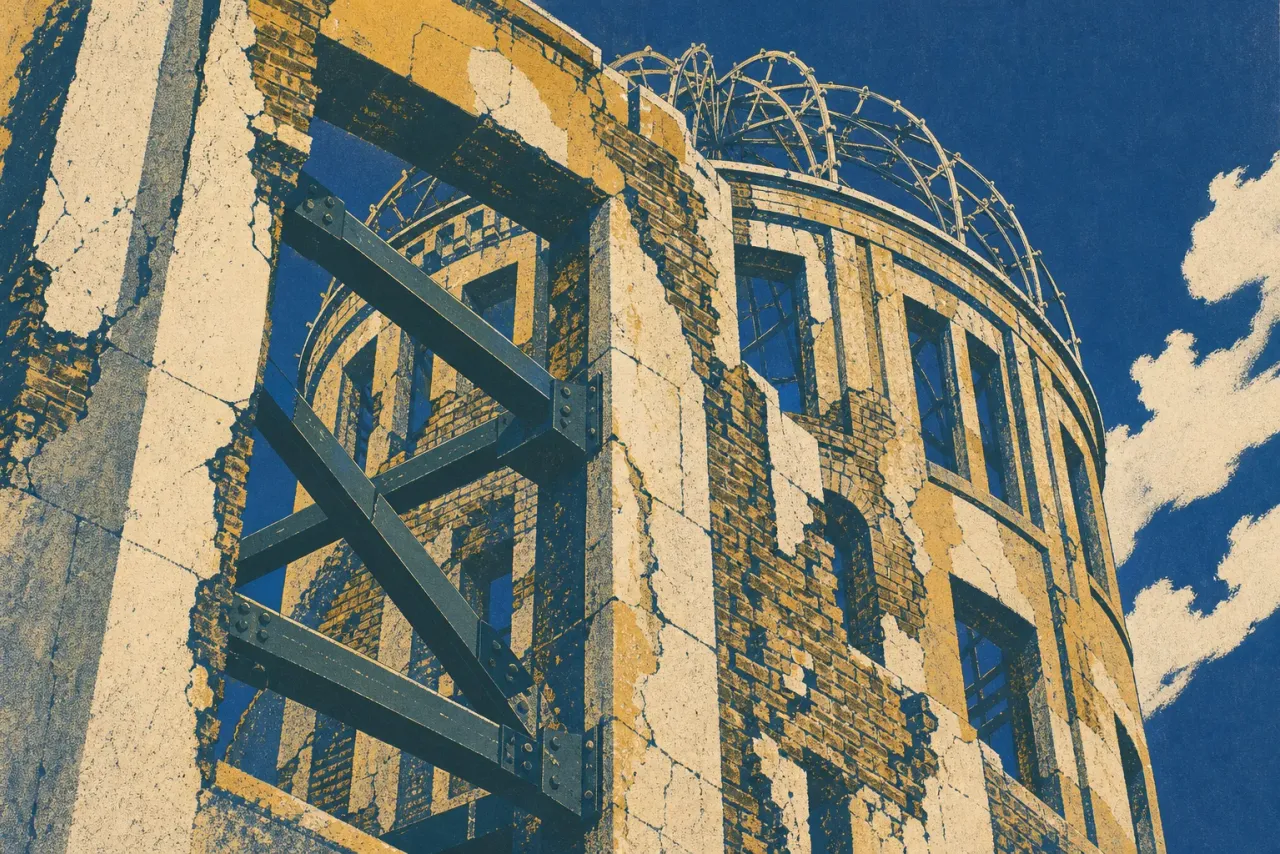
The building itself was never meant to mean anything. Czech architect Jan Letzel finished it in April 1915 as the Hiroshima Prefectural Commercial Exhibition Hall, a venue for art shows and trade fairs; on August 6, 1945, the bomb detonated almost directly overhead, and the hollowed shell has stood on the riverbank ever since. In December 1996 UNESCO inscribed it under a single criterion, judged not as architecture but purely as a symbol of peace. It is the only structure left standing near the hypocenter.
Time your visit around the museum, not the Dome
Since the Dome never closes, the Peace Memorial Museum sets your schedule. Admission costs 200 yen for adults in 2026, 100 yen for high schoolers, and nothing for anyone younger. Hours shift with the season: 7:30 to 19:00 from March through July and again September through November, until 20:00 in August (21:00 on August 5 and 6), and until 18:00 from December through February, with last entry thirty minutes before closing.
Two booking rules catch people out. The first hour of each day, 7:30 to 8:30, and the final ninety minutes require an online reservation. So does every admission from August 8 through 16, 2026. On August 6 itself, the museum opens only after the Peace Memorial Ceremony ends, around 9:45.
Crowds peak between 11:00 and 14:00, heaviest from March through May and August through November. You have two good options: arrive at opening with a reservation in hand, or start your circuit mid-afternoon and let the museum's later hours work for you once the tour groups thin out.
Walk the park before the museum, not after
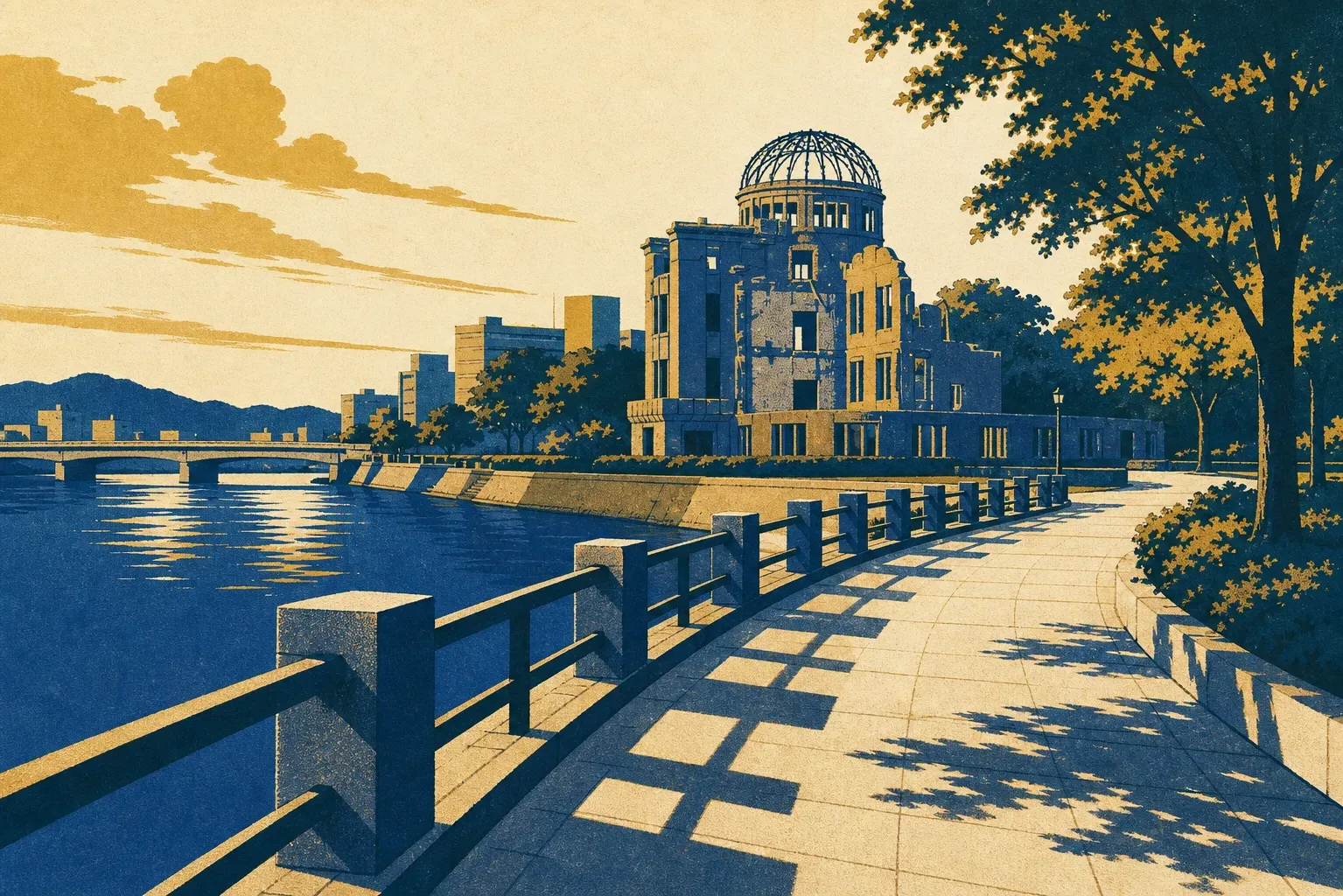
There's a logic to the order. Start at the Dome. You cannot go inside; the ruin is fenced, so viewing happens from the perimeter paths and from across the Motoyasu River, where the structure doubles in the water.
From there, cross into the park and stop at the Children's Peace Monument, hung with cases of folded paper cranes left in memory of Sadako Sasaki, then at the Cenotaph, the low arched tomb at the park's formal center.
Then the museum. Give it ninety minutes to two hours; the main exhibition documents the bombing and its human toll through the belongings victims left behind. Big bags go into the first-floor coin lockers. Keep your voice low and the flash off; tripods and selfie sticks stay at the hotel.
Saving the museum for last is about pacing. It is the heaviest hour of your day, and what you'll want afterward is not another monument but somewhere to sit.
Leave the hours after the museum empty
The classic planning error is booking something high-energy right after: a food tour with a set start time, or the sprint for a Miyajima ferry. Don't. Most people walk out feeling something they didn't quite expect, and the park is built for exactly that moment. Find a bench on the Motoyasu riverbank, or walk to the Atomic Bomb Memorial Mound, a grassed hill holding the ashes of tens of thousands of people who were never identified.
When you're ready to rejoin the living city, Hiroshima obliges fast. Nagataya, an okonomiyaki shop fitted out to look like a 1960s Showa dining room, sits steps from the Dome; expect a line for its Hiroshima-style pancake, built up in layers on a thin crepe of batter with a small mountain of cabbage and fried noodles rather than mixed Osaka-style. If the line defeats you, Okonomimura in Shintenchi, about fifteen minutes on foot, stacks more than twenty griddle counters across several floors. In winter, oysters from Hiroshima Bay, which produces most of Japan's supply, turn up grilled and deep-fried on menus all over downtown.
Come back after dark. From sunset until around midnight the Dome is illuminated, and the daytime crowds shrink to a handful of people standing quietly along the river. Seen at night, doubled in the black water, Letzel's exhibition hall does its strangest work: it has now stood far longer as a ruin than it ever stood as a building. The lights go out around midnight. The tram back to the station runs the same twenty minutes it ran that morning.