Beyond the deer park: a half day where Japan was invented
You can spot the three-hour visitors in Nara. They photograph a deer bowing for a cracker and file into Todai-ji to stand under the Great Buddha. By mid-afternoon they are back on the Kyoto train. It is a good day. It is also about a third of the story. The World Heritage inscription that put Nara on the list in 1998 names eight component sites, and three of them, Yakushi-ji, Toshodai-ji, and the excavated remains of Heijo Palace, sit on the west side of the city where almost nobody goes.
Those three answer the harder question: not "where is the big statue," but what Nara actually was. From 710 to 784 this was Heijo-kyo, the capital where a young state built its first real machinery of government, studying Tang China with the intensity of a student who knows the exam is real. The west side holds the evidence. Plan a half day, ride the Kintetsu line to Yamato-Saidaiji, and expect to share the grounds with school groups and pigeons rather than tour buses.
The palace that became a field
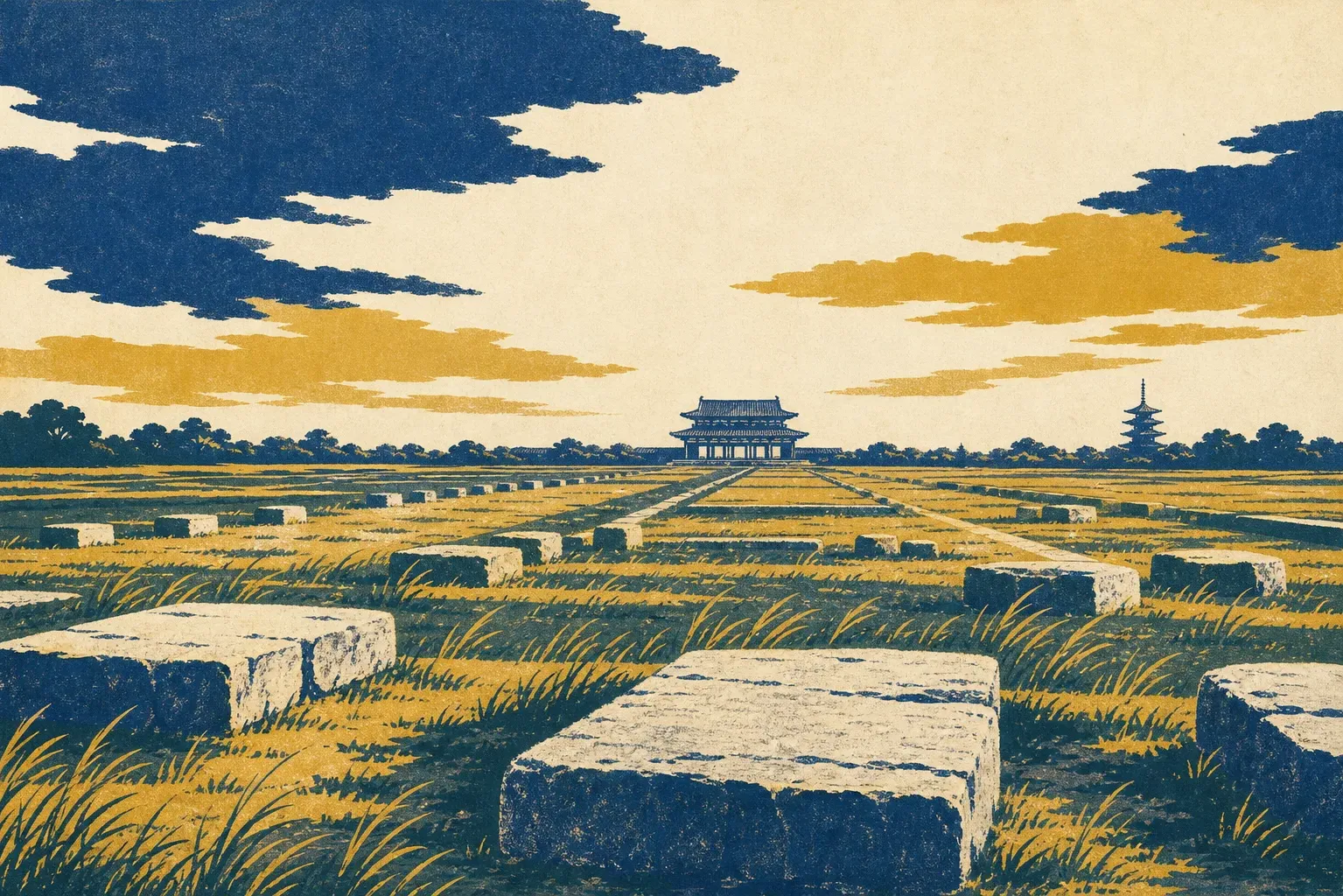
Heijo Palace is not a palace anymore. It is an enormous open field about a twenty-minute walk from the south exit of Yamato-Saidaiji Station, on a footway that narrows in places (coming straight from the park, take Nara Kotsu route 164 from stand 10 or 11 at the southwest exit of Kintetsu-Nara Station to the Suzakumon Hiroba-mae stop, about 16 minutes and 250 yen), and your first reaction may be that there is nothing here. Stay with that feeling, because the emptiness is the point. This grass was the imperial residence and administrative heart of the eighth-century capital, and archaeologists have been working the site continuously since 1959. Two full-scale reconstructions now anchor it: the Suzaku Gate, the palace's great southern entrance, and the Daigokuden, the audience hall where emperors presided over affairs of state.
UNESCO cites the palace layout under criterion iv as an outstanding example of early Asian capital planning, and the model was Chang'an, the Tang dynasty's capital: a rational grid with the palace at its head and a broad avenue running south from the Suzaku Gate. Stand in the gate's opening and sight down that axis. You are looking along the spine of Japan's first true planned city, drafted on a Chinese template by people building a nation from scratch.
Everything here is free, and the hours run on two schedules that repay a minute of checking. Suzaku Gate, the First Daigokuden and the archaeological halls open 9:00 to 16:30 with last entry at 16:00, and close on Mondays (the following day when Monday is a holiday) and from December 29 through January 3. The Izanai-kan visitor museum and Daigokumon keep going until 17:00, last entry 16:30, and shut only on the second Monday of February, April, July and November. So a Monday visit is not the write-off it is often made out to be: you lose the gate and the audience hall, but the field, the museum and the smaller gate are all there.
Two temples, two arrivals
South of the palace, in the Nishinokyo district, the loop's two temples tell matched stories about how Buddhist architecture reached this country.
Yakushi-ji began as a bargain with fate. Emperor Tenmu vowed the temple in 680, praying for the recovery of his ailing consort, and its plan was the height of continental fashion: a symmetrical compound with twin pagodas flanking the main hall. Fire and time took nearly all of it. The East Pagoda is the only structure on the grounds surviving from the eighth century, which makes it the sole original witness to that twin-pagoda scheme. The rebuilt halls around it gleam in fresh vermilion, so the pagoda's weathered wood reads like a photograph slipped into a painting. Open 9:00 to 17:00; 1,000 yen as of 2026.
Toshodai-ji, its neighbor in the same district, was founded in 759 by Ganjin, a Chinese master of the monastic precepts whom Japan had invited to come teach. He attempted the crossing six times. Five failed, and by the time he finally landed he was blind, having lost his sight along the way. The temple he founded became headquarters of the Ritsu school, the school of monastic discipline, and its Kondo is the definitive surviving example of a Tang-style golden hall. This is the transmission that criterion ii of the inscription describes: Chinese and Korean forms arriving in Japan and taking root. The long roofline and deep eaves are what the eighth century looked like, not reconstructed but present. Open 8:30 to 17:00; 1,000 yen as of 2026.
On a weekday you may have the Kondo's gravel courtyard nearly to yourself, a strange privilege given what the building is. Across town, the line for the Great Buddha stretches out the door.
Living temples, and what to eat
What the western loop finally teaches is that none of this is a museum. The inscription's criterion vi points to the continuing spiritual life of these institutions, and the proof is on the calendar: Todai-ji's Nigatsudo has held its Omizutori fire rite every March for more than 1,250 years, monks and torches on the same balcony, on schedule, since before the printing press existed. That is a better argument for living heritage than any plaque.
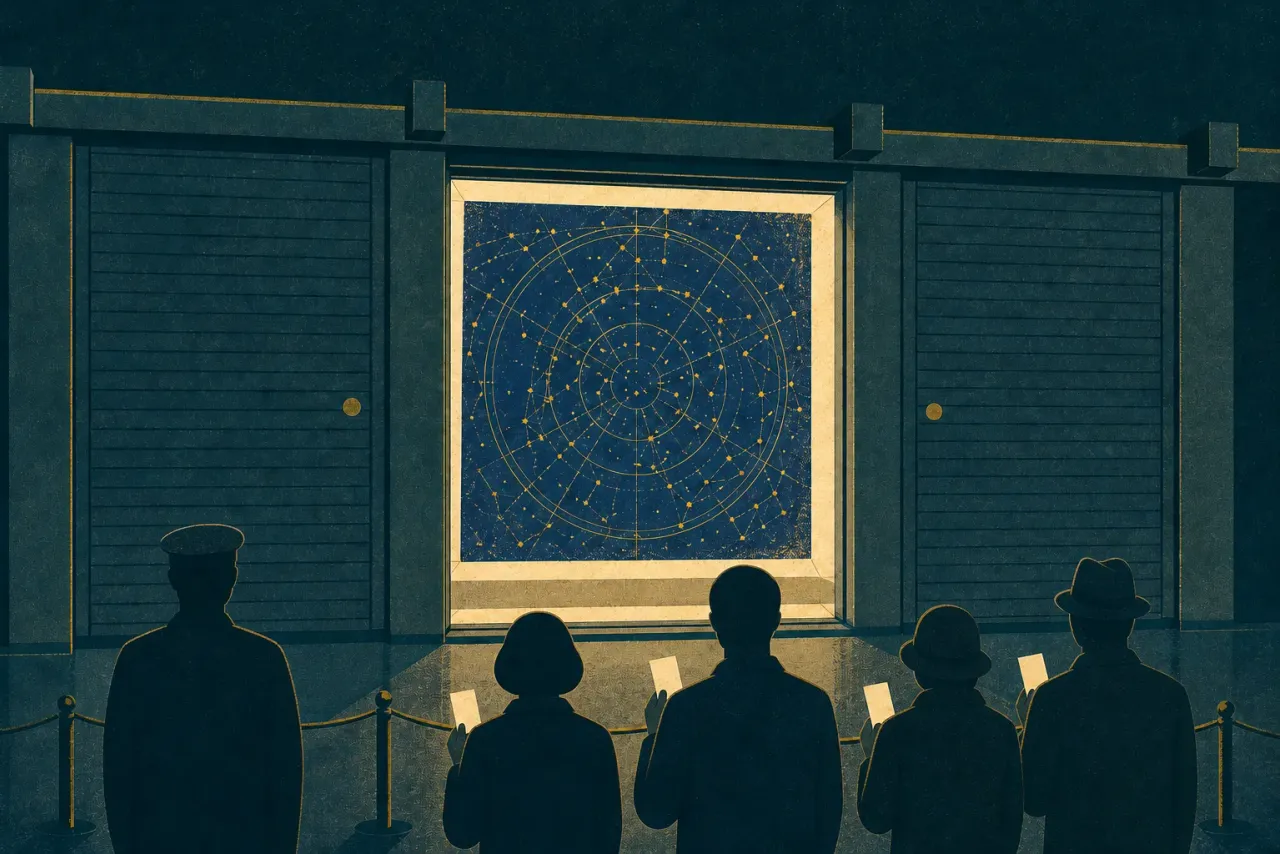
The Shosoin storehouse near Todai-ji makes the same point by withholding. Its imperial treasures appear only once a year, in an exhibition at the Nara National Museum running roughly late October to early November; the 2025 edition was the 77th. If your visit lands in that window, go, and brace for the crowds that come with it.
Lunch belongs to geography. Heijo-kyo was a landlocked capital, and its signature dish was engineered for that fact: kakinoha-zushi, pressed mackerel or salmon wrapped in persimmon leaves, whose antibacterial properties let fish travel inland before refrigeration existed. Hiraso and Kakinohazushi Hompo Tanaka are the names to know; Tanaka's main shop keeps a small dine-in corner called Kakinoha Chaya, though the boxed version was born as travel food and is happiest eaten out of hand.
Run the loop in opening order. Toshodai-ji unlocks at 8:30, half an hour before Yakushi-ji, so start there, walk to Yakushi-ji when its gates open at 9:00, then head north to the palace field for early afternoon, minding the 16:00 last entry at Suzaku Gate and the Daigokuden. Buy a box of kakinoha-zushi along the way and eat it the way it was designed to be eaten: far from the sea, in the middle of a capital that no longer exists.