The Moss Temple and the Sacred Mountain: Kyoto's World Heritage You Must Plan For
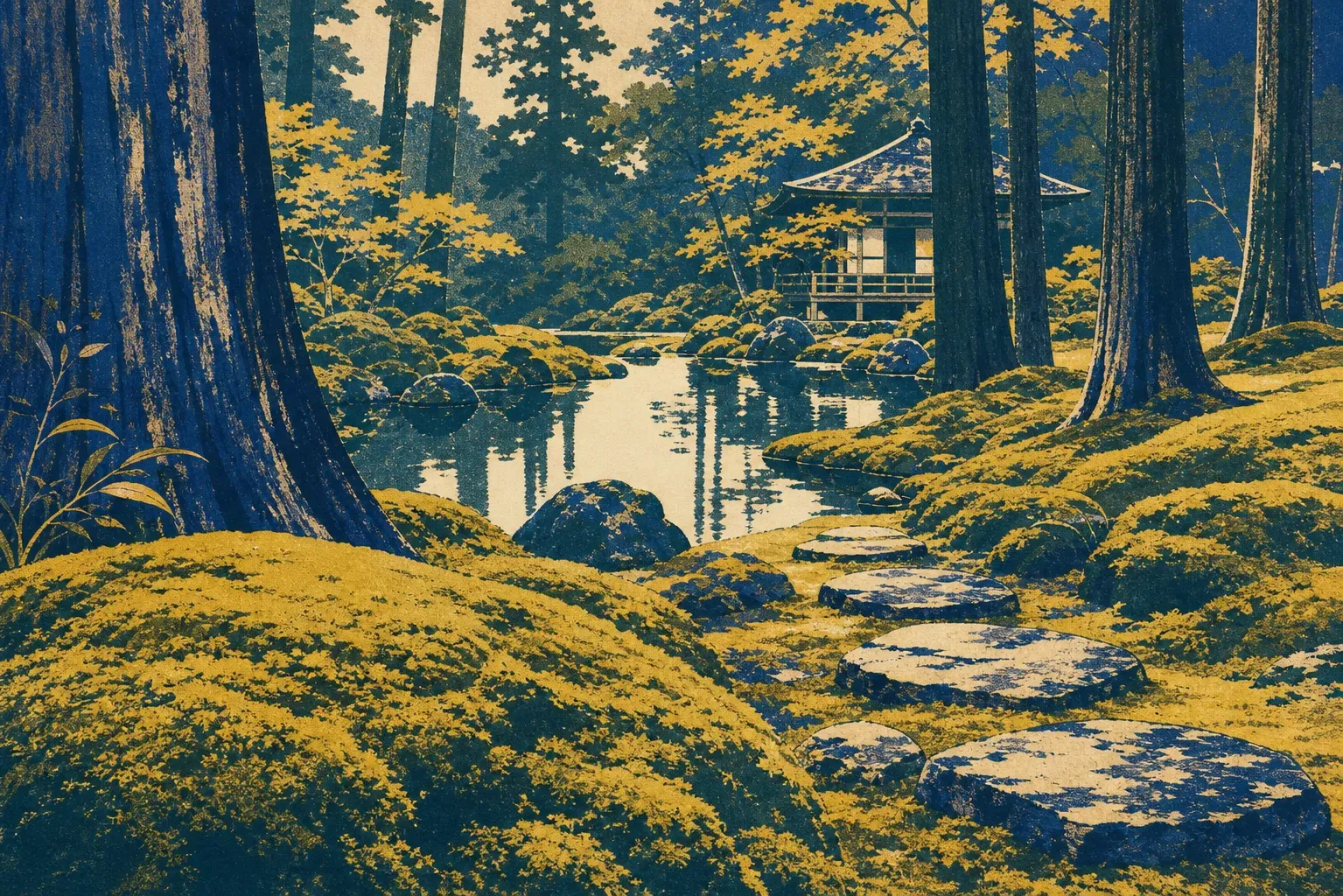
In 1977, the monks of Saiho-ji looked at what unrestricted tourism was doing to their moss and closed the gate. The temple never reopened to walk-ins. Nearly fifty years later, people still show up at the entrance in western Kyoto, phone in hand, and get politely turned away, because Saiho-ji is the one component of Kyoto's World Heritage listing that requires you to apply in advance and the only one that asks ¥4,000 for the privilege.
That's the thing about the "Historic Monuments of Ancient Kyoto" inscription: it covers 17 sites, and they are not created equal. Kinkaku-ji, Kiyomizu-dera, and Ryoan-ji ask nothing of you but ¥500 or ¥600 (as of 2026) and a tolerance for crowds. A second tier asks you to plan ahead, sometimes months ahead, or to leave town. If you've already done the Golden Pavilion circuit, this second tier is where the listing gets interesting.
The temple that makes you copy a sutra first
Saiho-ji, universally called Kokedera, the Moss Temple, grows roughly 120 species of moss across a pond garden that reads less like landscaping than like weather made permanent. Getting in works two ways. Online, reservations open two months ahead at intosaihoji.com; the fee is ¥4,000 plus a ¥110 processing charge (2026). The analog route still exists too: a return postcard mailed one to two months before your date, a small bureaucratic ritual that feels appropriate for the destination. Children under 13 are not admitted. Popular dates go fast, so treat the two-month mark the way you'd treat a restaurant that books out — set a reminder.
Every visit begins the same way. Before anyone sees a single moss cushion, you sit in the main hall for shakyo, sutra copying, led by the temple's monks. You're handed a brush pen and a sheet with the characters printed faintly underneath; you trace. No Japanese ability required, no calligraphy skill either, and the twenty-odd minutes of enforced quiet does something useful to your attention before you walk into the garden. Budget over an hour for the whole visit. One seasonal catch: the standard garden visit stops for winter grounds work — January 6 to February 27 in 2026, earlier in the month than most write-ups suggest — and the temple runs a main-hall visit with zazen, plus its separate seasonal programs, in its place. If moss is the point, don't book those weeks.
Getting there takes commitment by Kyoto standards. Bus 73 from Kyoto Station runs about an hour; a taxi does it in twenty minutes and is worth splitting if there are two of you and a reservation slot to make.
A mountain, not a stop
The single component outside Kyoto Prefecture is Enryaku-ji, the Tendai monastery sprawled across Mt. Hiei above Otsu and Lake Biwa. Founded in 788, it predates the capital itself. The most common mistake visitors make is slotting it in as a ninety-minute stop. It is not one. The monastery spans three precincts strung along the mountain: Todo, the main compound; Saito, a thirty-minute forest walk or short shuttle away and noticeably quieter; and Yokawa, remote enough that even the shuttle takes about fifteen minutes more. A single ¥1,000 ticket (2026) covers all three, which for a World Heritage site of this scale is close to a rounding error.
Todo's centerpiece is Konpon Chudo, the main hall, where an oil flame said to have burned for some 1,200 years is kept. Check what is actually open before you climb, because the hall's once-in-60-years renovation has changed what a visit means. Work began in fiscal 2016 and now runs to roughly fifteen years, with completion pushed out to around 2030, and interior worship is suspended from January 2026 until January 2028. The flame and the substitute principal image have been moved a few minutes away to Manpai-do, where you can still stand in front of both. What remains at the hall is the part guidebooks undersell: a temporary elevated stage that puts you level with the roof restoration, close enough to watch craftsmen work on a National Treasure. It comes down around December 2026, and that deadline, rather than the scaffolding, is the reason to go now.
Two routes climb the mountain. From the Lake Biwa side, take JR to Hieizan-Sakamoto or Keihan to Sakamoto-Hieizanguchi, then the Sakamoto cable car. From Kyoto, the Eizan line to Yase connects to a cable car and ropeway combination. Either way, budget a half day for Todo alone and a full day if you want Saito and Yokawa, which you should — Saito is where the crowds thin and the cedar quiet the monastery was built for actually survives. Hours run 9:00 to 16:00 at Todo year-round; Saito and Yokawa open at 9:30 from December through February, and snow can close them early. Winter visitors should check conditions the morning of.
Uji, the easy one you can still fumble
The two Uji components make the easiest out-of-town pairing in the whole inscription: the JR Nara Line runs from Kyoto Station in 20 to 30 minutes, and Byodo-in sits ten minutes' walk from the station. Easy to reach is not the same as impossible to botch. The Phoenix Hall interior admits visitors only on a separate ¥300 timed ticket (2026), sold same-day, on site, no online option, and in cherry or foliage season the day's slots can be gone by midday. Make Byodo-in your morning and lunch your afternoon, not the reverse. The temple has also announced changes to the interior visiting procedure for June through October 2026; check the official site before you build a day around it.
Across the river stands the inscription's most overlooked entry, Ujigami Shrine, which charges nothing and gets a fraction of Byodo-in's foot traffic. Most visitors never cross the bridge. Their loss is your ten quiet minutes.
Uji is also Japan's premier tea district, and the refueling carries its own centuries: Tsuen, beside Uji Bridge, claims a founding date of 1160 and the title of Japan's oldest teahouse, while Nakamura Tokichi near the JR station draws a line for matcha parfaits before it opens. I'd do Tsuen for the history and Nakamura Tokichi for the parfait, in that order, before the afternoon train back.
One more site rounds out the remote tier: Kozan-ji, up in the Takao hills northwest of the city, home of the Choju-giga scrolls, the celebrated ink paintings of frolicking animals. Admission is ¥1,000 (2026), with a surcharge in autumn, and it's a genuine excursion rather than an add-on. Save it for a second trip, or for the kind of traveler who plans a day around a scroll.
One booking date outranks everything else in this article. Two months before your trip begins, the Saiho-ji calendar opens. Book the moss first and build the rest around it.