Seventeen Sites, One Ancient Capital: A First-Timer's Plan for Kyoto's World Heritage
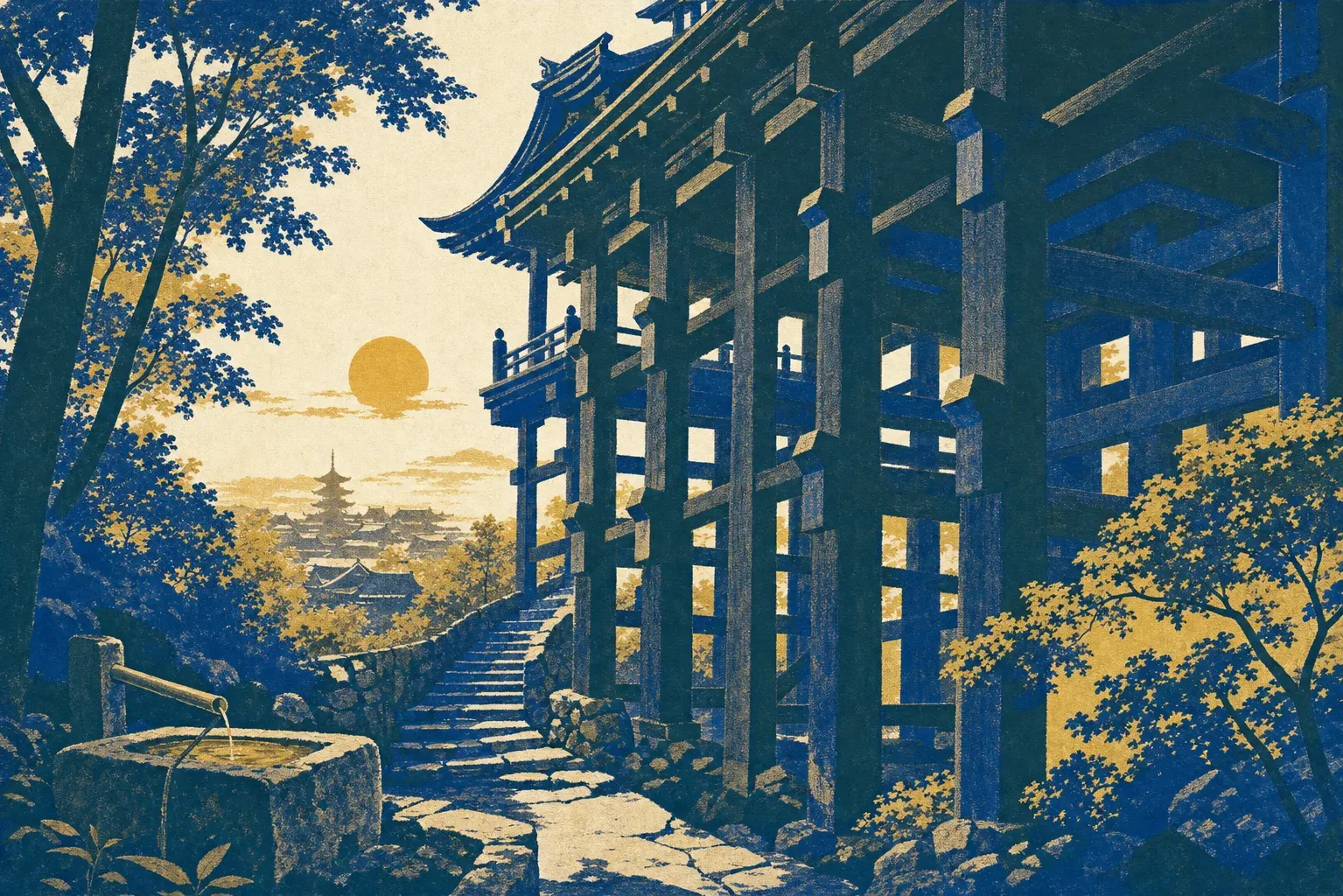
At 6:15 on a weekday morning, the wooden stage of Kiyomizu-dera holds a scattering of people: a jogger who came up from town, a monk crossing toward the main hall, and whoever else has learned that this temple opens at 6:00 with no closing days, all year. Admission is ¥500 (every price in this article is a 2026 figure). By 10:30 the uphill approach street will be shoulder to shoulder. Dawn here is the single best crowd-avoidance trick in Kyoto, and almost nobody uses it.
Kiyomizu-dera is one of 17 components of Historic Monuments of Ancient Kyoto, inscribed by UNESCO in 1994 for something no single building could demonstrate: over a thousand years of Japanese wooden architecture and garden art, evolving in one city from the 10th century through the 17th. Kyoto was founded in 794 as Heian-kyo, laid out on the model of ancient Chinese capitals, and remained the imperial capital until the mid-1800s. Sixteen of the components are temples and shrines. The seventeenth is Nijo Castle, the shogun's residence, and that single exception tells you how completely religion built this city.
The classic first-timer's mistake is treating the list as a checklist. Kozan-ji sits up a mountain road in Takao. Enryaku-ji, the one component across the prefectural border in Otsu, spreads over the summit of Mt. Hiei and absorbs most of a day by itself. Saiho-ji, the moss temple, takes reservations up to two months ahead, charges ¥4,000, and opens your visit with a sutra-copying session. With two or three days, seven or eight components is a full plate. The useful news is that they cluster.
Day one: a temple at dawn, a castle after lunch
Start where this article started. Bus 206 from Kyoto Station reaches the Kiyomizu-michi stop in about 15 minutes, and the ten-minute uphill walk that follows is deserted at 6:30 and a slow procession by mid-morning. Give yourself 30 to 60 minutes on and around the stage, which stands on wooden pillars above the hillside, then wander back down through the Higashiyama lanes while the souvenir shutters are still closed. If you can, come back during an illumination window: the temple lights the grounds until 21:30 for cherry season, the November foliage and mid-August Obon, and it publishes the exact dates each year.
Spend midday however the neighborhood pulls you, then give the afternoon to Nijo Castle, the component visitors most often shortchange. This is the shogun's 1603 Kyoto residence, and it needs 1.5 to 2 hours: ¥800 for the grounds plus ¥500 for the Ninomaru Palace interior, where the "nightingale floor" chirps underfoot by design. Gates open 8:45 with last entry at 16:00. Take the Tozai subway line to Nijojo-mae station instead of fighting a crosstown bus. Two caveats: the Ninomaru interior closes on Tuesdays in January, July, August, and December, and the whole site closes December 29-31, with the palace buildings shut a few days longer (December 26 to January 3). The separate Honmaru Palace requires an advance online reservation and another ¥1,000; skip it on a first visit.
Day two: the northwest axis, then free air
Kinkaku-ji, the Golden Pavilion, is the shortest visit on the entire list. One looping path, one long look at gold leaf doubled in the pond, and you are out in 15 to 45 minutes for ¥500. It opens at 9:00; bus 205 takes about 40 minutes from Kyoto Station, so leave early enough to be near the front of the line. From there the city's northwest axis does the routing for you. Ryoan-ji (¥600) is close by, with Japan's most famous rock garden: 15 stones, raked gravel, a veranda to sit on. Continue to Ninna-ji (¥800), an imperial temple whose Omuro cherries bloom late — a fallback if you miss peak season elsewhere.
For the afternoon, use the free components as decompression. Shimogamo Shrine stands inside Tadasu-no-mori, a surviving patch of primeval forest; Kamigamo, its paired shrine and one of the city's oldest, lies farther north. Neither charges admission, and neither feels like the ticketed circuit. A third option is Nishi Hongan-ji, a short walk from Kyoto Station: free entry, monumental Momoyama-era halls, and remarkably few tour groups for a building that size.
If gardens matter more to you than gold, swap this day's afternoon for Arashiyama: Tenryu-ji's landscape garden (¥500) was designed by the monk Muso Soseki in the 14th century, and Shigetsu, the restaurant inside the temple grounds, serves shojin ryori, the Buddhist vegetarian cuisine made without meat, fish, or eggs. Back downtown in the evening, Nishiki Market's 400-meter arcade holds about 130 food shops; the etiquette is to eat standing at the stall, not while walking. For simmered tofu, Okutan near Nanzenji has been at it since 1635.
Day three: Uji, before the tickets run out
The JR Nara Line runs from Kyoto Station to Uji in 16 to 22 minutes for a flat ¥240, rapid or local — the Miyakoji Rapid is the quick one and costs no extra — and your first stop should be the ticket window at Byodo-in, ten minutes' walk from the station. The garden opens at 8:45 (the Hoshokan Museum at 9:00), ¥700 for both. The real prize is the Phoenix Hall interior: ¥300 extra on a timed ticket sold same-day, on site only, admitting 50 people every 20 minutes starting at 9:30. In cherry or foliage season the day's slots can be gone by midday, so buy the interior ticket the moment you arrive and spend the wait on the tea street outside. One wrinkle for 2026: the temple has announced changes to the interior visiting procedure between June and October, so check the official site before you go. The hall itself was finished in 1053 and appears on the ¥10 coin. Check your pocket change against the real thing.
Ujigami Shrine sits ten minutes away across the river, free, its main hall dated to around 1060 and believed to be the oldest surviving shrine building in Japan. It receives a fraction of Byodo-in's traffic. Uji is Japan's premier tea district, and the shops along Byodo-in Omotesando pour proof of it.
A few logistics to close the loop. The Nozomi shinkansen covers Tokyo to Kyoto in about 2 hours 15 minutes. For a base, the Kyoto Station area is the practical choice, since the JR lines to Uji and toward Mt. Hiei start there; downtown Kawaramachi or Karasuma trades that for restaurants and both subway lines, and Gion puts the Kiyomizu dawn walk outside your door at ryokan prices. Budget one more line item: from March 1, 2026, Kyoto's accommodation tax runs ¥200 to ¥10,000 per person per night depending on room rate — Japan's highest; a room in the ¥6,000-20,000 bracket adds ¥400 a night.
Whatever you cut, let it be the reason you return. Enryaku-ji, up the Sakamoto cable car on Mt. Hiei above Otsu, wants a full day for its three precincts and gets shortchanged by anyone who gives it less. Its main hall, Konpon Chudo, is closed to interior worship until January 2028 while the roof is rebuilt, and the flame said to have burned there for roughly 1,200 years is being tended at Manpai-do meanwhile. It has outlasted the capital itself. It will still be lit when you come back.