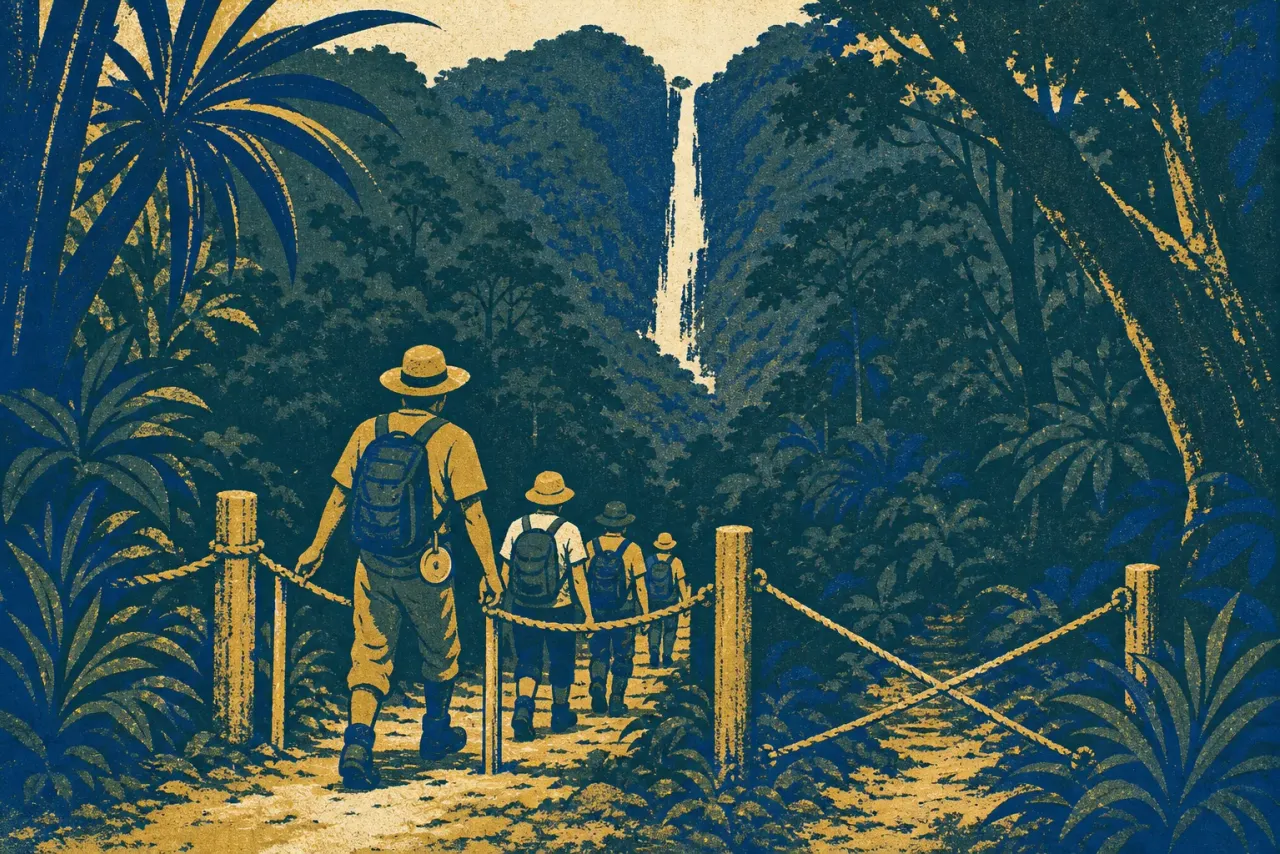
Four islands, one World Heritage site: which one do you actually fly to?
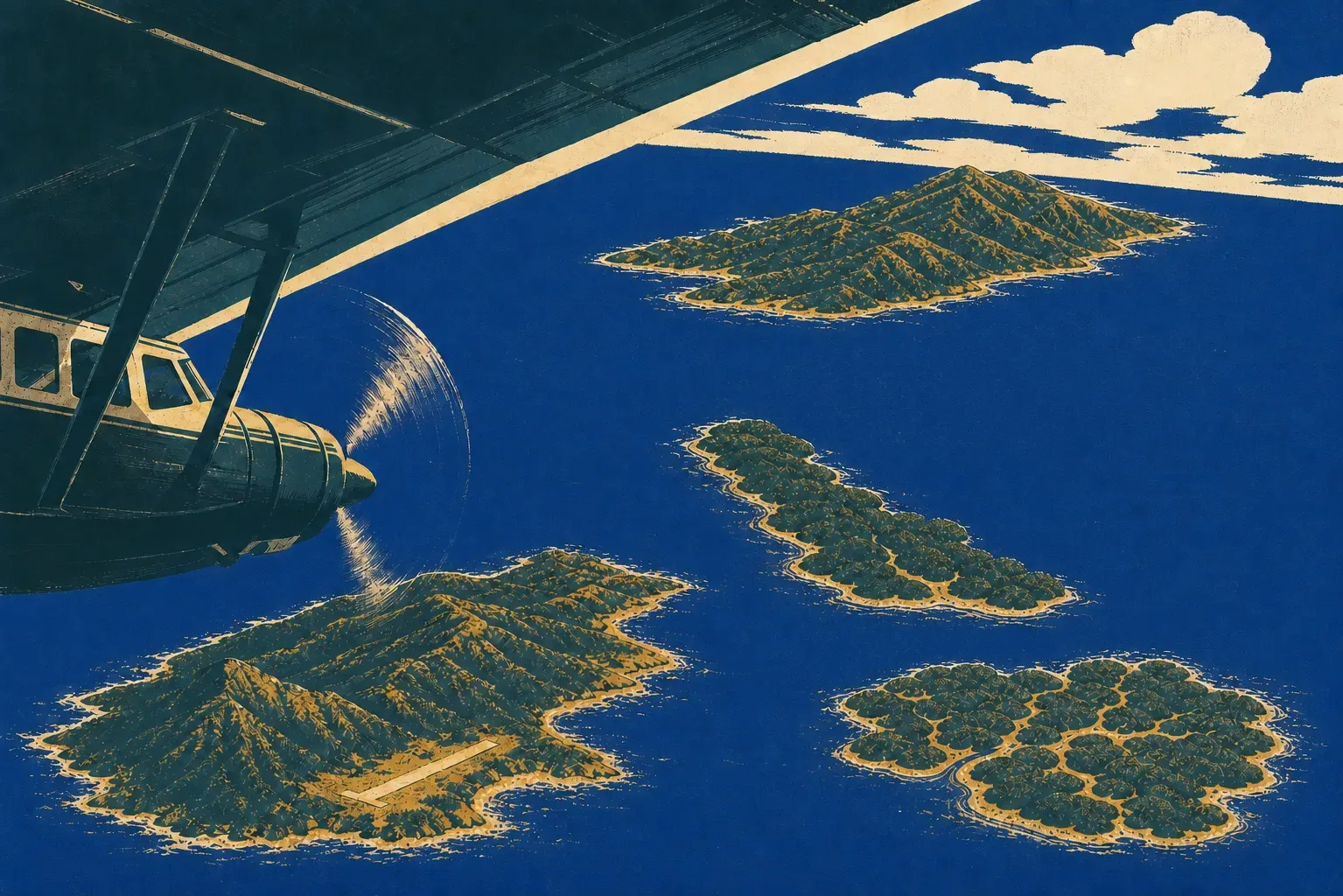
The confusion starts with the name. "Amami-Oshima Island, Tokunoshima Island, Northern Part of Okinawa Island, and Iriomote Island" reads like an itinerary. It is closer to a warning. This 2021 inscription covers five separate component parts spread across four islands and roughly 800 kilometers of ocean, with no shared gateway airport and no realistic way to combine the far ends in one normal vacation. Travelers who miss that book a flight to Naha and then wonder where the heritage site went.
One more structural fact before you open a flight app: the inscribed 42,698 hectares are entirely uninhabited. No village or temple sits inside the boundary. Every place you stand in street shoes is buffer zone or outside the property, and you reach the real thing on foot, usually behind a certified guide. Visit it the way you'd visit a wildlife refuge, not the way you'd visit Kyoto.
Why four islands share one listing comes down to geology. When the Okinawa Trough opened in the late Miocene, this chain broke away from the Eurasian continent and shattered into islands, stranding animals that then evolved separately on each one. So the endemism is island-specific: the Amami rabbit lives only on Amami-Oshima and Tokunoshima, the flightless Okinawa rail only in Yanbaru, the Iriomote cat only on Iriomote. Choosing your island means choosing your animal, your forest, and your booking problem.
Amami-Oshima: the easiest deep forest
Haneda to Amami is about 2 hours 20 minutes nonstop, the shortest hop from Tokyo to any part of the property, though at last check that was a single JAL departure a day. The Shimabus runs from the airport to Naze, the island's only real town, in 55 minutes for 1,100 yen (2026), so you can land without a rental car and sort out tours from a bar stool on Yanigawa street, where the shima-uta singing starts after dinner.
Access to the forest here is guided but not rationed. Kinsakubaru National Forest, where hikage-hego tree ferns grow to cinematic size, is closed to independent visitors; you go with an Amami-Islands-certified eco-tour guide, and 125 of the 186 certified across the whole island group work on this one island. That supply is Amami's quiet luxury. On Iriomote you plan around a permit calendar. On Amami you mostly just call. The exception worth flagging is the Santaro Line, the Sumiyo forest road where night tours look for Amami rabbits: vehicle numbers are managed nightly and reservations are required in advance, residents included.
Start at the Amami-Oshima World Heritage Conservation Center in Sumiyo. Free, 9:00 to 17:00 with last entry at 16:30, closed Thursdays, and it handles English. Then eat keihan, the island dish: rice under shredded chicken, thin omelette, pickled papaya and candied tangerine peel, drowned at the table in whole-chicken broth. Minatoya in Kasari bills itself as the birthplace and makes only about ten servings before the soup runs out; Hisakura in Tatsugo serves until 20:30 and is the low-risk version.
Tokunoshima, which contributes two of the five component parts, is Amami's quieter sibling. It has its own airport, its own free World Heritage Center (closed Tuesdays), the same rabbit, and 17 certified guides. Pick it if you've done Amami-Oshima already, or if togyu, the island's bull-sumo tradition, is a draw in itself.
Yanbaru: the one you can add to an Okinawa trip
Northern Okinawa Island is the component part that bolts onto a beach vacation. Fly into Naha, then drive 1.5 to 2 hours north past the last resort towers into Kunigami; the national parks tourism site budgets about five hours from Tokyo for the whole journey. That drive is the catch. Do it both ways in one day and you've spent four hours in a car to see a forest mostly through a windshield. The sane version is a night or two up north, around Okuma or in the campsites, bungalows and tree houses of Kunigami Forest Park (office closed Tuesdays).
Yanbaru's paid centerpiece is ASMUI, the rock landscape marketed as Daisekirinzan until it was renamed in December 2024. Admission is 2,500 yen for adults 15 and over (2026), shuttle bus and audio guide included, and the visit realistically takes 90 to 150 minutes. Know what you're walking on: in the Chūzan Seikan the goddess Amamikyo created Asumui before anywhere else, which makes this a sacred site with a ticket booth, not a theme park. For the rail itself, the better stop is the Ufugi Nature Museum near Hiji (300 yen as of 2026, closed Mondays and 23 June), where a display tallies roadkill as it accumulates: 26 Okinawa rails at last reading. That number tells you how to drive up here after dark.
Iriomote: book the permit before the flight
Iriomote demands the most and gives the most. You fly to Ishigaki, then take an Anei Kanko ferry, roughly 35 to 50 minutes, to Ohara in the south or Uehara in the north. Uehara is the gateway for the Urauchi and Hinai rivers, and it is also the first route suspended when swell comes up, so check Anei's per-route operation status before you build a day around it, especially in August and September, the peak months for typhoon approaches in these islands.
The planning trap here is legal rather than logistical. Since 1 March 2025, five of the island's marquee backcountry fields have been entry-capped under the Ecotourism Promotion Act, with daily quotas as low as 30 people and a town-registered guide mandatory on the two river routes. The application portal is Japanese-only, so in practice you write to a registered guide operator weeks ahead and let them file. Turn up without approval and you are simply not going in. Start that conversation before you book flights, not after.
Plenty of the island stays open to anyone: the Urauchi River sightseeing boat to the Mariudo and Kanpire falls track, mangrove kayaking on the Nakama River, the water-buffalo cart across the shallows to Yubu Island. The night sky counts too, now that DarkSky International granted the Iriomote-Ishigaki park full certification in May 2026.
A last calibration, valid on all four islands: you will probably not see the animals. None of the flagship species keeps daytime hours and all of them are scarce, so plan for subtropical forest, mangrove water and the noise of a night full of insects, and treat a sighting as luck. If a rabbit or a cat does cross your headlights, that moment is the whole reason the restrictions exist. Slow down.
Sources
- https://whc.unesco.org/en/list/1574/
- https://whc.unesco.org/?cid=31&l=en&id_site=1574&mode=json
- https://www.japan.travel/en/world-heritage/amami-oshima-island-tokunoshima-island-northern-part-of-okinawa-island-and-iriomote-island/
- https://amamito.jp/en/useful/562/
- https://iriomote-island.jp/access/
- https://www.data.jma.go.jp/yoho/typhoon/statistics/average/average.html