Jomon Sites of Northern Japan (Sannai Maruyama)
北海道・北東北の縄文遺跡群
- Shin-Aomori Station (Tohoku Shinkansen)
- ≈3.5–4 h from Tokyo
- Depends on route — see Access
- late spring
Quick facts
- ≈3.5–4 h from Tokyo
- shinkansen about 17,500 yen one way plus a few hundred yen for the shuttle bus
- Depends on route — see Access
- late spring · summer · autumn
- Shin-Aomori Station (Tohoku Shinkansen)
- The special exhibition 'Northern Jomon and Asia' at Sannai Maruyama runs through October 12, 2026 and charges a separate fee on top of the ¥500 general admission.
- Sannai Maruyama has scheduled fumigation work on its reconstructed buildings and parts of the large pit dwelling are currently restricted, so check the official site's notices page shortly before visiting.
- Free volunteer guides at the Akita stone circles require advance booking: 10 days at Oyu and 14 days at Isedotai.
Overview
Why it's inscribed
The textbook sequence is settled: first agriculture, then villages, then everything else. The Jomon sites of northern Japan break it. For more than 10,000 years, people here lived in permanent settlements without planting grain or keeping livestock. They raised monumental timber buildings and stone monuments. They buried their dead in ordered cemeteries. They traded jade and obsidian over hundreds of kilometers. All of it ran on wild food: fish, game, gathered nuts. At Sannai Maruyama they went so far as to manage stands of chestnut trees, which is as close to farming as the Jomon ever came.
Inscribed in 2021, the property links 17 archaeological sites across four prefectures into one argument, arranged to cover the full arc of the period. It opens with undecorated potsherds from around 13,000 BCE at Odai Yamamoto, the oldest pottery known in Northeast Asia, made by people still living in portable shelters. It peaks with hub villages like Sannai Maruyama. It closes with the great stone circles and ring-shaped burial earthworks of the final centuries, when settlements thinned out and ceremony intensified. No single site carries the story. Walked in sequence, they show a settled, spiritually elaborate society that never took up the plow.
What you'll actually see
Nobody sees all 17 components on one trip. These six justify the detours, in the order a Tohoku-then-Hokkaido itinerary meets them.
Sannai Maruyama
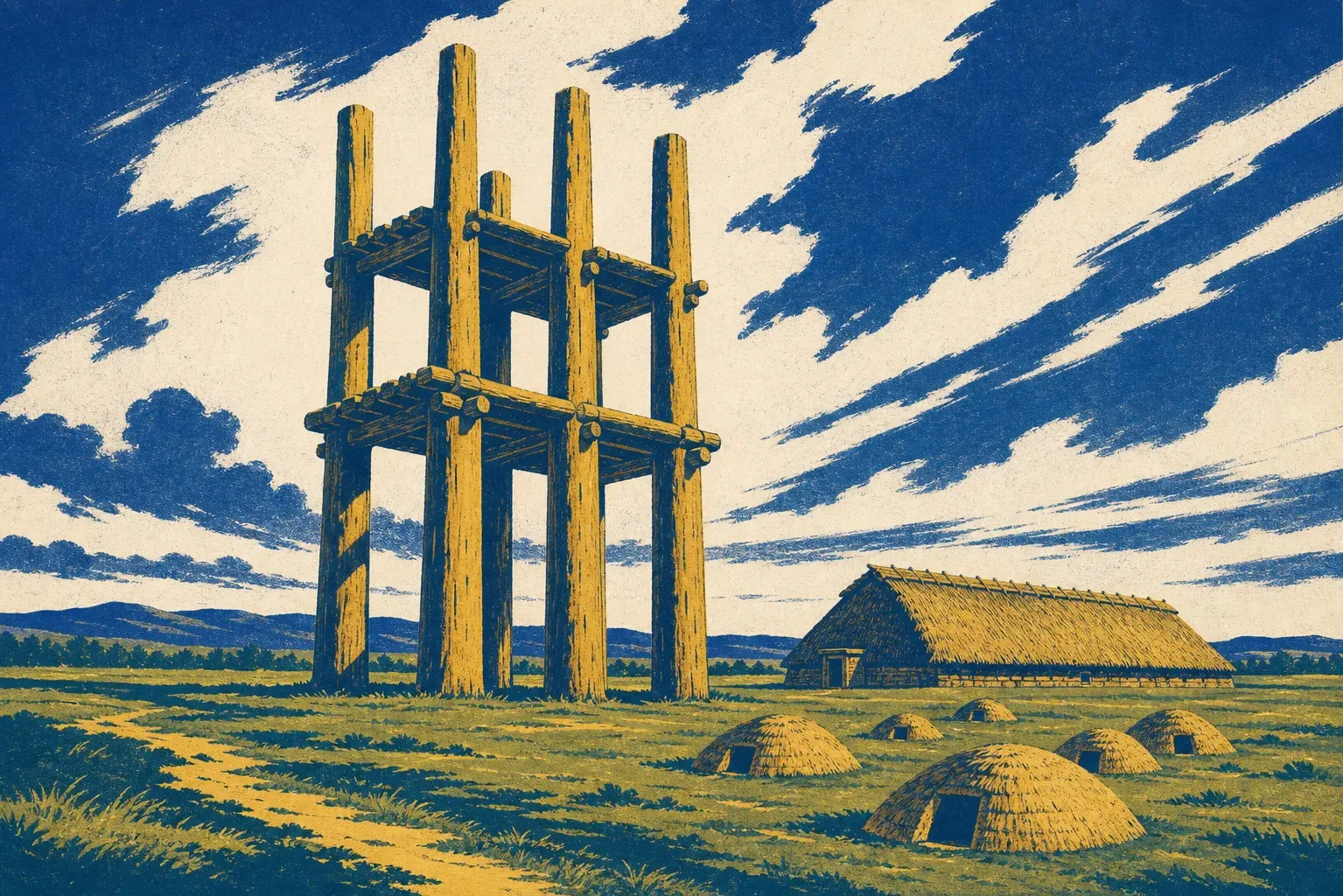
The flagship, in Aomori City, occupied from about 3,900 to 2,200 BCE and discovered in 1992 during ground work for a baseball stadium — the stadium lost. Its reconstructed six-pillar structure has become the image of the whole property: six post holes, each roughly two meters wide and two meters deep, that once held chestnut columns a meter thick. Walk the adult burial rows flanking the old eastern pathway, then the 32-meter longhouse. The Sanmaru Museum displays finds from a haul of more than 2,000 clay figurines, the largest from any site in Japan. Take the free 50-minute volunteer walk; translation tablets cover six languages.
Komakino Stone Circle
Also in Aomori City, on a plateau above the Aomori Plain: three concentric rings of stones laid out around 2,000 BCE, the whole arrangement 55 meters across. It draws a fraction of the flagship's visitors, which is the appeal. You stand alone with a 4,000-year-old monument and a long view over the Aomori Plain. The small preservation museum is free. The site itself closes from November 16 through April 30, so this one is strictly a warm-season stop.
Korekawa
Hachinohe's contribution is the late Jomon at its most refined, roughly 1,000 to 400 BCE. Waterlogged ground preserved objects that never survive elsewhere: lacquered bows, combs, bracelets, wooden containers, still glossy red after three millennia. The Korekawa Jomon Kan (¥250 as of 2026, closed Mondays) is a compact museum with a Japanese and English audio-guide app, and it pairs naturally with a night in Hachinohe's yokocho bars.
Oyu Stone Circles
In Kazuno, Akita: two big rings of river stones, Manza at 52 meters across and Nonakado at 44, each surrounded by concentric zones of post structures, storage pits, and graves. A line drawn between the two circles' centers points at the summer-solstice sunset, and the stones sit over burials, so this was cemetery and calendar at once. Museum admission is ¥320 as of 2026.
Isedotai Stone Circles
Four stone circles, each over 30 meters wide, the largest 45; nowhere else in Japan have so many been found so close together. Isedotai is also the property's one genuine train-access site: the Jomon museum, which is free, stands five minutes on foot from Jomon-Ogata Station. The catch is winter. The site shuts completely from November until late April, and the museum closes Mondays.
Kakinoshima and Ofune
The Hokkaido pair, on the coast northeast of Hakodate, in the Minamikayabe district on the eastern side of the Oshima Peninsula. Kakinoshima has U-shaped ceremonial earthworks over 190 meters long, among the largest in Japan; Ofune has more than 100 pit dwellings, some dug over two meters into the ground, unusually deep for the period. Between them sits the Hakodate Jomon Culture Center, home of "Kakku," the hollow clay figurine that became the first object in Hokkaido designated a National Treasure (¥300 as of 2026, closed Mondays and the last Friday of each month). Budget a full day and rent a car; the bus runs 90 to 100 minutes each way.
Worth knowing
Winter decides more than the weather here. Komakino closes from mid-November through April, Isedotai from November to late April, Kamegaoka and Kitakogane from December through March; a January visitor is left with Sannai Maruyama and whatever is indoors. June through September is the window, when Sannai Maruyama stays open until 18:00 and the low evening light is at its best on the six-pillar structure. If you can pick a single date, the week of the summer solstice at Oyu is the one with real astronomical payoff.
Give Sannai Maruyama two to three hours, not the 45-minute stop many itineraries allow, and resist trying to collect components; the flagship plus one stone circle makes a coherent trip. Eating and smoking are banned across the Sannai Maruyama grounds outside a designated picnic area, so finish any station bento before you arrive. At Oyu and Isedotai, stay off the stones, which rest on graves. And if you are headed to Kamegaoka for the famous goggle-eyed figurine, know that it lives in the Tokyo National Museum, not at the site.
Highlights
Sannai Maruyama Site (Aomori City) — reconstructed pit dwellings, a monumental six-pillared structure, and the Jomon Jiyukan museum (open 9:00–17:00/18:00, adults 500 yen, university students 250 yen, high school age and under free)
Oyu Stone Circles (Kazuno, Akita) — two large ritual stone circles 4,000–3,500 years old
Kamegaoka Burial Site (Tsugaru, Aomori) — origin of the iconic goggle-eyed dogu figurine
Korekawa Site and its museum of lacquered Jomon artifacts (Hachinohe, Aomori)
Kakinoshima and Ofune sites near Hakodate, with the Hakodate Jomon Culture Center (Hokkaido)
Komakino Stone Circle (Aomori) and Kiusu Earthwork Burial Circles (Chitose, Hokkaido)
Getting there from Tokyo
Tohoku Shinkansen Hayabusa from Tokyo to Shin-Aomori (about 3h), then the Nebutan-go shuttle bus from the East Exit about 15 min (or 10 min by taxi) to Sannai Maruyama. Other components need onward travel: Oyu Stone Circles are ~25 min by car/taxi from JR Kazuno-Hanawa Station; Hokkaido sites are reached via Hakodate (Hokkaido Shinkansen to Shin-Hakodate-Hokuto) or New Chitose Airport, with a rental car recommended.
Where to base & what to eat
Where to base
Aomori City (JR Aomori / Shin-Aomori station area)
The default base for Sannai Maruyama, with A-Factory, the Nebuta Museum WA RASSE, and the nokkedon market walkable from JR Aomori Station, but it is a functional port city and Shin-Aomori and Aomori are separate stations six minutes apart by train, so book near the right one.
Asamushi Onsen
Seaside ryokan on Mutsu Bay 20 to 25 minutes east of Aomori City by JR, worth one kaiseki-and-hot-spring night, though the half-board dinner locks up your evening and cuts you off from the city's izakaya.
Hachinohe
The natural second base for Korekawa, with Miroku Yokocho's tiny bars and the wharf morning markets, but it sits an hour from Aomori City by Shinkansen, so treat it as its own stop rather than a day trip.
Hakodate / Yunokawa Onsen
The only workable base for the Hokkaido components, with Yunokawa's seaside hot-spring hotels 30 minutes from downtown by tram; even from here Kakinoshima is an hour away by car and Ofune slightly more, so a rental car is close to mandatory.
What to eat
Nokkedon
Build-your-own seafood bowl at the Aomori Gyosai Center, the Furukawa market a short walk from JR Aomori Station: buy a book of meal tickets, take a bowl of rice, then trade tickets across roughly 30 stalls, where lean tuna costs one ticket and toro three.
Miso-curry-milk ramen
Aomori City's own invention, a miso broth with curry and milk stirred in; you will not find it under that name anywhere else in Japan.
Kaiyaki-miso
Egg and seafood simmered in miso with a large scallop shell serving as the pan, a standard izakaya order in Aomori City.
Senbei-jiru
Hachinohe's defining dish: Nanbu wheat crackers simmered into chicken or seafood broth until chewy; buy the crackers fresh at Takebayashi Senbei Shop and eat the soup around Miroku Yokocho.
Kiritanpo nabe with Hinai-jidori chicken
Pounded rice grilled on cedar skewers and dropped into hot pot with one of Japan's three great chicken breeds, the signature dish of the Kazuno-Odate corridor you cross to reach the Oyu Stone Circles.
Official links
Fares, hours and closures change with little notice. These are the operators' and authorities' own pages — worth a look close to your travel dates.
Related stories

Stone circles and a solstice line: driving the Jomon sites beyond Aomori
The argument that persuaded UNESCO lives mostly outside Aomori City, in stone circles and burial earthworks that close for winter and sit a taxi ride from the nearest station. A five-site route from Iwate to New Chitose, timed to the summer solstice.
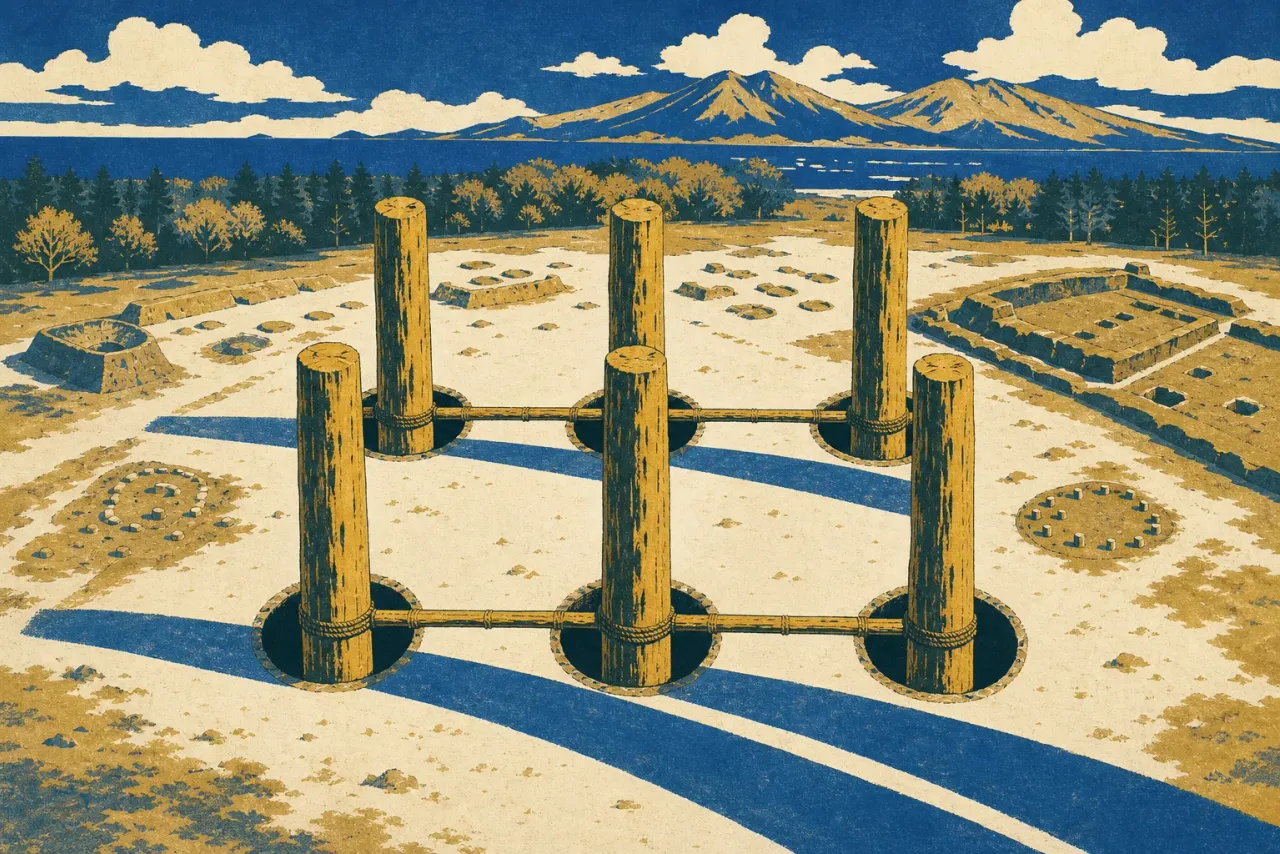
The six chestnut posts: a half-day at Sannai Maruyama from Tokyo
Three hours on the Hayabusa puts a village abandoned four thousand years ago within day-trip range of Tokyo. What the six post holes actually tell you, and how to time the visit around the site's few but unforgiving closed days.