Skip the crowds: why Gokayama is the gassho village you'll remember
The photograph that sells Shirakawa-go is nearly always the same one: Ogimachi village seen from the Shiroyama viewpoint, sixty thatched roofs under deep snow. What it leaves out is the line for the 300-yen shuttle (as of 2026) up to that viewpoint, the tour buses rotating through the parking lot, and the roughly 500 residents who close their village to day visitors after dark because they actually live there. Ogimachi absorbs enormous traffic, and on a holiday weekend it feels like it.
There is a workaround, and it has been sitting in the fine print since 1995. UNESCO never listed one village. It listed three.
One listing, three villages
The site's official name is Historic Villages of Shirakawa-go and Gokayama, and the selection was deliberate: one large settlement, one medium, one small. Ogimachi, in Gifu, is the large one, with about 60 gassho-zukuri farmhouses. Over the prefectural line in Toyama, in a district called Gokayama, sit the other two. Ainokura holds around 20 gassho houses on a terraced slope above the Shogawa river. Suganuma has nine.
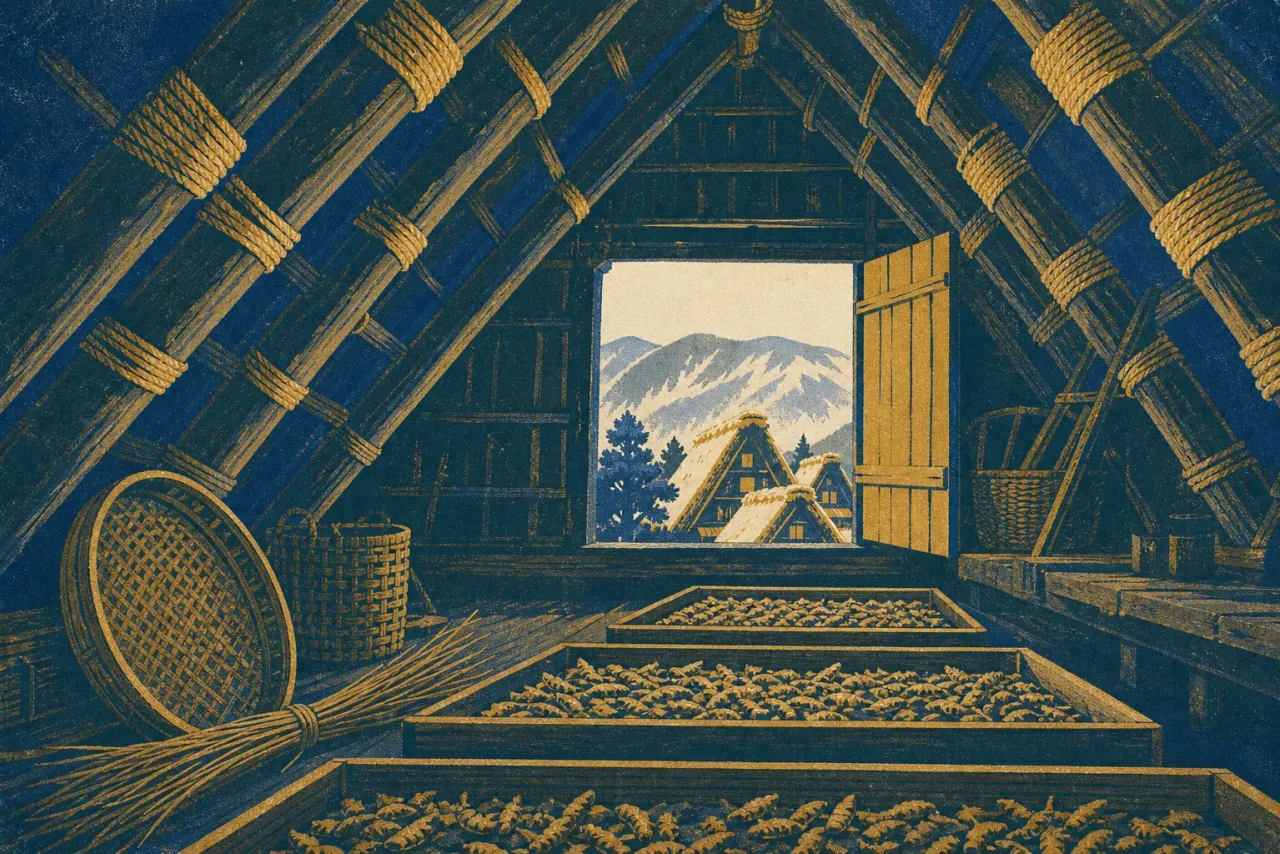
All three are built of the same stuff: gassho farmhouses with thatched roofs pitched at nearly 60 degrees against the valley's crushing snow, and attics that once held tiers of silkworm racks. For the full engineering story, tour Wada-ke House in Ogimachi and climb into the roof frame.
What differs is everything around the houses. Gokayama is markedly less developed, with fewer modern buildings breaking up the scene and a small fraction of the visitors. Walk into Suganuma on a weekday morning and you might share its nine farmhouses with a dozen people. For the architecturally inclined there is even a genuine distinction to hunt for: Shirakawa-go's houses are side-gabled, while Gokayama's are front-gabled, with eave attachments at the gable ends and broad earthen-floor workspaces inside. Once you notice it, the two districts stop being interchangeable postcards.
The bus that makes it work
No train reaches any of the villages. The connector is the Kaetsuno "World Heritage Bus" from Takaoka and Shin-Takaoka stations in Toyama, an easy reach for Hokuriku Shinkansen travelers. From Shin-Takaoka it reaches Ainokura's stop in about an hour (1,100 yen since the November 2025 fare revision) and Suganuma in about 80 minutes (1,300 yen), then runs roughly 30 minutes more to Shirakawa-go; that last Suganuma-to-Ogimachi leg alone is 910 yen. The routing is the entire strategy. Because one line strings all three villages together, you can cover the whole inscription in a day: Suganuma while it is still quiet, Ainokura through midday, Ogimachi in the late afternoon, or the reverse if you are starting from the Gifu side.
The catch is the timetable. Buses are sparse, and missing one can unravel an afternoon. Photograph the schedule before you leave the station and build the day around specific departures, not a vague plan to catch the next one. Note, too, that Ogimachi's paid houses close between 16:00 and 17:00, so if the big village is your finale, arrive with two hours of daylight in hand.
Gunpowder, stone tofu, and a hearth for the night
Gokayama's backstory is stranger than its serenity suggests. The valley's economy ran on washi papermaking and on saltpeter, the crucial ingredient of gunpowder, produced quietly in these remote farmhouses through the Edo Period. Suganuma's Ensho-no-Yakata museum told the saltpeter story, but it closed for repairs on July 31, 2026 and no reopening date has been announced, which also retired the 400-yen combined ticket. What remains at Suganuma is the Gokayama Folklore Museum next door, 300 yen for adults and 150 for children, open 9:00 to 16:30 and closing at 16:00 from December through March. Up in Ainokura, the Folklore Museum charges 300 yen (as of 2026), or 500 yen combined with the Traditional Industries Museum, which covers the paper trade; hours are 8:30 to 17:00. None of these takes more than half an hour, which is the right amount, because the real exhibit is the village itself.
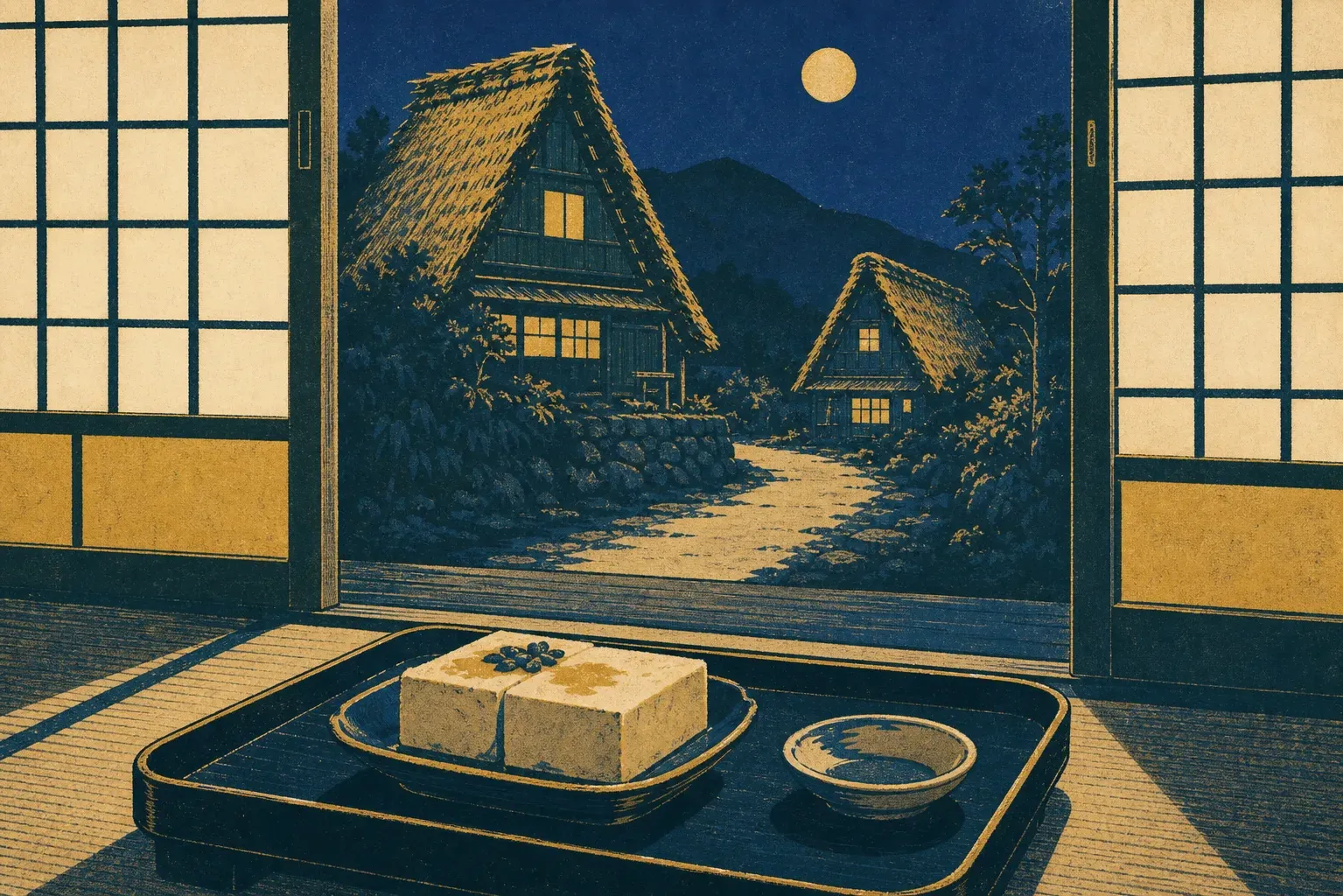
Eat here rather than saving your appetite for Ogimachi's snack street. Gokayama's kata-dofu, or stone tofu, is pressed so dense that it can be carried tied up with rope; it appears grilled or simmered in local set meals, usually with iwana, a river char cooked whole over coals, and a plate of foraged sansai. Gohei mochi, pounded rice glazed and grilled on a skewer, handles the walking-around role.
If you can, stay the night. Ainokura keeps a handful of gassho farmhouse minshuku where dinner is served around the sunken hearth, and after the last bus pulls out you will have one of Japan's most photographed landscapes nearly to yourself. Fair warning: rooms are very limited, English is minimal, and payment is cash. Book months ahead and bring more yen than you think you need. The reward is the after-dark village that Ogimachi reserves for its own overnight guests, minus the competition.
With a spare half day, continue to Kaminashi for Murakami-ke House, a gassho residence open 9:00 to 16:00 with last entry at 15:40 (closed Tuesdays and Wednesdays, and from mid-December through February; 400 yen as of 2026). The house keeps the district's folk-dance tradition within reach, with the bamboo sasara and other traditional instruments on display.
One habit will save your trip: check the last World Heritage Bus departure twice, once when you arrive and again after lunch. Unless, that is, you are sleeping in Ainokura. Then you can watch that bus leave without you, listen to the valley go quiet, and spend the evening in a village that briefly belongs to the people who live there, plus you.
Sources
- https://whc.unesco.org/en/list/734/
- https://whc.unesco.org/en/list/xml/
- https://shirakawa-go.gr.jp/en/
- https://shirakawa-go.gr.jp/en/access/
- https://www.japan-guide.com/e/e5953.html
- https://www.japan-guide.com/bus/gokayama.html
- https://gokayama-info.jp/archives/9106
- https://www.kaetsunou.co.jp/regular/fare