Hands in prayer: a first-timer's day in Shirakawa-go, hour by hour
No train reaches Shirakawa-go. Not from Tokyo, not from Kanazawa, not from anywhere. The Shogawa river valley was so cut off that until the 1950s it was called "the last hidden region left in Japan," and while the Hokuriku Shinkansen now runs along the coast an hour away, the final leg is still a bus through the mountains. Accept this early and the day trip becomes simple. Fight it, and you'll burn half your visiting hours on logistics.
Here's the day, run at the pace I'd actually run it.
Getting in: shinkansen, then bus, no exceptions
From Tokyo, take an early Hokuriku Shinkansen toward Toyama; the ride takes a bit over two hours on the fastest trains. At Toyama Station, transfer to the Nohi or Toyama Chitetsu highway bus: 90 minutes and 2,400 yen (as of 2026) to the village. Reserve the bus seat in advance. These are proper reserved-seat coaches, not turn-up-and-ride city buses, and they fill. Door to door you're looking at roughly four hours and about 15,500 yen each way (as of 2026). Kanazawa works too, at about four and a half hours and 17,000 yen total from Tokyo, and it's the better routing if you're folding Shirakawa-go into a Kanazawa stay, since direct buses run from there as well.
Leave Tokyo around 7:00 and you'll step off at the Ogimachi bus terminal around 11:00. Entry to the village itself is free. Drop your bag in a coin locker at the terminal; the whole place is walkable and you'll want your hands empty.
11:00 to 15:00: the village itself
Go up before you go in. From the terminal, the Shiroyama Viewpoint is a 15-to-20-minute uphill walk, or a 300-yen shuttle (as of 2026) if you'd rather save your knees. This is the postcard: sixty-odd thatched farmhouses scattered across the valley floor with rice paddies between them and mountains closing in on every side. Seeing the whole settlement first makes the next three hours legible — you'll always know where you are.
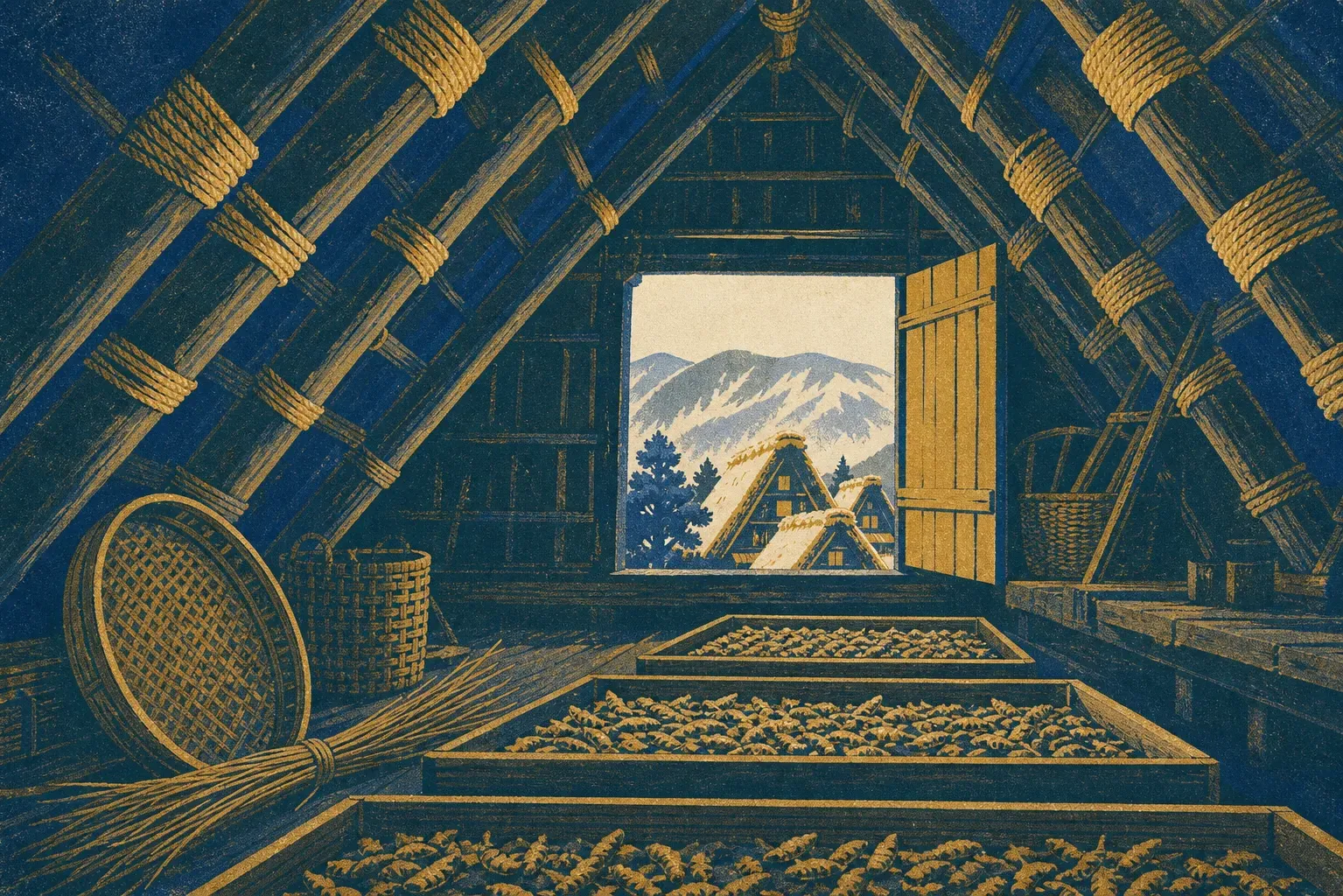
Down in the village, start with Wada-ke House, the largest gassho farmhouse in Ogimachi (9:00–17:00, 400 yen as of 2026). Here's the 30-second version of why any of this matters. Gassho-zukuri means "constructed like hands in prayer": the thatched roofs pitch at nearly 60 degrees, far steeper than an ordinary Japanese farmhouse, so the region's enormous snowfall slides off instead of crushing the frame. The roofs are assembled without a single nail, with diagonal braces that turn the whole sheathing into one flexing unit — a technique found nowhere else in Japan. And the space under that steep roof wasn't wasted. Climb Wada-ke's stairs and you're standing in an attic divided into multiple working levels where families raised silkworms, with openings at the gable ends feeding the worms light and air. These weren't just homes. They were farmhouses that worked as factories, built to shrug off months of snow.
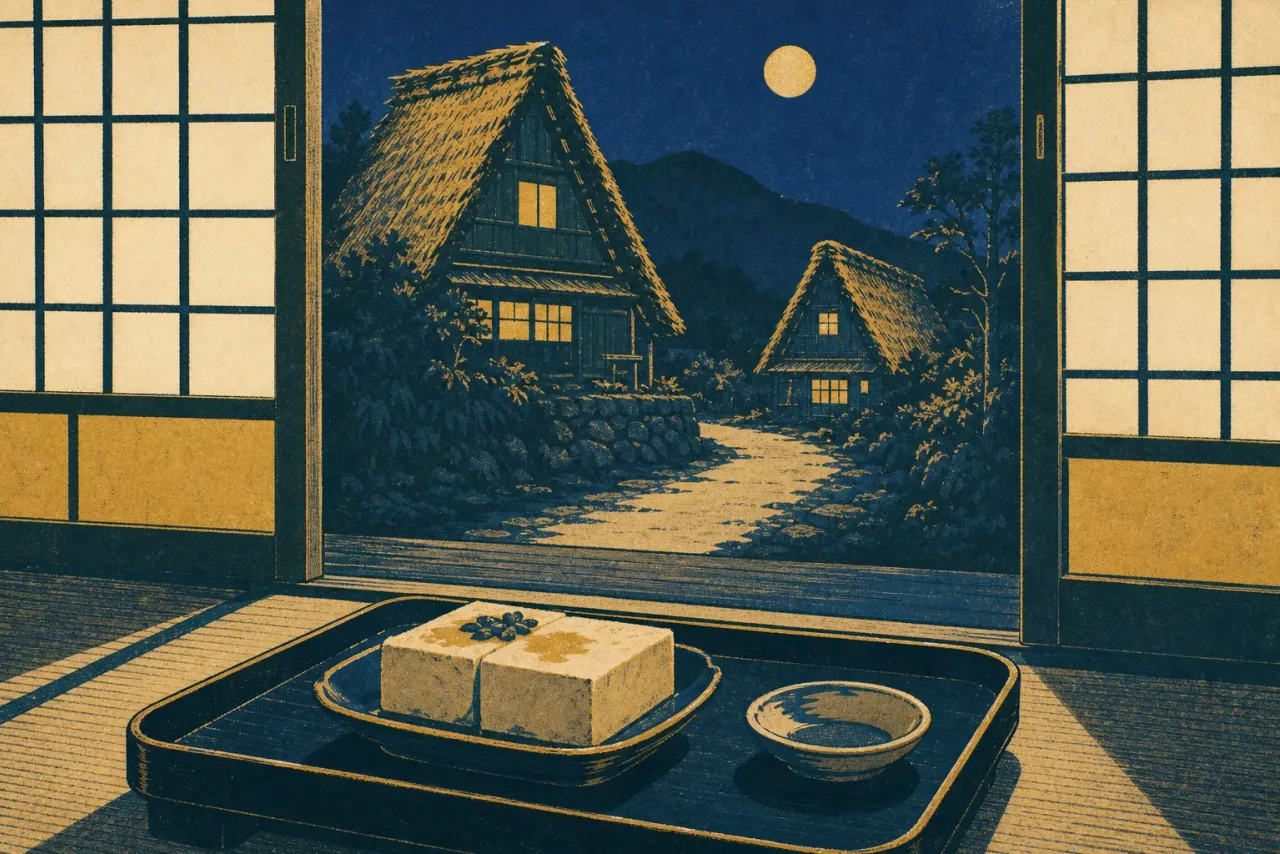
Lunch around 12:30. Ogimachi's main street sells grilled Hida beef skewers and croquettes for eating as you wander, but if you want to sit down, Restaurant Irori serves regional set meals around a sunken hearth (grilled tofu, mountain vegetables, pork on hoba miso) and has an English menu. Hoba miso, sweet miso grilled right on a magnolia leaf, is the signature dish of the Hida region. Order it at least once.
After lunch, you have a choice: Myozenji, a temple whose priest's residence is itself a gassho building (8:30–17:00 April through November, 400 yen as of 2026), or the Gassho-zukuri Minkaen across the river, an open-air museum of 25 gassho buildings relocated there to save them (8:40–17:00 March through November, 800 yen as of 2026). On a day trip, pick one rather than doing both. The Minkaen is the better classroom; Myozenji is the better atmosphere. Two to four hours covers Ogimachi honestly, and cramming every paid interior into that window turns the village into a checklist.
One thing to hold onto all afternoon: about 500 people live here. Ogimachi is not an open-air museum with residents as staff. It's a working farming village that absorbs an astonishing number of visitors between 8:00 and 17:00 and firmly reclaims itself afterward. Don't open doors or step into a garden for a better angle, and leave the drone at home; they're banned throughout the village. The paid houses close between 16:00 and 17:00, so arriving late in the day guts the visit.
The bus back, or the argument for skipping it
Day-trippers should aim for a late-afternoon bus and reserve that return seat when booking the outbound one. You'll be back in Tokyo for a late dinner.
But here's the honest case for blowing up the day-trip plan entirely. Night in Shirakawa-go belongs exclusively to overnight guests. The tour buses pull out, the lanes empty, and the handful of travelers staying in gassho minshuku like Shiroyamakan or Onyado Yuinosho get the village to themselves: dinner cooked over the hearth, then dark streets and quiet. Rooms are few and book out far ahead, but this is the single biggest upgrade available to the experience, and it costs nothing except one night of itinerary.
A winter note, because everyone asks. The famous snow light-up evenings run four nights in early 2027: January 11, 17, 24, and 31, from 17:30 to 19:30. Every attendee needs an advance reservation. The tourist association confirmed those four dates in July 2026 but held back the reservation routes, parking prices and sale dates until early September, so check the official event page rather than trusting figures carried over from the previous winter; in past years the routes have been a reserved bus tour, advance-reserved private-car parking, and an overnight-stay lottery, the last of which is also the reliable way to a timed Shiroyama Viewpoint ticket. On event days, daytime visitors may enter only until 14:00 and must be out of the village by 16:00, and after 14:00 nothing but reserved light-up buses gets in. Show up on spec and you'll be walking out well before the photographs happen.
The roofs, by the way, are still rethatched the old way, neighbors climbing up to work each other's houses under a mutual-aid custom called yui. What survives of the valley's gassho houses is here, in three protected villages, still being lived in. Reserve the bus seat early. Keep to the lanes. And when 17:00 comes, let the residents have their evening.