Ninety minutes underground: how to actually do the Sado gold mines in a day from Tokyo
Every winter, somebody steps off an early-afternoon jetfoil at Ryotsu Port, drives fifty minutes across Sado Island, and finds the ticket window at Sado Kinzan already shut. Last admission at the gold mine is 16:00 from April through October but 15:30 from November through March, and that missing half hour is the most reliable way to wreck the trip. Ignore the closing times printed on brochures; those describe when the gates lock behind people already inside. Build the whole day backward from last admission and the rest falls into place.
The trip itself is genuinely doable from Tokyo in a day. The Joetsu Shinkansen reaches Niigata in about two hours. From Niigata Station, a taxi covers the 2.7 km to the ferry terminal in about 10 minutes for roughly ¥1,500 (as of 2026), or there's a city bus from stop No. 17 outside the station. Sado Kisen's jetfoil then crosses to Ryotsu in as little as 67 minutes: ¥8,250 adult one-way as of 2026, with the fuel surcharge already inside that figure rather than added at the counter. The car ferry is cheaper at ¥3,570 but takes 2 hours 30 minutes, which on a day trip is the difference between seeing the tunnels and seeing the parking lot.
Before any of that, check Sado Kisen's live service-status page the morning you travel, ideally before boarding the shinkansen. The jetfoil is a fast craft on an open stretch of the Sea of Japan, and rough weather cancels it. A cancelled jetfoil means the slow ferry, and in November the slow ferry means your day is over before it starts. Better to learn that at Tokyo Station than at the pier.
Getting across the island
Ryotsu to Aikawa, the mining town, is about 50 minutes by car. Route buses run there and cost little, ¥260 to ¥860 depending on distance under the fares set in October 2025, with another revision due on October 1, 2026. Payment is cash on most lines, but not on the one you need: the Honsen main line between Ryotsu and Aikawa has taken contactless credit cards since January 22, 2026. The day passes (¥2,000 for one day, ¥3,000 for two, ¥3,500 for three, as of 2026) are good on every Niigata Kotsu Sado route including the Honsen, and sell through the operator's mobile-ticket app, which makes the one-day pass cheaper than two single fares for exactly this trip. What the buses can't fix is frequency: service thins badly in the off-season. A bus itinerary can work. It just leaves no slack, and a day governed by a 15:30 cutoff needs slack.
Rent a car instead. You'll need your passport and an International Driving Permit under the 1949 Geneva Convention (a handful of countries, France and Germany among them, substitute an official Japanese translation of the license); Times, Toyota Rent a Car and Nippon Rent-a-Car all take English bookings online. If driving isn't an option, sightseeing taxis offer 3-hour and 5-hour courses, with the caveat that drivers may not speak English. Whichever you choose, arrange it before you're standing on the pier.
The Aikawa sequence
Start at Kirarium Sado, not the mine. This is the interpretive center for the whole World Heritage property: ¥300 for adults as of 2026, about 30 minutes, open 8:30 to 17:00 and closed December 29 through January 3. It also happens to be the Aikawa tourist information office and the desk where guided tours get booked, so one stop solves three problems. More to the point, it converts what you're about to see underground from wet rock into legible history.
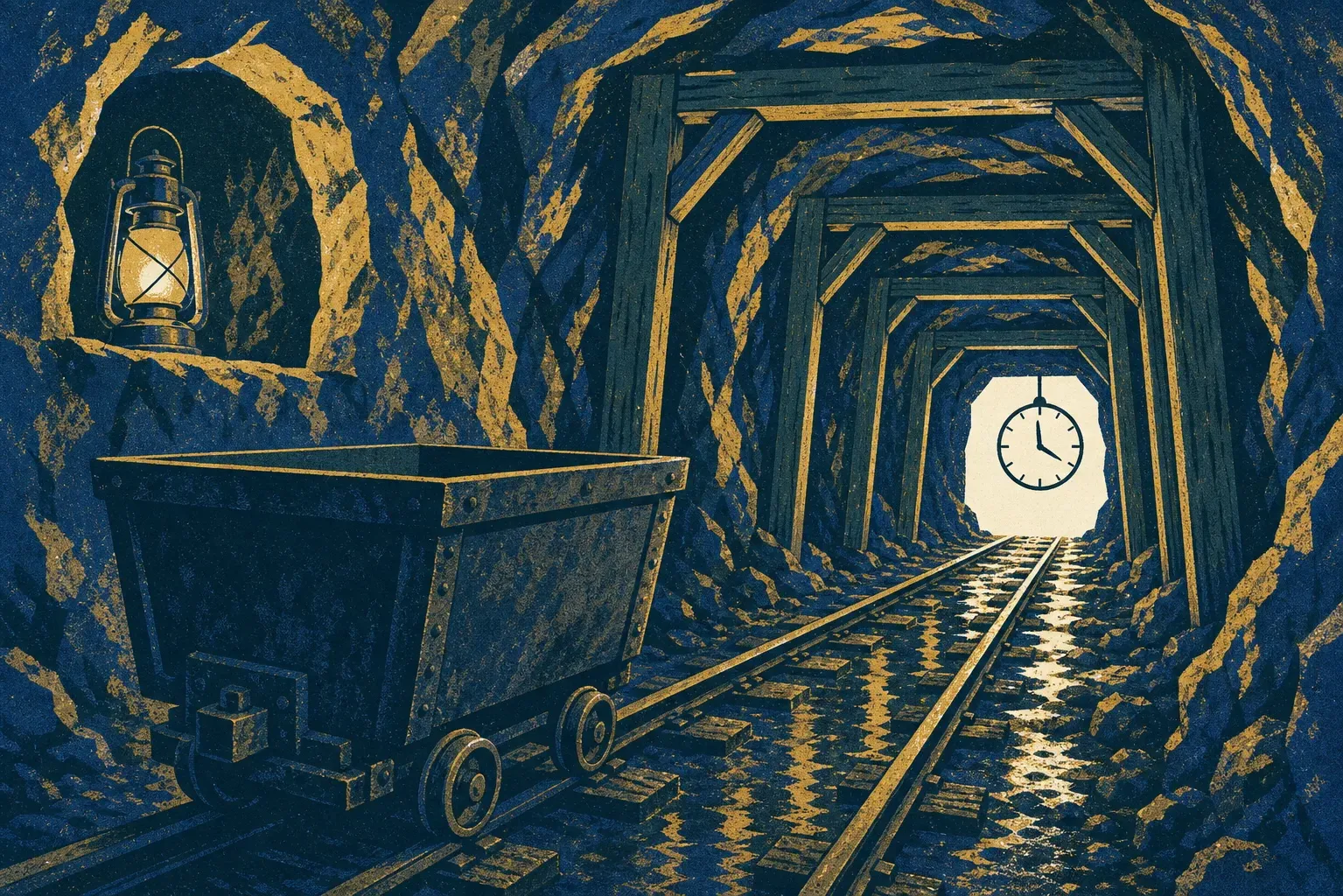
The mine is next. One ¥1,500 adult ticket (as of 2026) now covers both tunnels; the two were merged into a single combined ticket in April 2025, so ignore older blog posts describing a choice. Sōdayū-kō is the Edo-period route, worked entirely by hand, with life-size animatronic figures doing the hauling and drainage in the dark. Dōyū-kō carries the story from Meiji modernization through the mine's final closure on March 31, 1989, and surfaces at the close-range view of Dōyū-no-Warito, the summit Edo miners split open by hand chasing the lode. Count on 60 to 90 minutes, no reservation needed. The tunnels hold at cellar temperature year-round; pack a layer even in August.
Back down in town, the reconstructed Sado Bugyōshō, the shogunate's magistrate office, charges ¥500 (as of 2026) and stays open to 17:00. Give it half an hour for the assay works where ore from the tunnels you just walked became the shogunate's koban coins.
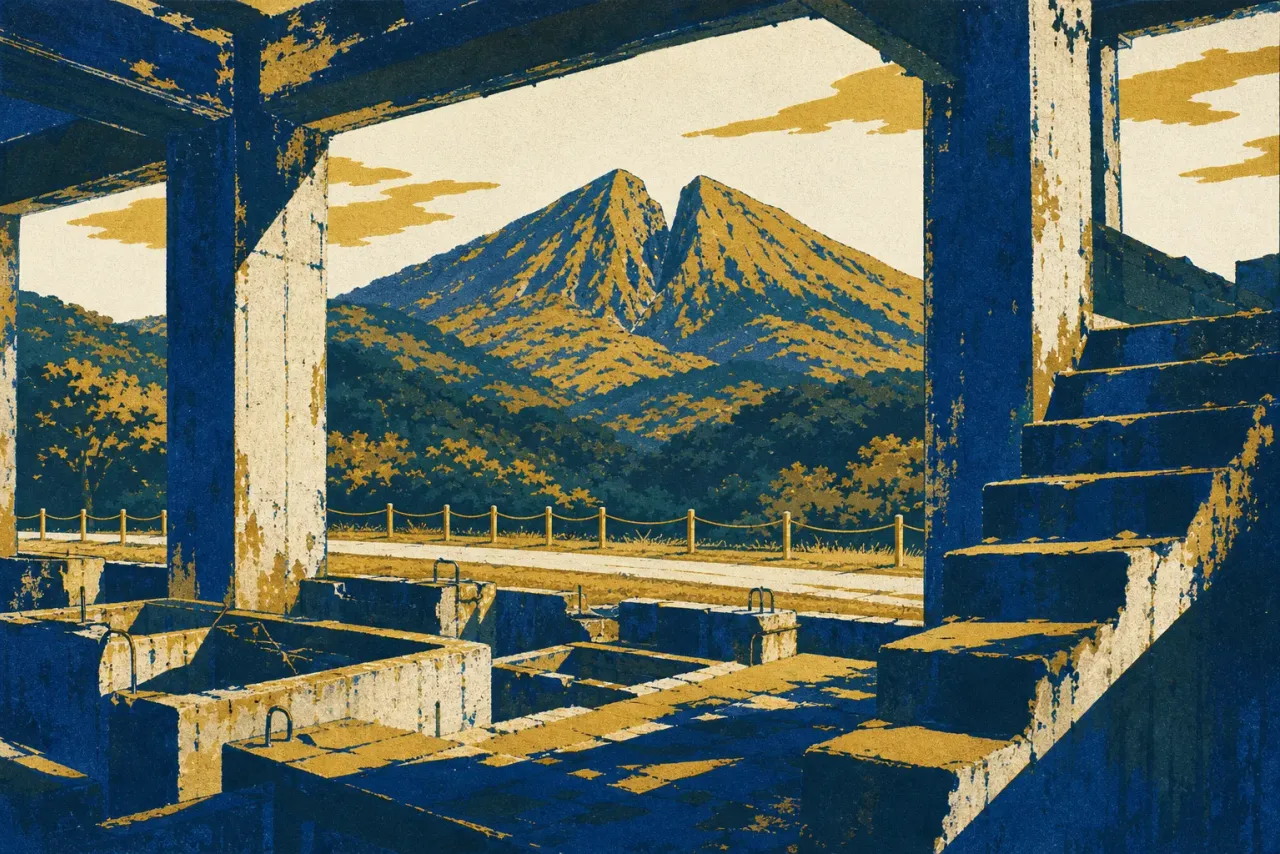
Finish in the Kitazawa district. The Kitazawa Flotation Plant is a tiered concrete ruin climbing the hillside, free to wander and illuminated during the tourist season, and Kitazawa Terrace on the site itself serves Sado kurobuta pork, making it the obvious lunch stop. Note two things. Since April 1, 2026, the Sado Kinzan shop and reference room have relocated here, to the Aikawa Gino Densho Tenjikan, so souvenirs now happen in Kitazawa rather than at the tunnel entrance. And Kitazawa, for all its fame, is not World Heritage: the 2024 inscription covers only the hand-worked mining landscape of the late 1500s to mid-1800s, and this industrial-era plant sits outside it as a National Historic Site. Your photos won't care.
Book by 4 p.m. the day before, or not at all
Two experiences cannot be decided on the day. The guided Yamashi tour (¥5,000 as of 2026, about 70 minutes, April through November only) and ISLAND MIRRORGE, a 30-minute mixed-reality staging inside the Dōyū tunnel (¥3,500 as of 2026), both close reservations at 16:00 the previous day. If either tempts you, book the evening before you leave Tokyo. The standard tunnel course needs nothing.
Here's the clock for a summer day, assuming a morning jetfoil that lands you in Ryotsu before noon: pick up the car by 12:15, reach Aikawa around 13:00, lunch at Kitazawa Terrace, Kirarium at 14:00, the mine's ticket window by 15:00 with a full hour of margin on the 16:00 cutoff, Bugyōshō until it closes, then the flotation plant ruins in the last light. In winter, compress everything. Aim to be off the boat by 13:00 and push lunch to the end, because the 15:30 last admission is a hard wall.
Carry cash. Bus lines other than the Honsen take nothing else, Kirarium accepts electronic money but not credit cards, and several island businesses follow suit. The island-side total for one adult (jetfoil round trip, port taxis both ways, all three admissions) runs about ¥22,000 as of 2026, with the shinkansen fare and the rental car on top.
If the schedule leaves you twenty spare minutes near the mine, spend them on the path uphill from the Sado Kinzanmae bus stop (fifteen minutes on foot, no parking) to a single gravestone for 28 mushukunin, conscript laborers who died underground in 1853 draining the flooded lower galleries. This mountain filled the shogunate's treasury for two and a half centuries. The stone on the hill is the other side of the ledger.