The Tombs You're Allowed to Climb: A Day in Furuichi, the Half Everyone Skips
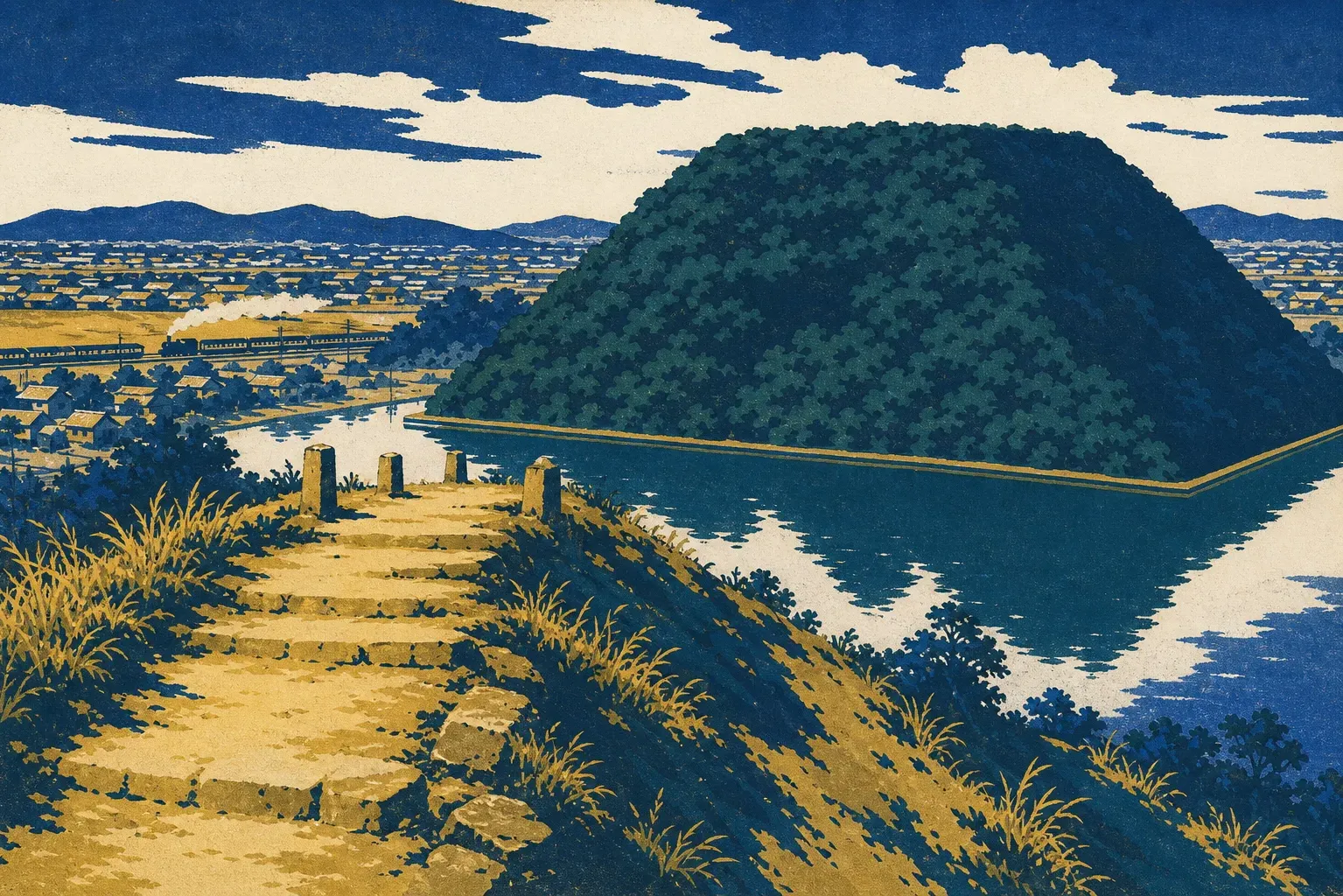
In 1922, the engineers planning the Kintetsu Minami-Osaka Line ran into a problem that exists almost nowhere else on earth: they could not find a route across the southern Osaka Plain without cutting into a fifth-century tomb. The neighborhoods of Habikino and Fujiidera are organized around burial mounds the way other towns are organized around rivers. The track they finally laid ran across the grounds of Sawada Hachiman Shrine, with local residents' backing, and two new stations, Goryō-mae and Hajinosato, opened in 1924.
A century later, that is still the train you ride to Furuichi, and the story still describes the place: a working suburb threaded between monuments, where the World Heritage site is also the view from the platform. Step off at Hajinosato and one of the inscribed mounds, Nabezuka, a 63-meter square platform, stands a short walk from the gate. You can walk up it. That one fact separates Furuichi from everything you did in Sakai.
What Furuichi has that Mozu doesn't
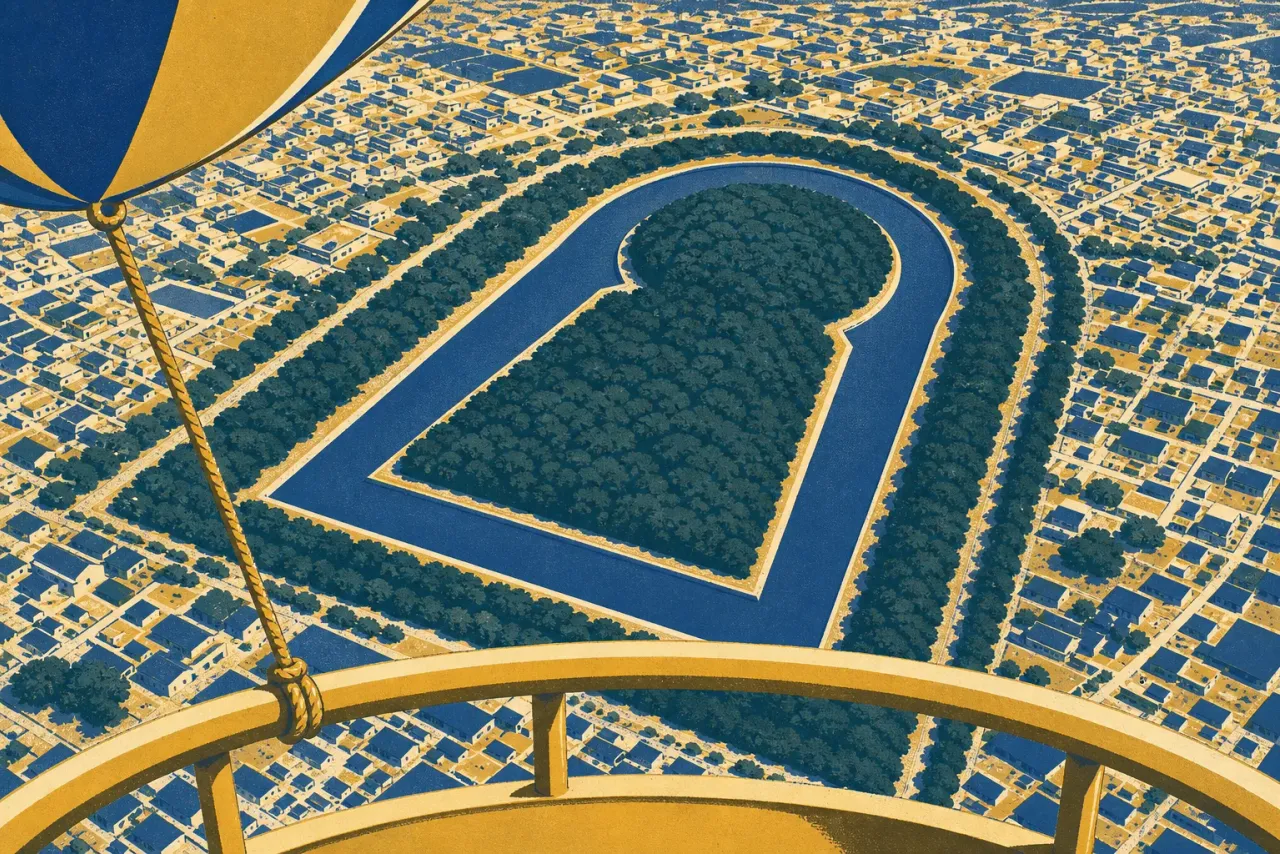
If you have already done the Mozu cluster, you know the central frustration of this World Heritage property. Nintoku-tennō-ryō Kofun is 486 meters long, and from the ground you cannot see it. You circle the moat, bow at the worship point, watch the keyhole shape in aerial video at the visitor center. The tomb itself stays an idea.
Furuichi answers that frustration three ways. Start with size, because the famous statistic is misleading. Ōjin-tennō-ryō Kofun, the anchor of the Furuichi group, is 425 meters long and 36 meters high: second in Japan by length, but first where it counts. Its mound holds roughly 1,430,000 cubic meters of moved earth, against about 1,400,000 for Nintoku-ryō. The largest kofun in Japan by volume is not the one everybody photographs in Sakai.
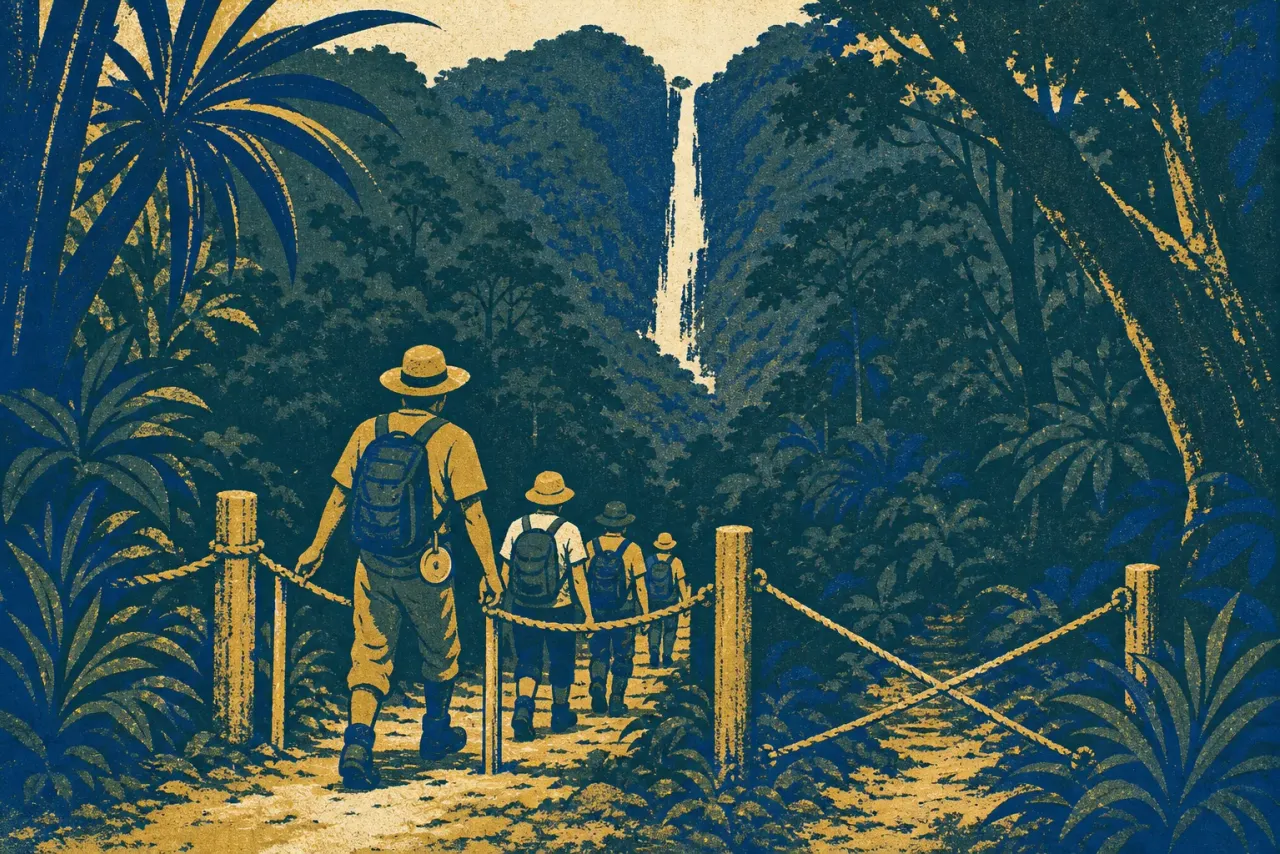
Then there is access, which matters more. Six of the inscribed component mounds in Furuichi can be climbed: Tsudō-shiroyama, Nabezuka, Komuroyama, Ōtorizuka, Hachizuka and Nonaka. In Mozu, the single mound open to walkers, Jō-no-yama, is not even part of the World Heritage property. Climbing is not a consolation prize here; it is closer to the original point of these structures than bowing at a fence. Kofun were built as stages. The burial facility was cut into the top of the finished mound, and the rituals took place up there, in the open, on a terraced platform faced with pale stones and lined with thousands of clay haniwa. Standing on one puts you where the ceremony was.
Komuroyama is the climb to prioritize. From the rear circle you can see Tsudō-shiroyama and Chūai-tennō-ryō to the west, Ōjin-ryō to the south, Nakatsuhime-ryō to the north, and on the horizon the Abeno Harukas tower, back where your train started. The Furuichi area has no elevated viewpoint of any kind, no equivalent of Sakai's free 21st-floor observation lobby, so a mound top is what you get. It is better. The view comes with grass underfoot and, most days, nobody else on it.
Getting there is simple: the Kintetsu Minami-Osaka Line leaves from Osaka-Abenobashi, the terminal adjacent to JR Tennoji, and Fujiidera, Hajinosato and Furuichi stations all serve the cluster. Coin lockers are at Fujiidera and Furuichi. Rental bicycles wait at the Hajinosato Station bicycle parking, and I would take one; the mounds spread across two municipalities, and a bike flattens the distances between them.
Small rooms, strange hours
Where Sakai concentrates its interpretation in one big free visitor center, Furuichi scatters it across four modest buildings on schedules that seem designed to test your commitment.
Mahora Shiroyama, the guidance building at Tsudō-shiroyama Kofun, holds a full-size replica of the tomb's long-chest stone coffin, the closest anyone gets to the inside of a burial chamber anywhere in this property. It is free and open 9:00 to 16:00; Fujiidera City, which operates it, lists no weekly closing day at all, only December 28 through January 4, though the World Heritage council's own FAQ still prints a Monday-and-Tuesday closure alongside that New Year line. If the coffin is why you are making the trip, call the city on 072-939-1419 first. Aiseru Shura Hall in Fujiidera displays the waterfowl-shaped haniwa excavated from the same tomb; also free, 9:00 to 17:30 Tuesday through Sunday, closed Mondays and December 29 to January 3. The Habikino City Cultural Assets Exhibition Room, with the ornaments from Minegazuka Kofun, opens weekdays only, 10:00 to 16:00. And the treasure hall at Konda Hachimangu Shrine, which enshrines Emperor Ōjin himself, shows the National Treasure gilt-bronze saddle fittings dug from Konda-maruyama Kofun on Saturdays only, 13:00 to 16:00, for 500 yen (as of 2026).
Do the arithmetic before you pick a date. Tuesday through Friday gets you everything except the saddle fittings; a Saturday gets you the saddle fittings and locks you out of the weekdays-only Habikino room; Monday costs you Aiseru Shura Hall. No day of the week opens all four. My vote is Saturday. The saddle fittings are a National Treasure with a three-hour weekly window, and the Minegazuka ornaments, fine as they are, will forgive you.
One museum on this side outranks all of them, and it deserves its own half day: the Osaka Prefectural Chikatsu Asuka Museum in Kanan Town, Tadao Ando's concrete monument to the Kofun period, complete with a scale model of Nintoku-ryō and films on how the mounds were built. Hours are 9:45 to 17:00, last entry 16:30, closed Mondays. The permanent collection costs 310 yen for adults, 210 for students and visitors 65 and over, free through junior high school (2026 prices); note that from April 1, 2026, feature exhibitions rose to 600 yen and special exhibitions to 1,000. If you see one museum across both clusters of this property, make it this one.
Quiche shaped like a burial mound
Furuichi eats nothing like Sakai. The Mozu side leans on its medieval port history, sweets built from imported poppy seed and cinnamon. Out here the food culture splits between cheerful tomb kitsch and actual farm country.
MAISON INCO in Fujiidera bakes a kofun quiche and kofun financiers, tomb-shaped and unembarrassed. Ōkuraya, the shop of the Kawachi Konda Haniwa Village fifteen minutes on foot from Furuichi Station, runs haniwa-making workshops at 10:00 and 13:30 and sells a kofun-shaped bento; both require reservations. Dōmyōji temple in Fujiidera is the birthplace of dōmyōji flour, the coarse glutinous rice flour that gives Kansai-style sakuramochi its texture, so the pink sweet you have eaten all over western Japan traces back to this neighborhood. And Habikino is wine country, with grapes grown since the Meiji era: grape picking runs mid-June to early August, and Kawachi Wine offers winery tours with tastings by reservation. Their plum wine was poured at the G20 Osaka Summit, which is more than most suburbs can say for their local bottle.
Plan this as a day trip, because it can't be anything else. There is essentially no visitor lodging on the Furuichi side; the official FAQ, asked where to stay, simply points to the Sakai and Fujiidera tourism sites. Base yourself around Tennoji or Abenobashi and you are twenty-odd minutes from the mounds with all of Osaka's dinners behind you.
As for timing, the tourism bureau's own pick is autumn, when cosmos bloom on the banks of Ōjin-ryō and the new vintage arrives in Habikino, and for once the official recommendation is the right one. So: an October Saturday. Lockers at Fujiidera, a bike at Hajinosato, Nabezuka straight off the train, Komuroyama's summit before lunch, Konda Hachimangu when the treasure hall unlocks at 13:00. The tombs have waited sixteen centuries. The saddle fittings go back behind their door at four.