Why a 1,400-Year-Old Carpenter's Trick Still Holds Up Horyu-ji
The fire came in 670. It destroyed the entire compound Prince Shotoku had founded in 607 under Empress Suiko, in the very first generation of Japanese Buddhism. What the monks and carpenters rebuilt over the following decades is still standing in Ikaruga, a quiet town twelve minutes by train from Nara. The Kondo, the main hall at the center of Horyu-ji's western precinct, is usually named the oldest wooden building on Earth. Not the oldest in Japan. The oldest anywhere.
Eleven structures on these grounds date to the late seventh and early eighth centuries. When Japan joined the World Heritage system in 1993, the Buddhist Monuments in the Horyu-ji Area went onto the country's first list, inscribed under four of the six cultural criteria: masterpiece, cultural interchange, architectural landmark, living tradition. Read that list again. It is the committee admitting it could not pick a single reason the place matters.
What the carpenters were copying, and what they changed
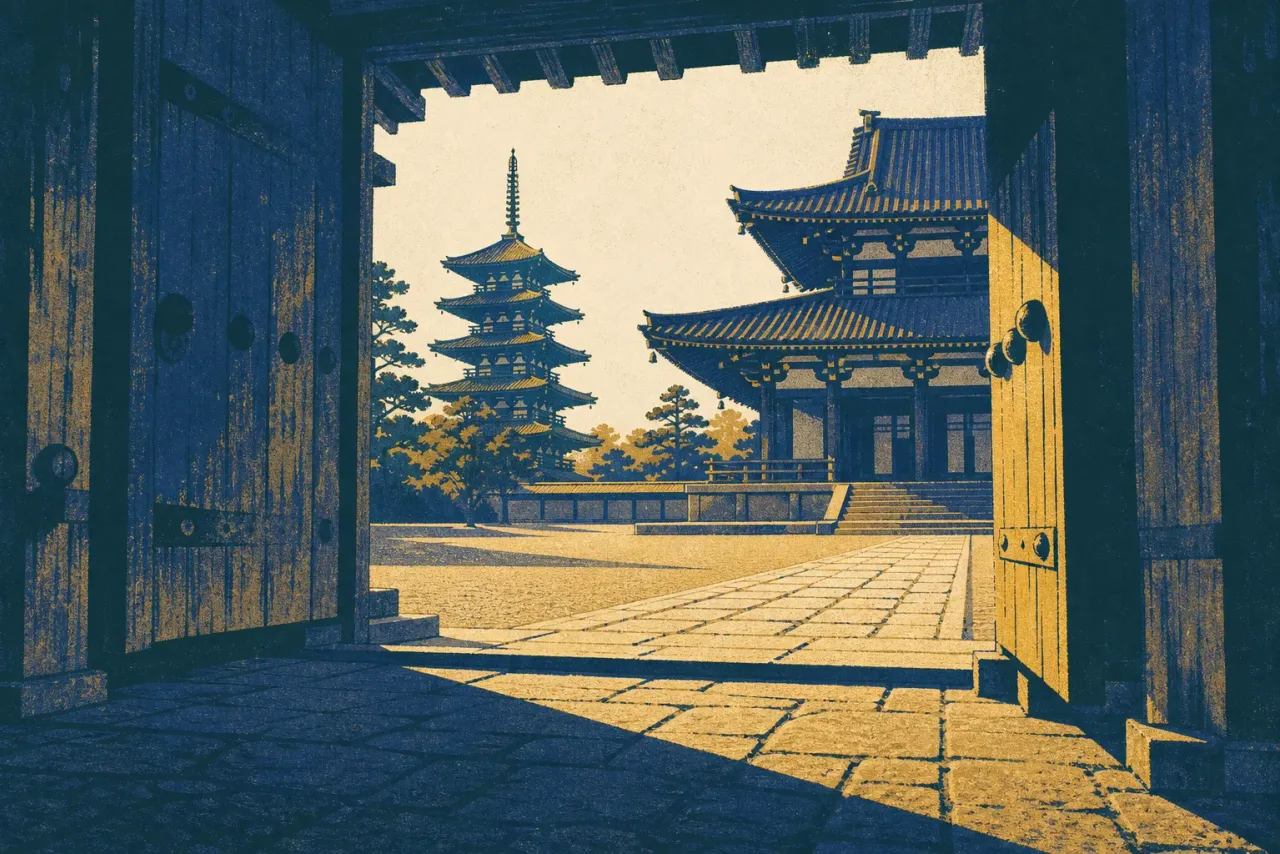
Buddhism reached Japan in the sixth century as a complete package: scriptures, images, and the architecture to house them, transmitted from China by way of the Korean peninsula. Horyu-ji's builders worked from that imported plan. A walled courtyard. A middle gate. A pagoda and a main hall side by side, ringed by a covered corridor. UNESCO's core case for the site is that these buildings document, in actual surviving timber rather than in drawings or ruins, how continental monastery architecture was absorbed and reshaped into something Japanese. You are watching a civilization learn a foreign language and begin speaking it with its own accent.
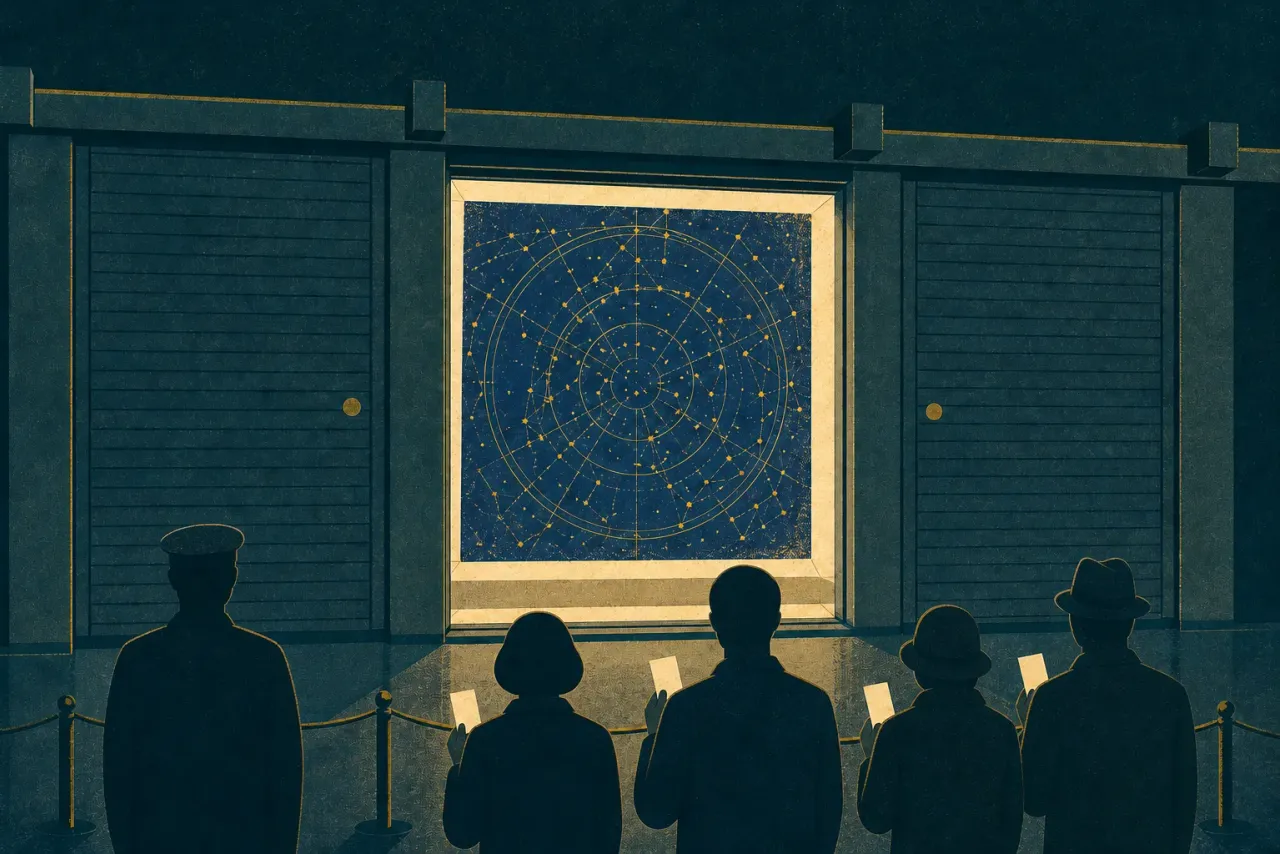
Walk the sequence slowly. The Chumon, the middle gate, holds Japan's oldest guardian Nio statues. Behind it the Kairo corridor encloses the courtyard, and the two-story Kondo sits at its heart; inside, in low light, is the bronze Shaka Triad, cast in 623. Photography of the interior is prohibited, which is your first hint that this is not a museum.
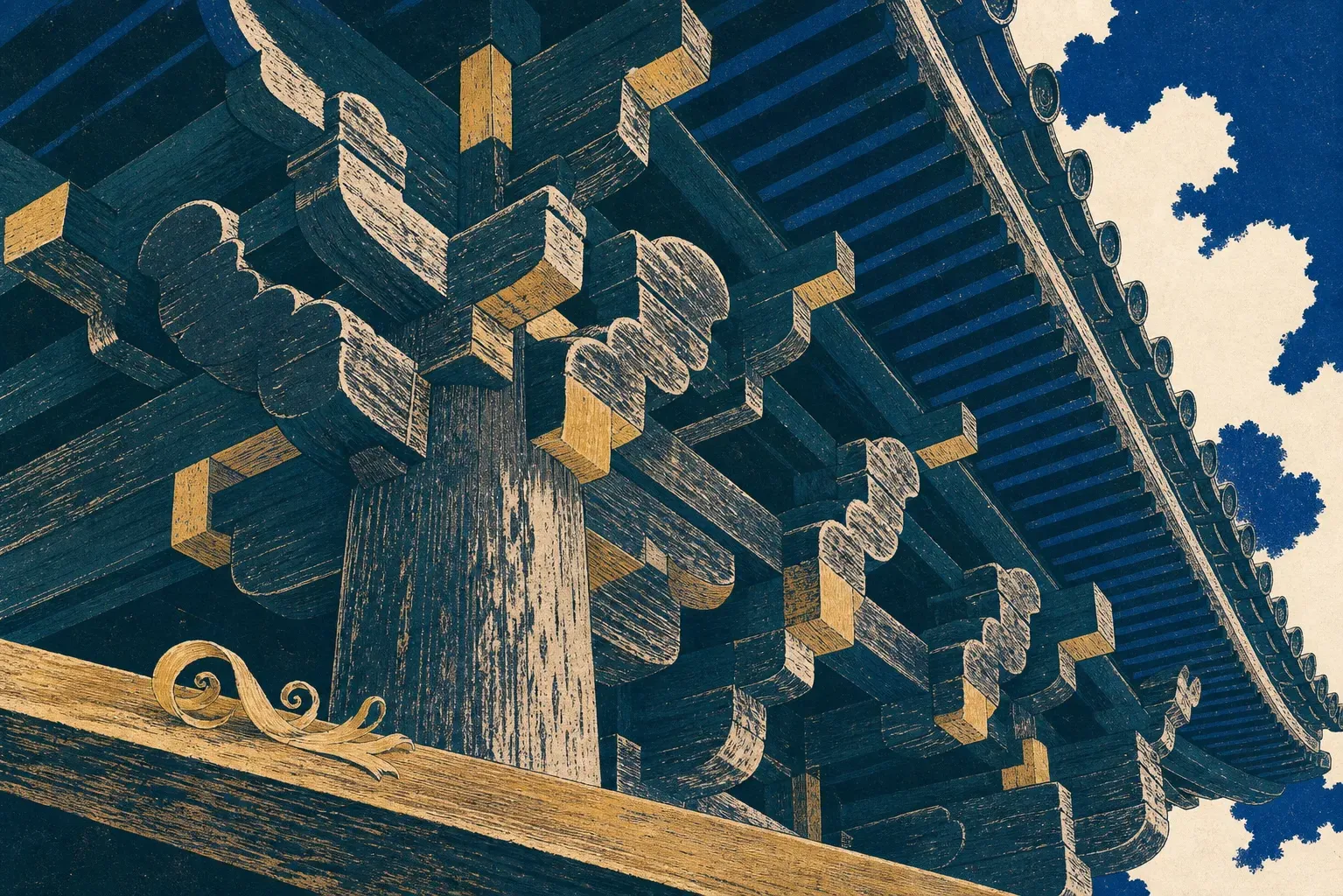
Here is the honest answer about the carpenter's trick, though. No single secret joint explains thirteen centuries. Wood lasts when an institution lasts around it. Buddhist rites have continued on these grounds since the seventh century without interruption; nineteen of the buildings are designated National Treasures, and the temple's holdings run to some 2,300 structures and artifacts, roughly 200 of them designated National Treasures or Important Cultural Properties, which means generations of caretakers have been watching this timber and taking it seriously. A building that is used gets watched. A building that is watched gets repaired. The trick, if you insist on one, is continuity.
A tomb you read from the outside
The five-story pagoda rises about 32 meters over the western precinct, and it is the thing everyone photographs and almost no one understands. You cannot climb it. It was never meant to be climbed. The pagoda is a reliquary: relics rest in vessels at the base of its central pillar, and the five stories stack above them like a diagram of the cosmos rendered in timber. Once you know that, the building changes. It stops being a tower and becomes a marker, a vertical announcement that something holy lies at its root.
Between the precincts, the Daihozo-in gallery of 1998 holds the temple's portable masterpieces, the slender seventh-century Kudara Kannon above all. Give it forty minutes, not ten.
Five minutes' walk east, the octagonal Yumedono of 739 stands on the site of Prince Shotoku's Ikaruga Palace. Its principal image, the Guze Kannon, is said to be a life-size likeness of the prince himself and spent centuries wrapped in cloth, unseen. It comes out only for a few weeks each spring and autumn; check the current windows before you go, and if your dates line up, rearrange your day around it.
Making the day work
The temple is not at the station. From JR Horyuji, itself twelve minutes from Nara on the Yamatoji Line, it is a twenty-minute walk or an eight-minute hop on bus #72, which does not start running until after 9:00. One ticket, 2,000 yen as of 2026, covers all three paid areas. Come for the 8:00 opening if you can, on foot or by taxi, since the bus cannot get you there that early; the courtyard is quietest before the school groups arrive. Plan on two to three hours, then lunch in town on tatsuta-age, Ikaruga's soy-and-ginger fried chicken named for the Tatsuta River of classical poetry.
With an afternoon to spare, walk twenty minutes northeast through the fields to Hokki-ji, the second temple in the inscription. Its three-story pagoda, completed in 706, is Japan's oldest surviving example and the temple's only original building: the same argument about continuity, made in a smaller courtyard you may well have to yourself.
One request before you go through the gate. This is a working monastery, not an architecture park. Keep your voice low inside the halls and keep the camera down wherever interiors are concerned; shoes come off where the signs say so. The Shaka Triad has been receiving prayers in the Kondo since the seventh century. You will see it the way every visitor before you has seen it: with your own eyes, in the dim light, before stepping back out into the bright gravel of the courtyard.