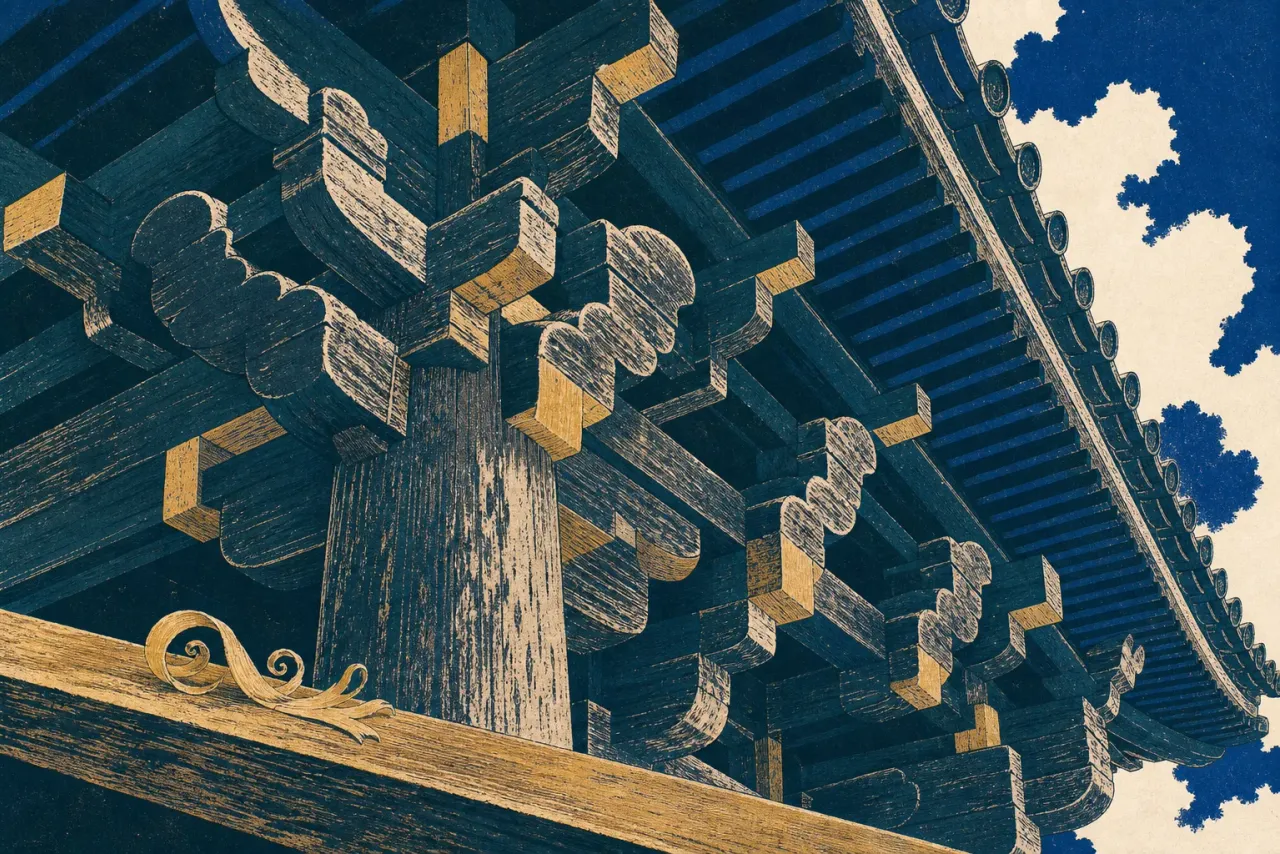
Half a Day at the World's Oldest Wooden Building: A First-Timer's Plan for Horyu-ji
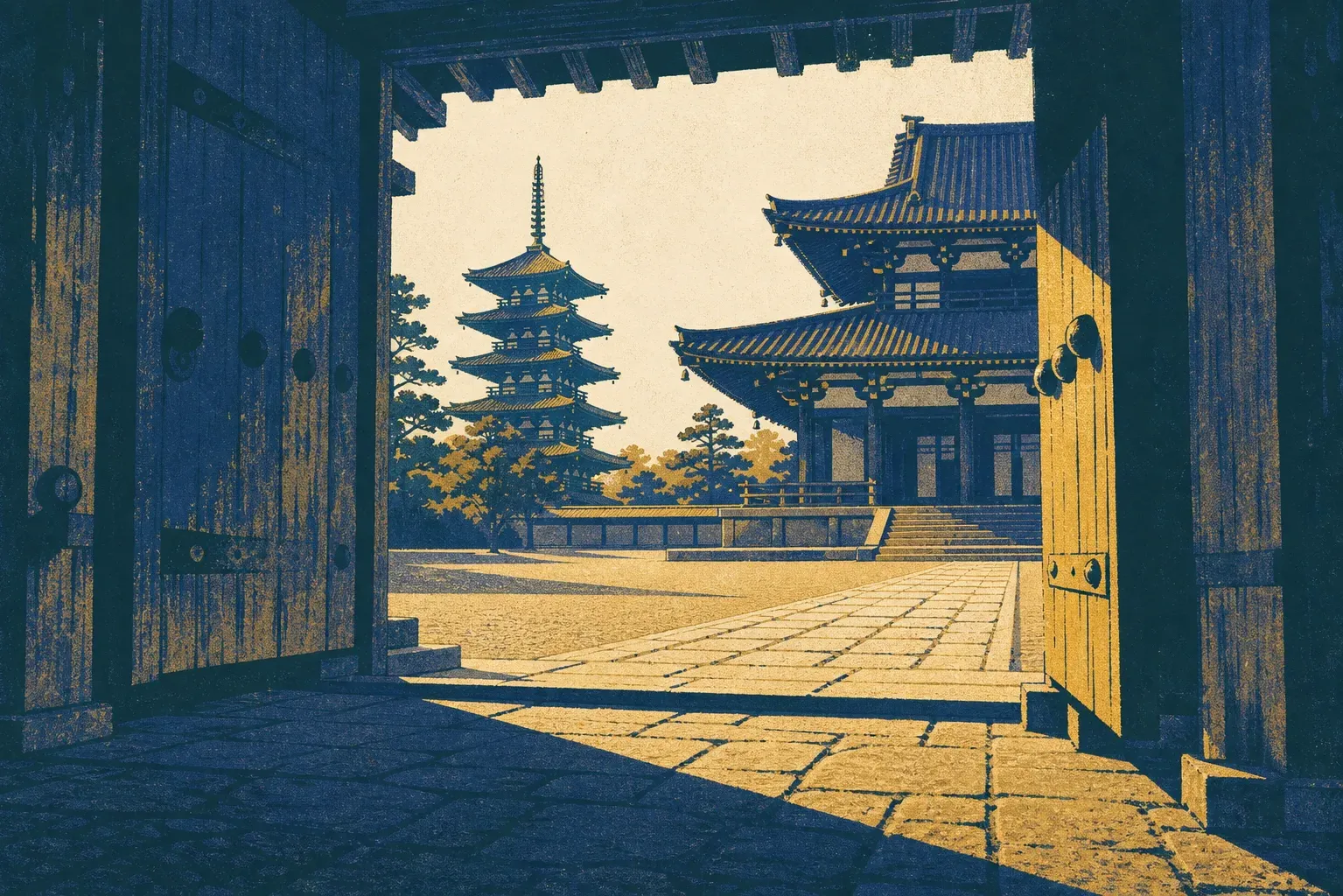
The first mistake happens at the station. JR Horyuji is a small stop on the Yamatoji Line, and people step off the train expecting to see a pagoda. What they get instead is a bicycle lot and a quiet suburban street. The temple sits a 20-minute walk north through the town of Ikaruga, or an 8-minute ride on bus #72 (220 yen as of 2026, roughly every 20 minutes) — but the first #72 of the day doesn't leave the station until 9:12 on weekdays and 8:58 on weekends, so anyone aiming at the 8:00 opening walks or takes a taxi. Knowing that in advance is the difference between standing at the gate when it opens and shuffling in behind three busloads of junior high students at 9:30.
The gate is worth the effort. Horyu-ji was founded in 607 by Prince Shotoku, the regent who championed Buddhism's arrival in Japan, and rites have continued on these grounds for 1,400 years. The Kondo, its main hall, went up in the decades after a fire destroyed the original compound in 670, and it is widely cited as the oldest surviving wooden building on Earth. When UNESCO inscribed Japan's first World Heritage sites in 1993, the Buddhist monuments of the Horyu-ji area were in that founding group. Nineteen of the buildings here are National Treasures. The temple's holdings run to roughly 2,300 structures and artifacts, about 200 of them designated National Treasures or Important Cultural Properties. Nara Park, 12 minutes away by train, has the deer and the Great Buddha; Horyu-ji has the actual beginning of Japanese Buddhism, still standing in seventh-century wood.
So the question every Kyoto- or Osaka-based traveler asks: is it worth leaving Nara Park for? Yes, if you give it a real half day and walk it in the right order.
Getting there without wasting the morning
From JR Nara Station, the Yamatoji Line reaches Horyuji Station in 12 minutes for 240 yen (2026). From Osaka the same line runs direct from Tennoji in about 22 minutes (490 yen) and from JR Namba in about 25, which makes Horyu-ji arguably easier from those stations than from Kyoto; starting at Osaka Station instead, budget 45 to 50 minutes and a change at Tennoji or Shin-Imamiya (660 yen). Kyoto-based travelers should take a JR Nara Line rapid to Nara, about 45 minutes, then transfer. A bus (#98) also runs from Nara's downtown stations straight to the temple, but it takes an hour and costs 880 yen; the train wins every time.
Admission is refreshingly simple. Since March 2025, a single 2,000 yen ticket (1,700 yen for junior high students, 1,000 yen for elementary, unchanged in 2026) covers all three paid areas: the Western Precinct, the Daihozo-in treasure gallery, and the Eastern Precinct. You buy it at the Western Precinct entrance. No reservations exist, and none are needed, which after the timed-entry culture of Kyoto feels almost quaint.
Hours run 8:00 to 17:00 from late February through November 3, closing at 16:30 in winter, with ticket sales ending 30 minutes before the gates do: last entry 16:30 in the main season and 16:00 in winter. That winter cutoff still catches people who lingered too long with the deer. Better to invert the day: Horyu-ji at 8:00, Nara Park in the afternoon. The crowds here are not international tourists but Japanese school groups, and they arrive mid-morning by the bus. The first hour belongs to you and a handful of photographers.
The order that makes the temple make sense
Start where your ticket starts, in the Western Precinct. At the Chumon middle gate, stop for the two guardian Nio, the oldest in Japan, before passing into the courtyard framed by the covered kairo corridor. Two buildings stand inside it. The Kondo houses the bronze Shaka Triad, cast in 623. Beside it rises the five-story pagoda, about 32 meters of seventh-century carpentry; it is a reliquary, not a viewpoint, so you circle it rather than climb it. Photography of the interiors is prohibited throughout, and this is a functioning monastery, so keep voices down inside the halls and take shoes off where indicated.
Next comes the part too many first-timers skip. The Daihozo-in, the treasure gallery between the two precincts, occupies modern halls built in 1998 and holds the temple's portable masterpieces. Chief among them is the Kudara Kannon, a slender two-meter wooden bodhisattva from the seventh century that has become an emblem of Asuka-period art, and the Tamamushi Shrine, a miniature lacquered shrine painted with Buddhist narrative scenes. If your energy is flagging and you have to choose between a second lap of the courtyard and the gallery, choose the gallery. Many visitors leave saying it was the best thing on the grounds.
From there, a five-minute walk east brings you to the Eastern Precinct, built on the ground where Shotoku's Ikaruga Palace once stood. Its centerpiece is the octagonal Yumedono, the Hall of Visions, finished in 739. Inside is the Guze Kannon, a hidden image said to be a life-size likeness of Shotoku himself, kept wrapped for centuries and shown only during short spring and autumn openings. In 2026 those windows are April 11 to May 18 and October 22 to November 22. If you can aim your Kansai trip at either one, do; seeing a statue that spent most of recorded history in the dark is a different order of experience.
One more stop, and it requires its own ticket: Chugu-ji, the nunnery adjoining the Eastern Precinct, charges a separate 600 yen (2026) and closes earlier than the main temple, at 16:30 most of the year and 16:00 from October through late March. Its single great treasure is the seated Miroku Bosatsu, carved in black camphor wood, whose faint half-smile gets compared to the Mona Lisa's. Twenty minutes there is enough, and worth it.
Budget two to three hours for Horyu-ji itself. With Chugu-ji and lunch, you have your half day.
Lunch is fried chicken, and it has a pedigree
Ikaruga's specialty is tatsuta-age: chicken marinated in soy sauce and ginger, dredged in potato starch, fried to an amber that locals say recalls maple leaves floating on the Tatsuta River — the same river classical poets wrote about, which is how the dish got its name. Wa Cafe Fukokuen, near the Horyuji-sando bus stop in a historic residence whose front gate was relocated from Yodo Castle, serves a tatsuta-age lunch with shiokoji-marinated chicken and warm Miwa somen noodles for 1,800 yen including tax (2026), or 2,200 with a drink; the cafe runs 10:00 to 16:00 with last order at 15:45 and closes Wednesdays, but lunch sets are served only from 11:00 to 14:00, so come off the temple grounds before two if that is your plan. Cafe Comodo, in a restored soy-sauce factory just south of the Great East Gate, does a popular tatsuta-age set and sits conveniently on your way out of the Eastern Precinct. The Horyuji i-Center tourist office hands out a map of other shops serving the dish, if you want to compare.
Travelers with a full day rather than half should rent a bicycle and ride about 20 minutes northeast to Hokki-ji, the second temple in the World Heritage inscription. Its 24-meter three-story pagoda, completed in 706, is Japan's oldest of that type and the only original building left on the grounds; admission is 500 yen (2026), and in September cosmos flowers bloom in the surrounding fields. Do not attempt it on foot as an afterthought. It is a separate destination, not an annex.
Heading back, you have the same choice as the morning, and by afternoon the bus is genuinely an option: #72 runs until about 16:44, or take the 20-minute walk to JR Horyuji Station, where trains return to Nara in 12 minutes and to Tennoji in about 22. Time it right and you will pass the school groups coming in as you leave, which is its own quiet satisfaction. The deer will still be there at two o'clock. The eighth century, it turns out, is best before nine.