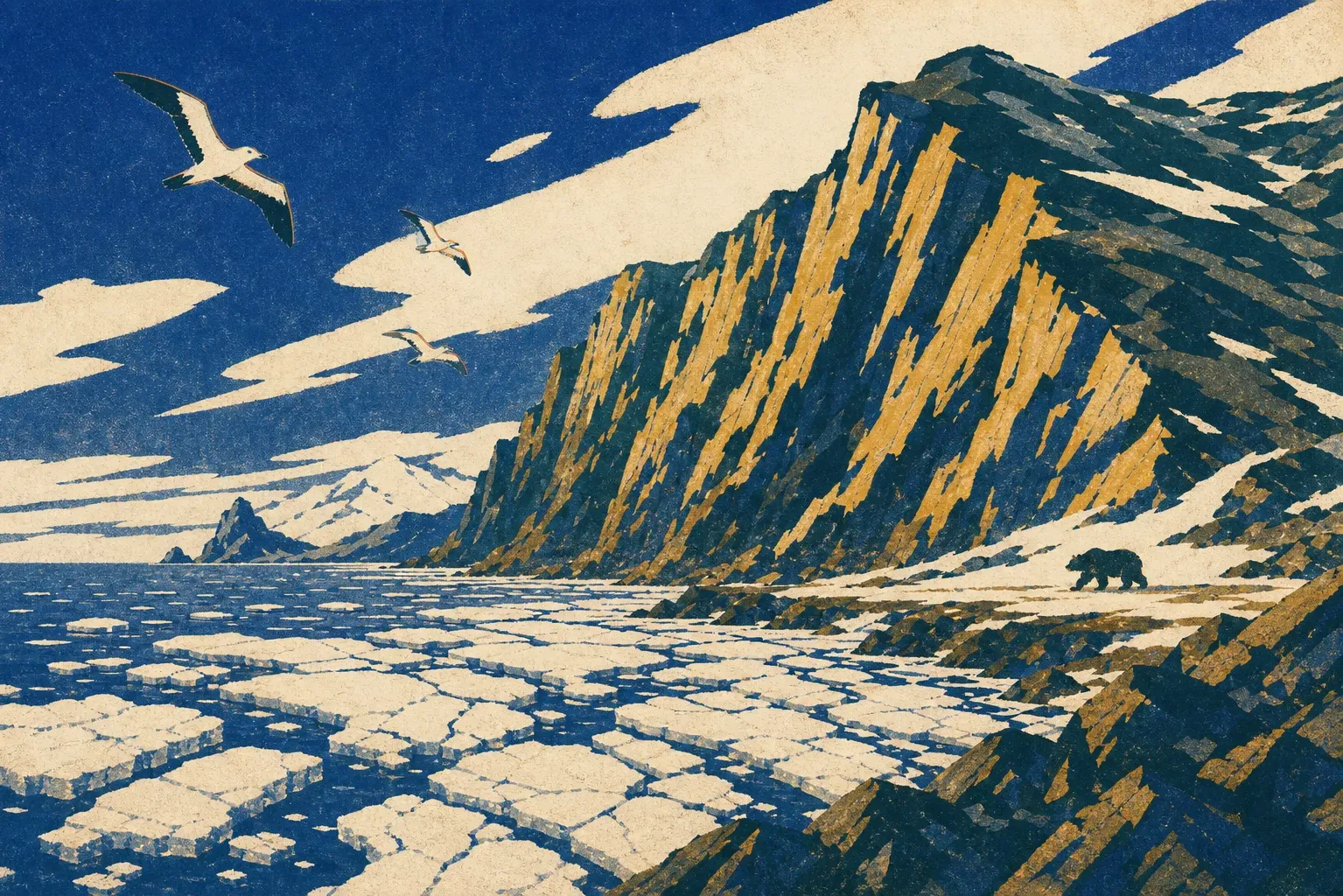
Shiretoko Peninsula
知床
- Utoro (via Memanbetsu Airport / JR Shiretoko-Shari Station)
- ≈6 h from Tokyo
- Depends on route — see Access
- Summer (Jun-Sep) for hiking the Five Lakes and boat cruises
Quick facts
- ≈6 h from Tokyo
- flight roughly 20,000-45,000 yen one way plus about 3,000-3,500 yen bus
- Depends on route — see Access
- Summer (Jun-Sep) for hiking the Five Lakes and boat cruises · Late Jan-Mar for drift ice · Autumn (late Sep-Oct) for foliage and salmon runs
- Utoro (via Memanbetsu Airport / JR Shiretoko-Shari Station)
- Kamuiwakka Yu-no-taki is online-reservation only for the 2026 season (through September 30, capped at 210 people per day): watch the official lecture video and accept the risk statement when you book, or you will be turned away at the trailhead.
- Private vehicles are banned on the Kamuiwakka access road August 8–15, 2026; ride the shuttle bus instead (3,900 yen adult including the bus, as of 2026).
- Until the Five Lakes season closes on November 8, 2026, walking the ground paths requires a compulsory 10-minute lecture at the Field House (450 yen adults / 200 yen children as of 2026), and the paths close instantly and without notice whenever a brown bear is sighted — check the live status board the morning of your visit.
Overview
Why it's inscribed
Shiretoko is on the World Heritage list for a food chain, not a view. The Sea of Okhotsk freezes along this coast at a lower latitude than anywhere else in the Northern Hemisphere, and the ice does real work: as it forms it expels salt and drives nutrient-rich water toward the surface, and when it melts each spring the plankton bloom is enormous. Fish fatten on the bloom. Five species of Pacific salmonids then haul those ocean nutrients up the peninsula's rivers, where brown bears drag them into the forest and the leftovers feed eagles, foxes, and eventually the trees themselves. UNESCO calls the result one of the richest integrated ecosystems in the world, and it drew the boundary to match: from 1,600-meter volcanic peaks down the slopes and three kilometers out to sea, the whole gradient is protected.
The peninsula also shelters species with few footholds left anywhere. Blakiston's fish-owl, the largest owl on Earth, lives here. Steller's sea eagles and white-tailed eagles hunt the coastline; Steller's sea lions patrol offshore; a small violet, Viola kitamiana, grows on these mountains and nowhere else. Brown bear density is among the highest recorded in the world, which explains most of the rules you will meet on the ground. And roughly the last quarter of the peninsula has no road at all.
What you'll actually see
Oshinkoshin Falls
Route 334 runs directly past this twin-stream waterfall at the entrance to the park, and nearly everyone stops. Give it five minutes. There is no fee and barely a walk, which makes it the right warm-up: a first look at how much water this peninsula moves before you spend the next two days watching that water feed everything else. Then drive on. The serious stops all lie further up the coast.
Shiretoko Nature Center and Furepe Falls
Free to enter and worth half an hour before anything else, because the desk inside posts live bear sightings and trail closures, which is the information that will actually shape your day. There is also a large-screen theater called KINETOKO, an outdoor-gear shop, and a Baristart Coffee counter. Then take the 2-kilometer round-trip trail to Furepe Falls, where groundwater seeps out of a cliff face and drops to the sea in a thin, weeping flow; the local nickname is Maiden's Tears. Forty minutes round trip in the green season and about an hour once there is snow on the ground, free either way; when snow lingers or rain has churned the path, the center lends the long boots you will want, from a counter open 9:00 to 14:30 with returns by 15:30.
Shiretoko Five Lakes
The same parking lot serves two different walks, and visitors mix them up constantly. The elevated boardwalk is free, needs no reservation, runs 1.6 kilometers round trip behind an electrified bear fence, and reaches Lake One in about 40 minutes, wheelchair and stroller included. The ground pathway is the real walk: a forest loop past all five lakes whose rules change with the calendar. From May 10 through July 31 you may enter only with a certified guide in a group of ten or fewer, from 6,000 yen for the three-hour loop as of 2026; the rest of the season, a compulsory 10-minute lecture and 450 yen (2026 fee) gets you in on your own. If the dates allow the ground path, take it.
Kamuiwakka Yu-no-taki
A river of hot-spring water that you ascend on foot, in the water. The flow starts around 25 degrees Celsius and warms as you climb a series of low cascades to the fourth falls, where it reaches 35 to 38 degrees and the route ends. The 2026 season runs July 1 to September 30 and is reservation-only: you watch the official lecture video online and accept a risk statement when you book, and daily admissions are capped. Helmets are compulsory and free; water shoes rent from 550 yen as of 2026. The site keeps a running public tally of the year's bear sightings, rockfalls, and injuries, which tells you what kind of outing this is. A small adventure, not a soak.
Shiretoko Pass
The seasonal mountain road between Utoro and Rausu crosses the peninsula's volcanic spine and delivers the classic head-on view of Mt. Rausu, 1,661 meters and one of Japan's "100 Famous Mountains." It is not maintained through winter and opens and closes on its own schedule, so check the live road-status board before you commit to a cross-peninsula day. When it is open, it is the only practical link between the two coasts, and the shift from the Okhotsk side to the Nemuro Strait side justifies the drive on its own.
Rausu and the Nemuro Strait
Rausu runs on kombu and whales. From late April to mid-October, cruises leave the port at 9:00 and 13:00 looking for orca, sperm whales, minke whales, and Dall's porpoises; from late January to mid-March the same operators push into the drift ice to find Steller's sea eagles. The operators run to their own rule: throttle down at about 300 meters, close the gap slowly from there, and never take the boat inside roughly 50 meters. A good skipper will not be talked out of it. If an animal decides to close the last stretch itself, that is the animal's business. On land there are the hot springs: Rausu Onsen and Kumanoyu, plus the summer-only seaside pools at Seseki and Aidomari, the easternmost bath in Japan.
Cape Shiretoko, by boat
No road reaches the cape, and none ever has. The one way to see the tip is the Aurora sightseeing ship from Utoro: four hours round trip, 10,000 yen for adults as of 2026, sailing during Golden Week and again from June through mid-October. The desk takes Visa, Mastercard and a few other brands on the day, but confirm yours at reception rather than assuming. The boat tracks the roadless coast past 100-meter cliffs and waterfalls that fall straight into the sea. Godzilla-iwa Kanko runs smaller boats from the same port, and the shorter Rusha Bay run (2 hours 15 minutes, 8,000 yen in 2026) covers a good stretch of the same coastline if four hours is more boat than you want.
Worth knowing
Bears set the schedule here, not you. Any trail can close mid-morning on a sighting, so check the live board at the Nature Center or the Five Lakes Field House on the morning you walk, and keep one flexible slot in your plan for whatever gets bumped. Never eat or even snack on the Five Lakes trails; food smell teaches bears to connect humans with meals, and the rule is enforced, not suggested. The roadside foxes are not for feeding either. Bring cash anyway: the Aurora ticket desk does take cards, but only some brands, and card acceptance around the peninsula thins out fast. Winter drift-ice walks now sell out more than two months ahead, so book them before your flights. If you can pick your month, September and early October give you salmon running the rivers, fall color, and nearly everything still open. And do not mistake the free boardwalk for the Five Lakes: it is a 40-minute stroll to one lake, a fine fallback when bears close the forest loops, but not the same walk.
Highlights
Shiretoko Five Lakes (Shiretoko Goko) elevated boardwalk and forest hiking loop
Winter drift ice on the Sea of Okhotsk (drift-ice walks and icebreaker cruises)
Wildlife: brown bears, Blakiston's fish owls, Steller's and white-tailed sea eagles
Boat cruises along 100 m coastal cliffs from Utoro toward Cape Shiretoko
Kamuiwakka and Furepe waterfalls and Shiretoko Pass scenery
Shiretoko Nature Center guided treks and autumn salmon runs
Getting there from Tokyo
Fly Haneda to Memanbetsu Airport (about 1h45m), then airport/route bus or rental car to Utoro on the peninsula (about 2h; or JR to Shiretoko-Shari Station and Shari Bus 'Shiretoko Line' about 50-70 min to Utoro)
Where to base & what to eat
Where to base
Utoro Onsen
The default base, 20 minutes from the Five Lakes and the departure point for every cruise and drift-ice tour, but rooms vanish and prices spike in July–August and February, and the town largely hibernates out of season.
Shari town (JR Shiretoko-Shari)
Cheaper and home to the only train station, which suits car-less travelers arriving late, but the bus to Utoro takes 50–70 minutes each way and the last one back leaves early, so you lose about two hours a day.
Rausu
The base for orca and whale cruises and the wild seaside baths, mostly small minshuku rather than resorts, but it sits across the seasonal Shiretoko Pass and English-capable businesses are scarce.
Abashiri
A business-hotel town two hours from Utoro that makes sense as a winter base for the icebreaker Aurora or a one-night airport buffer, but it is not Shiretoko, and day-tripping to the Five Lakes from here is punishing.
What to eat
Shiretoko salmon
Shari brands itself Japan's number-one salmon town; eat it as a set meal at Shokudo Leonardo in Utoro, and on autumn mornings (never Sundays, when the boats stay in) watch the catch landed at the Utoro Salmon Terrace.
Rausu kombu
The Nemuro Strait side's signature product, a kelp prized for its deep umami dashi that Japanese chefs pay a premium for; dried, it is the single best edible souvenir from the eastern coast.
Okhotsk sea urchin
At GVO in Utoro the owner dives for the uni himself, a rare case of the harvester and the cook being the same person.
Okhotsk crab
Shiretoko Kani-no-ya (relocated and reopened in July 2022) and the fisherman-run Ryoshi-no-Mise Kaniya, which adds sea views, are Utoro's two dedicated crab houses.
Tonkotsu ramen at Namishibuki
A Michelin-guide-listed tonkotsu shop in the port at Utoro; the reliable non-seafood dinner when your cruise gets canceled.
Official links
Fares, hours and closures change with little notice. These are the operators' and authorities' own pages — worth a look close to your travel dates.
Related stories
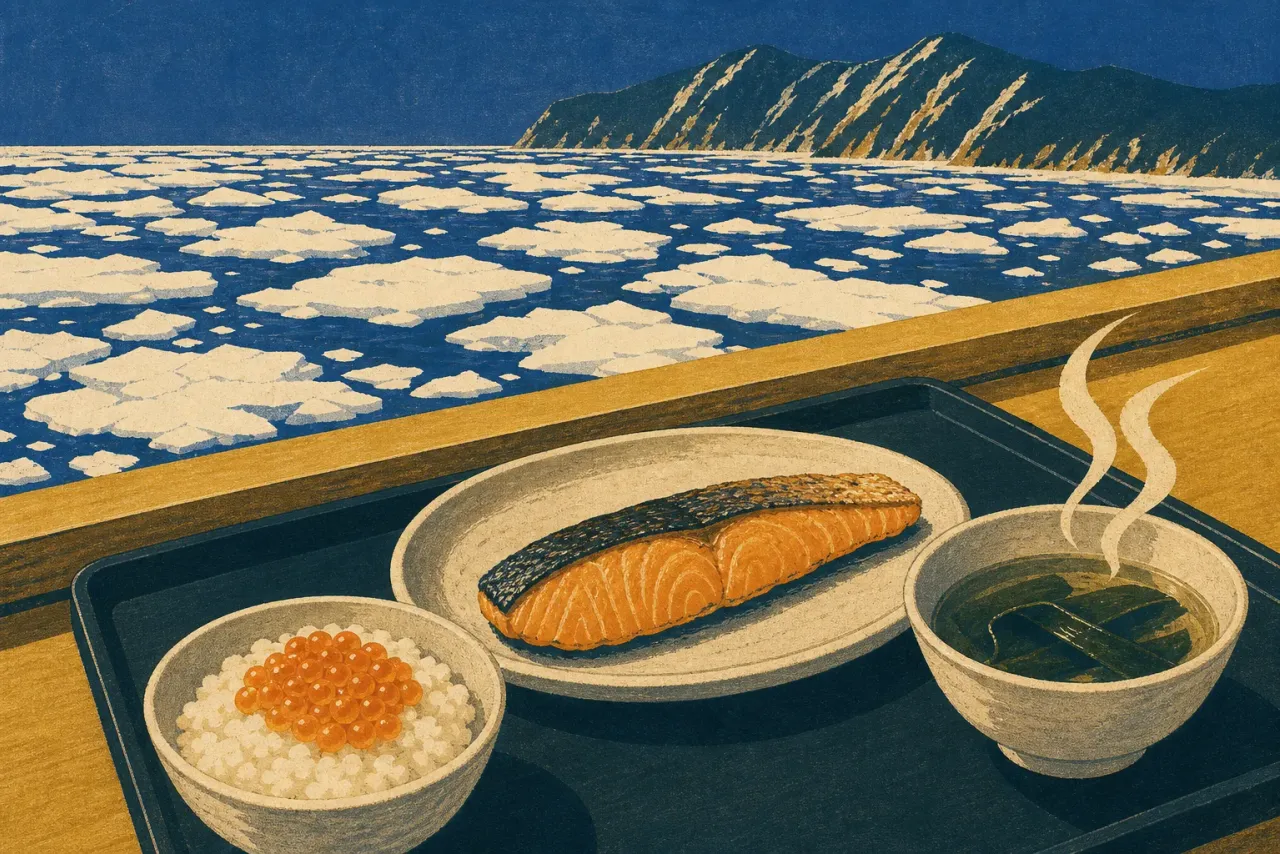
Ice, Salmon, Bear: Eating the Food Chain That Made Shiretoko a World Heritage Site
Shiretoko's UNESCO citation describes a system that runs from sea ice to plankton to salmon to bears. Utoro's menus describe the same thing, which makes dinner here a form of interpretation.

Booked, Not Bounced: The Reservation Rules That Decide Your Shiretoko Day
Shiretoko manages one of the world's densest brown bear populations with caps, lectures, and guided-only windows instead of fences. Here is every reservation your travel dates trigger, decoded month by month.